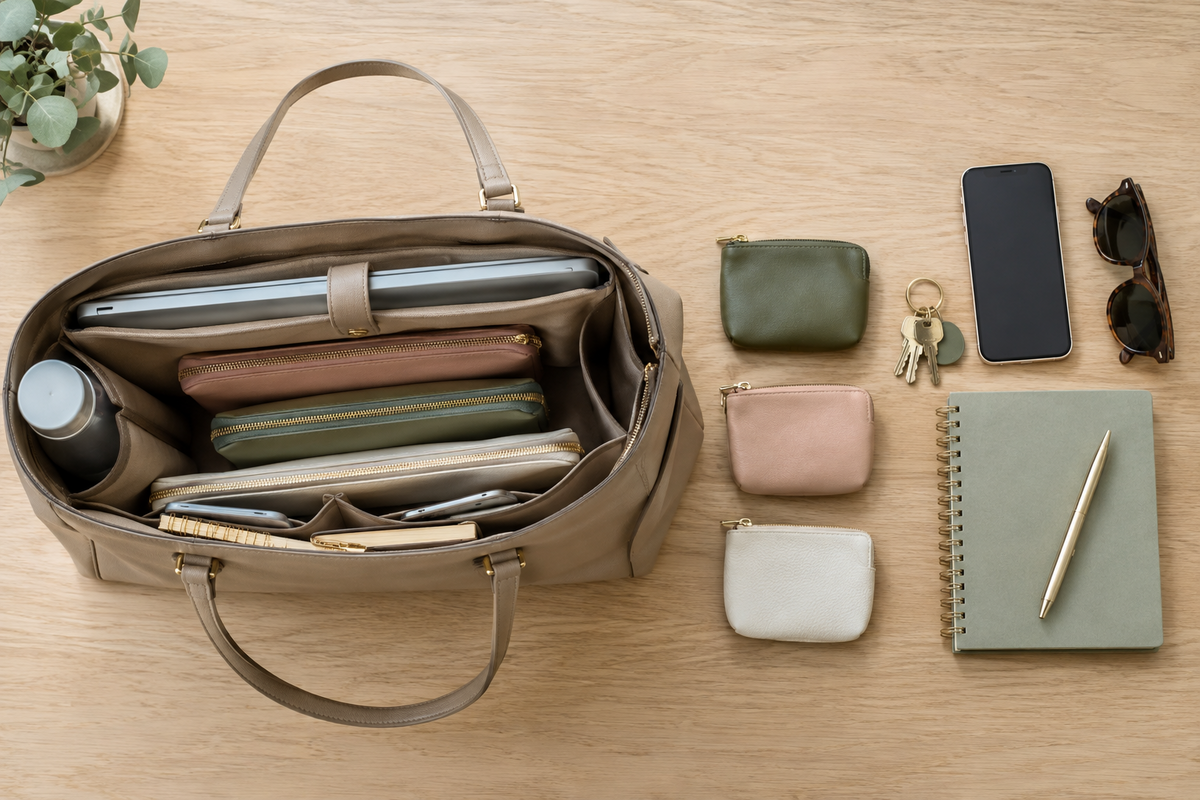
You know the moment. Your phone is buzzing somewhere at the bottom of your tote, and you are digging past receipts, a loose lip balm, a granola bar wrapper and a tangle of charger cables while the person behind you waits. By the time you find it, the call has gone to voicemail. If you have ever wondered how to organize a tote bag so that this stops happening, you are in the right place.
Tote bags are wonderful because they are big, open and easy to throw things into. That is also the problem. An open tote with no structure turns into a "bag black hole" within a week. The good news is that a tidy tote is not about being a naturally neat person. It is about a simple system: a few zones, a few pouches and a two-minute reset. This guide shows you exactly how to set it up.
Why Tote Bags Get Messy So Fast
Before you fix the mess, it helps to understand where it comes from. Most messy totes share the same three causes.
- One big open space. Without dividers, everything slides to the bottom and piles up in the same corner. Small items sink, flat items hide against the sides, and heavy items crush everything else.
- No "home" for anything. If your keys do not have a fixed spot, they go wherever your hand drops them. Next time you need them, you have to search.
- Things go in, nothing comes out. Receipts, snack wrappers, spare hair ties and "just in case" items build up day after day. Many women carry several pounds of things they have not used in weeks.
That last point matters for your body as well as your sanity. A bag that keeps getting heavier can lead to shoulder and neck strain. If your bag already feels like a workout, read our guide on shoulder pain from a heavy purse and how heavy a bag should be before you reorganize.
Step 1: Empty Everything and Sort It Into Four Piles
Pick a table, tip your tote upside down and empty every pocket. Yes, every pocket, including the one you forgot about. Then sort what you find into four piles:
- Daily essentials: things you use every single day, such as your phone, wallet, keys, transit card, sunglasses and lip balm.
- Work or school items: laptop, charger, notebook, pens, planner, badge or lanyard.
- Food and drink: water bottle, lunch, snacks, coffee cup.
- Everything else: trash, duplicates, "maybe" items and things that belong at home.
Throw away the trash right away. Put duplicates back where they belong at home (you do not need three pens that do not work and four hair ties). Be honest about the "maybe" pile. If you have not used something in the last two weeks, it probably does not need to travel with you every day.
Step 2: Create Zones Inside Your Tote
The secret to an organized tote bag is zones. A zone is simply an area of your bag where one kind of item always lives. When every category has a zone, your hand learns where to go, and you stop searching.
Here is a zone layout that works for most work totes:
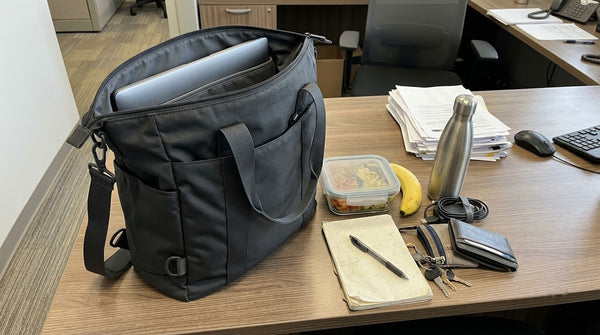
- Back wall (closest to your body): tech zone. Your laptop or tablet goes here, upright, against the side of the bag that sits next to your body. This keeps the heaviest item close to you, which is better for your shoulder, and it protects the screen. (More on that in can you carry a laptop in a tote bag?)
- Middle: work zone. Notebook, planner and folders stand upright in front of your laptop, like books on a shelf.
- Front wall pockets: grab zone. Phone, keys, transit card and sunglasses. These are the things you reach for most, so they should be the easiest to reach.
- Zip pocket: secure zone. Wallet, passport, cards and anything you would hate to lose.
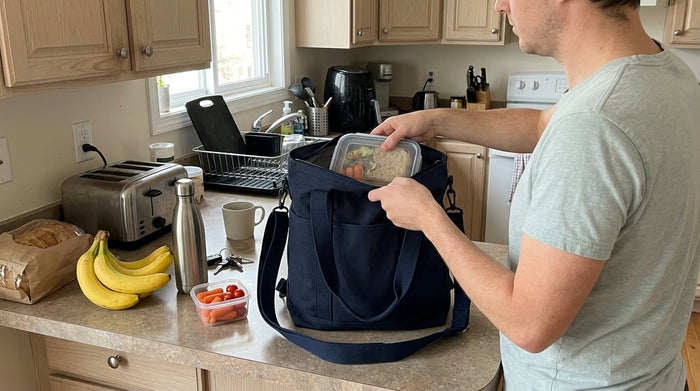
- Separate section: food zone. Lunch, snacks and drinks, kept apart from your laptop and papers.
Keeping food in its own zone is the most important rule of all. A leaking yogurt or a sweating water bottle can damage a laptop, ruin paperwork and leave your bag smelling for days. If your lunch lives in your main tote, keep it in an insulated, leak-proof section. Our guide on how to clean an insulated lunch bag and get rid of the smell covers what to do if a spill has already happened.
Step 3: Use Pouches for the Small Stuff
Small items are what make a tote feel chaotic. The fix is to group them into pouches, so instead of fifteen loose things, you have three or four "containers." Here are the pouches most women find useful:
- Tech pouch: charger, cable, earbuds, power bank, adapter. Wrap cables loosely with a velcro tie so they do not knot.
- Beauty and wellness pouch: lip balm, hand cream, mini deodorant, painkillers, tissues, hair ties, period products.
- Admin pouch: pens, sticky notes, business cards, a small notebook, receipts you need to keep.
Choose pouches in different colors or textures so you can tell them apart by feel. That way, you can reach into your bag without looking and still pull out the right one.
Tip: keep the pouches small. A giant pouch is just a second messy bag inside your first messy bag.
Step 4: Give Every Item a Permanent "Home"
Once your zones and pouches are set up, decide on one permanent spot for each daily essential. Keys always go in the same front pocket. Phone always goes in the same slip pocket. Transit card always lives in the same place. This is the habit that makes everything else work.
At first, you will need to think about it. After a week or two, it becomes automatic. You will start reaching for your keys before you even reach the door, and you will notice right away if something is missing.
If you are trying to build this habit, it pairs well with a short morning routine. Our 10-minute morning checklist for packing a work tote walks you through packing in the same order every day, so nothing gets left behind.
Step 5: Pack in the Right Order
The order you pack your tote matters more than you might think. Pack in this sequence:
- Laptop or tablet first, against the back wall.
- Notebooks and folders next, standing upright.
- Pouches in the middle, side by side, not stacked.
- Lunch and drinks in their own section.
- Daily essentials last, in the front pockets, so they are on top and easy to grab.
Heavy things go in first and lowest. Light things you need often go in last and highest. This keeps your bag balanced and stops small items from sinking to the bottom.
Step 6: Do a Two-Minute Reset Every Evening
Even the best system falls apart without maintenance. The good news is that maintenance only takes two minutes. Every evening, or at least every Friday, do a quick reset:
- Take out trash, receipts and wrappers.
- Remove your lunch container and wash it.
- Put loose items back into their pouches.
- Charge your phone and power bank.
- Check that your keys, wallet and badge are in their homes.
Once a month, do a deeper clean. Empty the bag completely, shake out crumbs, wipe the lining and check the pouches for things that do not belong.
How to Organize a Tote Bag for Work vs. Weekends
Your workday tote and your weekend tote do not need the same contents. Many women keep a "core kit" that moves between bags: wallet, keys, phone, lip balm and a small wellness pouch. Then they add a "work layer" (laptop, charger, notebook, lunch) on weekdays and a "weekend layer" (sunglasses, a reusable shopping bag, a water bottle) on Saturdays and Sundays.
If you switch between office days and work-from-home days, this core-plus-layers idea is a lifesaver. For a full list of what to bring on in-office days, see our return to office essentials guide for hybrid workers.
Organizing Tips for Specific Jobs
Different jobs create different kinds of mess. A few quick ideas:
- Teachers: keep a dedicated folder for papers to grade and a separate pouch for markers and stickers. Our teacher bag essentials checklist has a full list.
- Nurses and healthcare workers: keep a "clean" zone for food and a separate pouch for work items like pens, a penlight and hand cream. See our nurse bag essentials for a 12-hour shift.
- Gym-goers: keep a ready-packed gym kit with a wet bag. See how to carry gym clothes to work in one bag.
- Pumping moms: keep clean and used parts in separate labeled pouches. Our pump bag essentials checklist covers the rest.
- Commuters: keep valuables in a zip pocket on the side of the bag closest to your body. Our anti-theft habits for city workers explain why.
What to Look for in a Tote That Stays Organized
Pouches can help any bag, but some totes make organization much easier from the start. When you shop, look for:
- Built-in compartments. Interior pockets and dividers do the work of pouches for you.
- A structured shape. A bag that holds its shape keeps items upright instead of collapsing into a pile.
- A zip closure or zip pocket. This keeps valuables secure and stops things from falling out when you set the bag down.
- A padded laptop space. This gives your heaviest item a fixed home.
- A separate food section. This keeps lunch away from your laptop and papers.
- An easy-to-clean lining. Spills happen. A wipeable lining makes them a non-event.
For a deeper look at these features, read how to choose a work bag for women: 9 features that actually matter.
Our Pick: A Tote With the Organization Built In
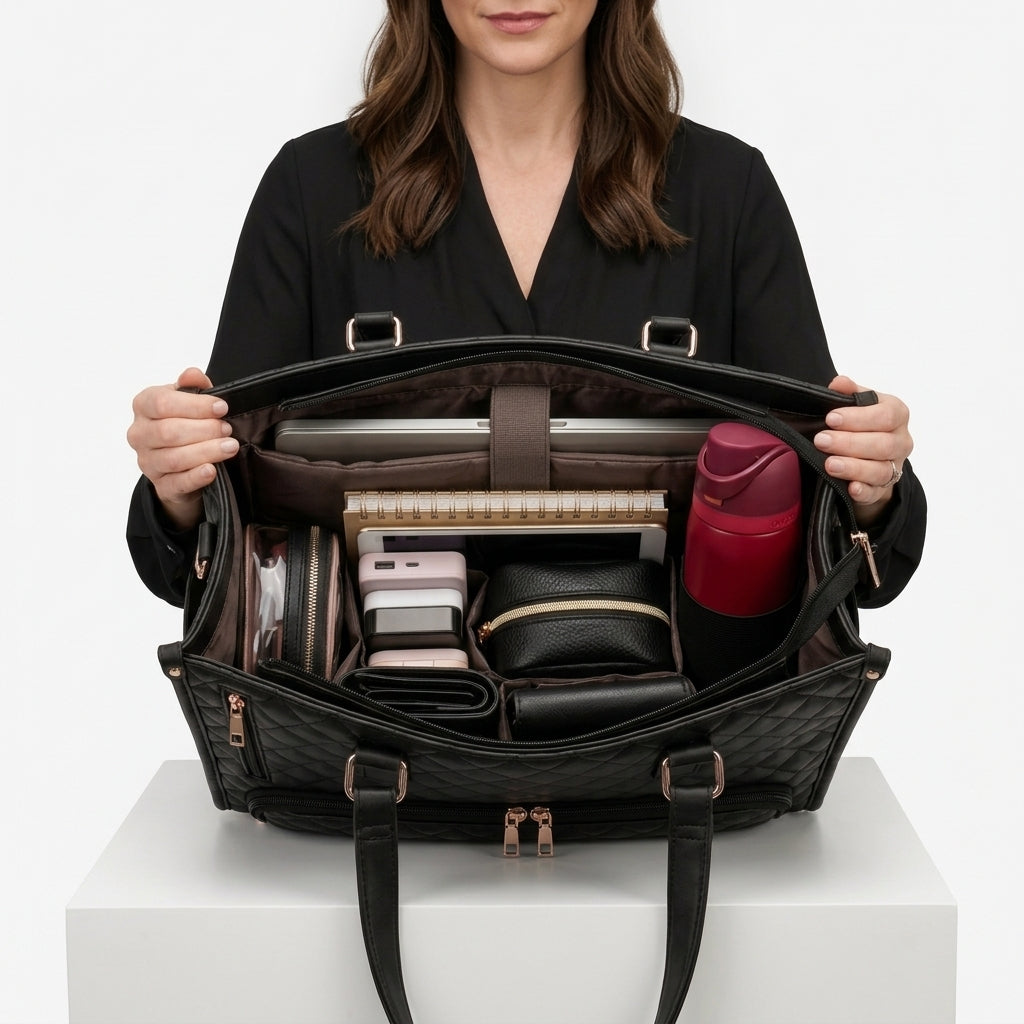
If you are tired of buying pouches to fix a bag that has no structure, the JELRIX 3-in-1 Totebag was designed to solve exactly this problem. It combines a work tote, an insulated lunch bag and an organizer in one structured bag.
- 7 smart compartments plus a secure zip pocket, so your daily essentials each have a home.
- A laptop space that fits laptops up to 17", so your tech zone is built in.
- A leak-proof insulated food compartment that keeps meals warm for up to 5 hours and cold for up to 10, kept separate from your laptop and papers.
- A waterproof exterior and easy-to-clean lining, so a spill does not ruin your day.
It comes with free tracked shipping in 3 to 5 days and a 30-day easy returns policy, so you can try the system for yourself.
A Simple Weekly Checklist
Save this list and use it every Sunday evening:
- ☐ Empty trash and receipts
- ☐ Wash lunch containers and wipe the food section
- ☐ Restock the wellness pouch (painkillers, tissues, hand cream)
- ☐ Charge the power bank
- ☐ Check that every daily essential is in its home
- ☐ Remove anything you did not use this week
What the Experts Say
Neuroscience research from Princeton University has looked at how multiple objects in our field of view compete for the brain’s attention, which may help explain why rummaging through a cluttered bag feels so frustrating. Organizing also keeps weight in check: TIME has reported on the health risks of carrying a heavy purse.
Keep Reading
Once your bag is organized, decide what deserves a place in it with our purse essentials checklist. Keep it in good shape with how to clean a tote bag and protect it from rain, and if you are carrying for little ones too, see working mom bag essentials.
Frequently Asked Questions
How do I keep my tote bag organized?
Divide your tote into zones (tech, work, grab, secure and food), group small items into a few pouches, give every daily essential one permanent spot, and spend two minutes each evening taking out trash and putting things back in their homes.
What should I put in my tote bag for work?
Most women carry a phone, wallet, keys, laptop and charger, a notebook and pens, a water bottle, lunch and snacks, and a small wellness pouch. Keep only what you use each week to stop the bag from getting heavy.
How do I stop small things from sinking to the bottom of my bag?
Put small items into pouches, pack heavy items first and lowest, and keep the things you use most in front pockets near the top. A structured tote with built-in compartments also stops items from sliding into one corner.
Should I keep my lunch in the same bag as my laptop?
Only if your lunch has its own sealed, leak-proof section. Food and drinks can leak or create condensation, which can damage electronics and paperwork. A separate insulated compartment keeps both safe.
How often should I clean out my tote bag?
Do a quick two-minute reset every evening or at least once a week, and a full empty-and-wipe clean once a month. Clean the food section right away after any spill.