A coffee drip on the front. A pen mark inside. A grey film on the bottom from too many train floors. And then there is the lunch section, which smells faintly of last Tuesday's curry. Bags work hard, and it shows. If you carry the same tote every day, sooner or later you will want to know how to clean a tote bag without ruining it, and how to protect it from rain and stains so it stays looking new.
The right method depends on what your bag is made of. This guide covers the most common tote materials, a simple weekly routine, how to treat common stains and how to keep a bag dry in wet weather.
Quick answer: to clean most tote bags, empty and shake them out, wipe the lining with a cloth dipped in warm water and a few drops of mild dish soap, spot-clean the outside according to the material, then wipe with plain water and air-dry at room temperature. Avoid harsh chemicals, hot water and direct heat. Clean any food compartment after spills and let it dry open.
Before you start: always check your bag's care label or the brand's care instructions first. When in doubt, test any cleaner on a small hidden spot.
Step 1: Empty and Shake It Out
Every clean starts the same way. Take everything out, including every pocket. Turn the bag upside down and shake out crumbs and grit over a bin. Use a lint roller or a handheld vacuum on the lining and corners. Grit is not just dirty, it can scratch your laptop and phone.
Step 2: Clean the Lining
Most linings can be wiped clean. Mix a few drops of mild dish soap in warm water, dip a soft cloth, wring it out well and wipe the inside. Then wipe again with a cloth dampened with plain water, and leave the bag open to dry fully.
For ink or makeup marks on fabric linings, the American Cleaning Institute's stain removal guide is a helpful reference for which treatment works on which stain.
Step 3: Clean the Outside by Material
Canvas and cotton totes
Spot-clean with mild soap and a soft brush or cloth. Some unlined canvas totes can be hand-washed in cool water, but structured or lined canvas bags can lose their shape in a washing machine. Air-dry, stuffed with a towel to hold the shape. Do not tumble dry.
Vegan leather, faux leather and coated fabrics
Wipe with a damp cloth and a drop of mild soap, then wipe with clean water and dry with a soft towel. Avoid harsh solvents, alcohol and abrasive sponges, which can damage the coating. Keep the bag away from direct heat when drying.
Genuine leather
Wipe with a barely damp cloth. Use a cleaner and conditioner made for leather, following the product's instructions. Do not soak leather.
Nylon and polyester
These are usually easy to clean. Use warm soapy water and a soft brush, rinse with a clean damp cloth and air-dry.
Step 4: Don't Forget the Handles and Bottom
Handles collect oil from your hands and the bottom collects dirt from floors. Give both an extra wipe with soapy water, then plain water. Try not to put your bag on the floor in public places; use a chair, a hook or your lap instead.
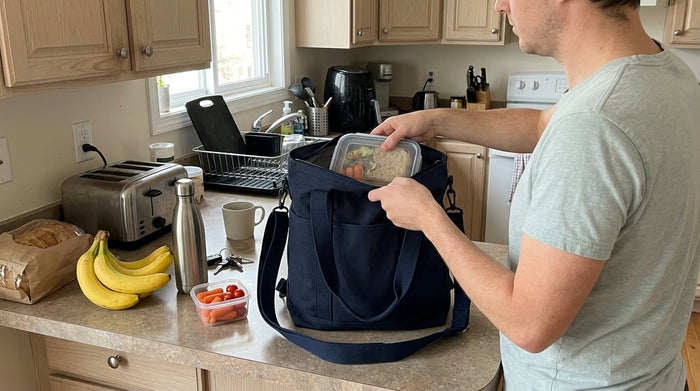
How to Clean the Lunch Section
If your bag has a built-in lunch or insulated section, it needs a little more care, because food spills and condensation can lead to smells and mould.
- Wipe out crumbs and spills the same day.
- Wash with warm soapy water, then wipe with clean water.
- For smells, wipe with a mix of water and white vinegar, or leave a little baking soda inside overnight and wipe it out.
- Leave the compartment open to dry completely before closing it.
Keeping it clean matters for food safety too. The USDA advises using an insulated lunch bag with ice packs for perishable food and washing lunch bags regularly. For a full step-by-step method, see our guide on how to clean an insulated lunch bag and get rid of the smell.
How to Remove Common Stains
- Coffee and tea: blot (do not rub) as soon as possible, then dab with cool water and a little mild soap.
- Ink: on coated or faux leather, act fast with a damp cloth. On fabric, follow a stain guide for ink and test first.
- Makeup: lift powder with a dry brush first, then use a little soap and water. For oily foundation, a drop of dish soap helps break down oil.
- Grease and food: blot, then use a little dish soap on a damp cloth.
- Water marks: wipe the whole panel evenly with a barely damp cloth so it dries evenly.
How to Protect Your Bag From Rain
If you live somewhere wet, such as the UK, the Pacific Northwest or coastal Canada, rain protection matters as much as cleaning.
- Choose a waterproof or water-resistant exterior. It is the easiest way to keep the contents dry.
- Keep the top closed. A zip-top or a bag with a secure zip pocket protects your phone and documents.
- Carry a compact umbrella or a foldable rain cover in an outer pocket.
- Pack electronics in a sleeve or pouch as a second layer.
- Dry your bag properly after a downpour: empty it, wipe it, stuff it with paper or a towel and let it dry at room temperature, away from radiators.
Laptops in particular should stay dry. See our guide on how to protect a laptop in a tote bag.
A Simple Weekly Bag Care Routine
- Empty out trash and receipts.
- Wipe the lunch section.
- Shake out crumbs.
- Wipe the handles.
- Restock your pouches.
It takes five minutes and stops dirt building up. It also stops your bag getting heavier week by week. Our guide on how to organize a tote bag includes a weekly checklist.
How to Store a Tote Bag
- Stuff it with tissue paper or a soft towel to keep its shape.
- Store it upright, not squashed under other things.
- Keep it out of direct sunlight, which can fade colors.
- Use a dust bag or a cotton pillowcase for long-term storage.
- Do not hang heavy bags by their handles for months, as handles can stretch.
Prevention: Habits That Keep Your Bag Clean
- Keep pens capped and in a pouch.
- Keep makeup in a closed pouch.
- Keep food and drinks in a sealed, leak-proof section.
- Do not put your bag on the floor in restrooms, trains or restaurants.
- Wash your hands before handling a light-colored bag.
A Simple Cleaning Schedule
- Every day: remove food containers and wrappers; wipe any spills in the lunch section.
- Every week: empty trash and receipts, shake out crumbs, wipe the lining and handles.
- Every month: clean the outside according to the material, clean all pouches, air the bag out for a few hours.
- Every season: check seams, straps and zips; deep-clean and condition if your bag is leather.
Cleaning Myths to Avoid
- "Hot water cleans better." Hot water can set some stains, shrink fabrics and damage coatings. Cool or lukewarm water is safer for most bags.
- "Baby wipes are fine for everything." Some wipes contain oils or alcohol that can leave residue or damage finishes. Test first or use a damp cloth with mild soap.
- "A hairdryer speeds up drying." Direct heat can warp, crack or fade materials. Air-dry at room temperature.
- "More product means more clean." Too much soap leaves residue that attracts dirt. A few drops is enough.
Cleaning Products to Use With Care
Bleach, strong solvents, nail polish remover and abrasive sponges can permanently damage many bag materials. If you are not sure whether a product is safe for your bag, check the care label, test it on a hidden spot, or stick to mild dish soap and water. For washable fabric pouches and liners, the American Cleaning Institute has general cleaning tips on choosing and using laundry products safely.
When to Repair, Not Replace
A loose seam, a sticky zip or a worn handle does not have to mean a new bag. Many shoe repair shops and tailors can fix straps, zips and stitching. Rubbing a zip with a pencil or a little wax can help it run more smoothly. Looking after a bag you love, and repairing it when needed, is both cheaper and better for the planet. Our guide on how to pack a zero-waste lunch covers more low-waste habits.
Our Pick: A Bag That Is Easy to Keep Clean
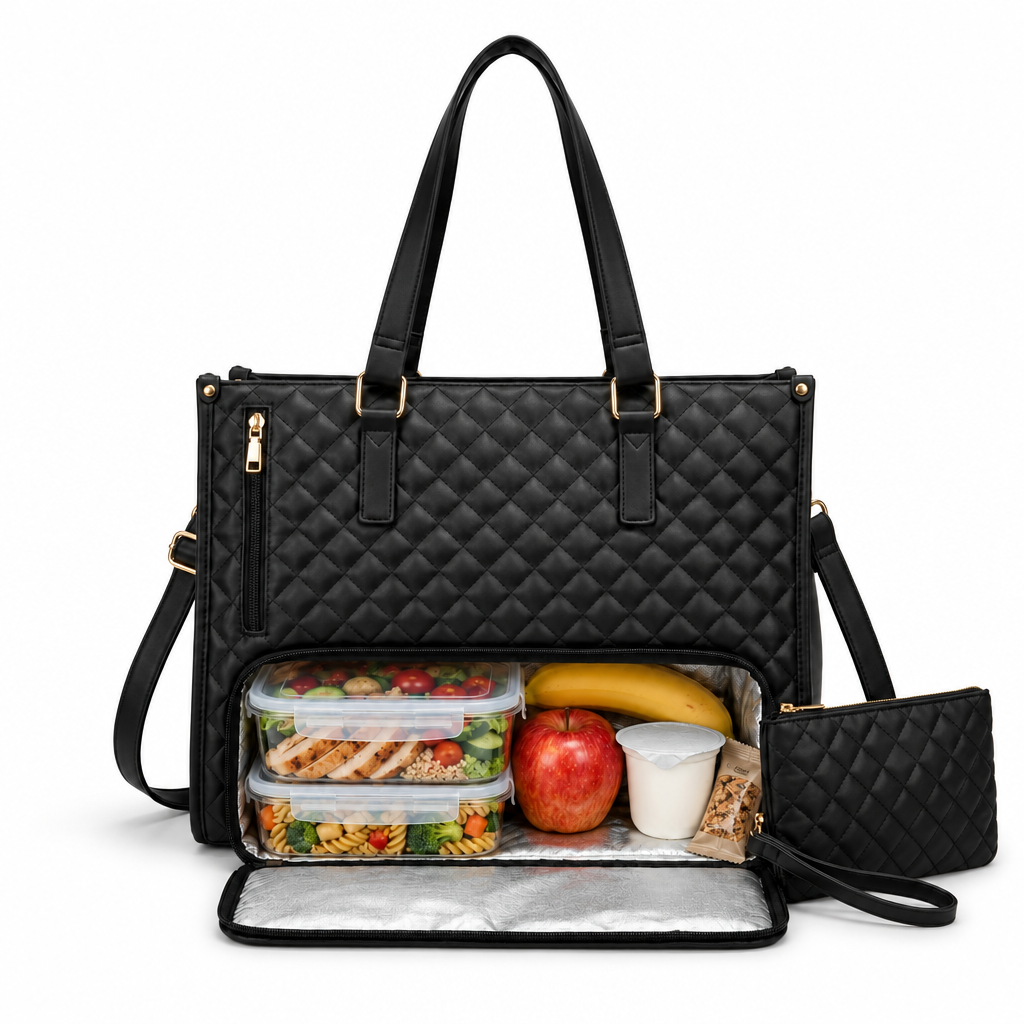
The easiest bag to clean is one designed to be cleaned. The JELRIX 3-in-1 Totebag was built for everyday life:
- A waterproof exterior to help protect your things in the rain.
- An easy-to-clean inside lining, so spills are a quick wipe.
- A 100% leak-proof insulated food compartment, so lunch stays sealed away from your laptop and papers.
- 7 smart compartments plus a secure zip pocket to keep pens, makeup and valuables contained.
- Fits laptops up to 17".
Always follow the care instructions that come with your bag. It ships in 3 to 5 days with tracking and comes with 30-day easy returns.
Key Takeaways
- Always check the care label and test cleaners on a hidden spot first.
- Mild soap, cool water and a soft cloth work for most bags.
- Clean the lunch section after every spill and let it dry fully.
- Air-dry bags at room temperature, never with direct heat.
- Keep pens, makeup and food in closed pouches or sealed sections to prevent stains.
A clean bag is not just about looks. Removing grit protects your laptop and phone from scratches, and keeping the food section clean stops smells and helps keep lunch safe.
Frequently Asked Questions
How do I clean the inside of a lunch compartment?
Wipe out crumbs, wash with warm soapy water, wipe with clean water and leave it open to dry completely. For smells, use diluted white vinegar or baking soda overnight.
How do I clean a tote bag without ruining it?
Check the care label first. Empty and shake out the bag, wipe the lining with mild soapy water, spot-clean the outside according to the material, rinse with a clean damp cloth and air-dry away from direct heat.
Can I put my tote bag in the washing machine?
Some simple, unlined canvas totes can be machine-washed, but structured, lined, leather or coated bags usually should not be. Check the care label and spot-clean if you are unsure.
How do I get a bad smell out of my bag?
Empty it, wipe the inside with mild soapy water, then with a little diluted white vinegar. Leave baking soda inside overnight, wipe it out and let the bag air-dry fully with the compartments open.
How do I keep my bag dry in the rain?
Choose a waterproof or water-resistant bag, keep it closed, carry a compact umbrella, and pack electronics in a sleeve. After heavy rain, empty and dry the bag at room temperature.
How often should I clean my work bag?
Do a quick five-minute tidy and wipe every week, clean the lunch section after any spill, and give the whole bag a deeper clean every month or two.