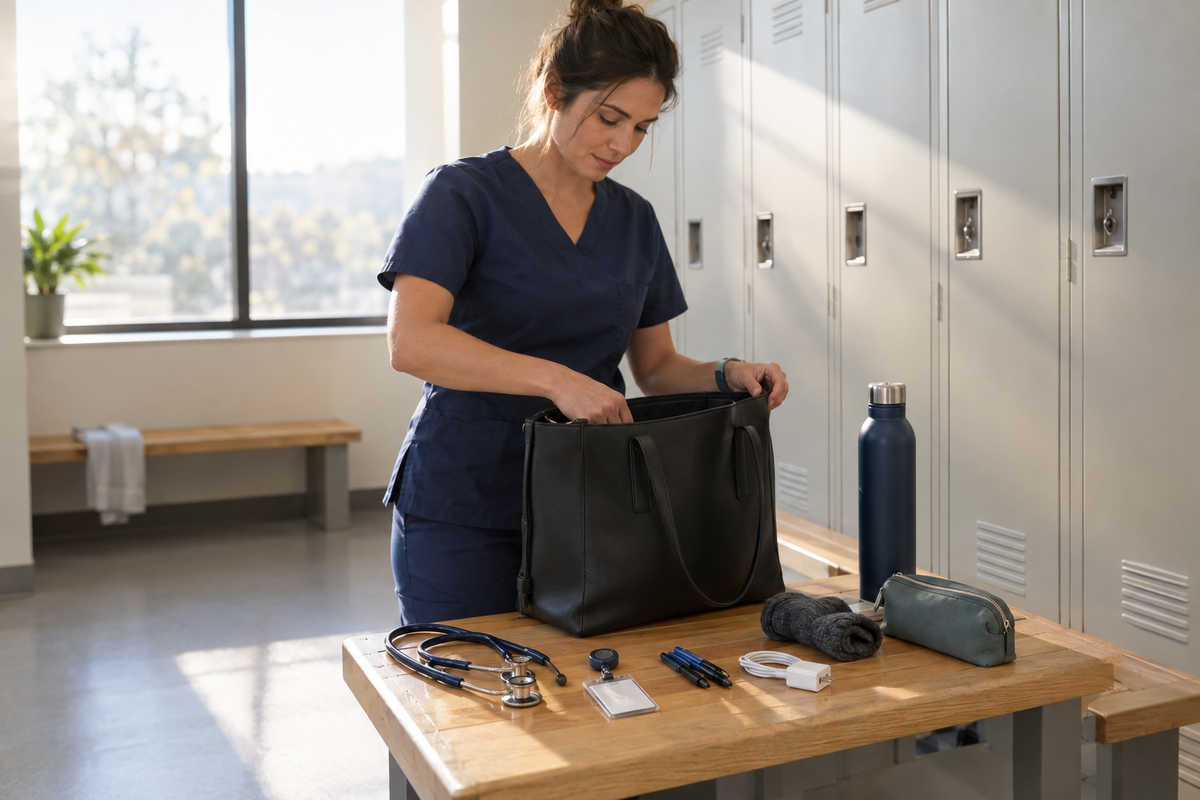
You clock in before sunrise and clock out long after dark. Somewhere in between, your phone dies, your lunch sits warm in a locker, and you realize the spare socks you meant to pack are still on the bedroom floor. Twelve hours is a long time to go without the small things that keep you comfortable and focused.
The fix is not a bigger bag. It is a system. This guide walks you through the nurse bag essentials that actually earn their space, how to keep food safe when there is no fridge, how to keep lunch away from work gear, and what to look for in the best bag for nurses and other healthcare workers.
Why a 12-Hour Shift Needs a Packing System
On a regular workday, you can run out for a coffee or grab a charger from your desk. On a 12-hour shift, breaks are short, unpredictable and sometimes skipped. Whatever you forget at home, you go without.
A packing system solves three problems at once:
- Decision fatigue. After a run of night shifts, a checklist does the thinking for you.
- Hygiene. Your bag travels between home, your car or the bus, and a clinical environment. Separating food, clean clothes and work items keeps things tidier.
- Comfort. The right snacks, water and socks make the last two hours easier.
The goal is a bag you can restock in five minutes and grab without thinking.
The Complete Nurse Bag Essentials Checklist
Use these nurse bag essentials as a master list, then trim it to fit your unit, your facility's rules and what your locker already holds.
Clinical and work items
- Badge, badge reel and any access cards
- Stethoscope (if you bring your own)
- Pens in two colors, plus a spare
- Small notebook or report sheet clipboard
- Penlight and bandage scissors, if your role uses them
- Reading glasses or spare contact lenses
- A compact pocket organizer for scrubs
Comfort items
- A change of socks, or compression socks if you like wearing them on long shifts
- A light layer such as a cardigan or fleece for cold units and break rooms
- Hair ties, clips or a headband
- Lip balm and travel-size hand cream (hand washing and sanitizer dry out skin fast)
- Any personal medication you normally take, in its labeled container
Hygiene and freshen-up kit
- Travel deodorant and face wipes
- Toothbrush, small toothpaste and mints
- Small zip pouch for period products
- Disinfecting wipes for your phone, badge and bag
- A spare set of scrubs or underwear, kept in a sealed bag
Tech and chargers
- Phone charger with a long cable (break room outlets are never where you need them)
- Small power bank
- Earbuds for your break or the commute home
Food and drink
- A main meal for your longest break
- Two or three small snacks you can eat in a minute or two
- A large reusable water bottle
- Two cold sources (gel packs or a frozen water bottle)
- Utensils and a napkin
What to Pack for a 12 Hour Shift: Meals and Hydration
Food on a long shift has one job: keep your energy steady when you cannot predict when you will eat. Plan one solid meal plus several small things you can eat quickly.
Lunch ideas for nurses on a 12 hour shift
Think "easy to eat cold or reheat once, and fine if your break gets pushed back."
- Grain bowls: rice or quinoa, a protein such as chicken, beans or tofu, roasted vegetables and a sauce packed separately.
- Wraps and sandwiches: pack wet ingredients like tomato apart so the bread holds up for hours.
- Soup or chili: pack it hot in a preheated insulated container if there is no microwave free on your break.
- Bento-style boxes: cheese, crackers, boiled eggs, hummus, vegetables and fruit, ideal for eating in short bites.
Quick snacks that work between tasks
- Nuts, trail mix or seeds
- Granola or protein bars
- Bananas, apples or clementines
- Yogurt or cheese sticks (keep these cold)
- Crackers or rice cakes
Hydration
It is easy to reach the end of a shift having barely had a drink. Keep a large refillable bottle where you will see it, and bring a second one frozen if you also use it as a cold source.
How to Keep Lunch Cold at Work Without a Fridge
Staff fridges fill up fast or sit a long walk from your unit. If you cannot count on one, keep food safe in your own bag.
According to the USDA, bacteria multiply rapidly between 40°F and 140°F (4°C to 60°C), and perishable food should not sit at room temperature for more than 2 hours, or 1 hour above 90°F (32°C). On a 12-hour shift, that window closes long before your break.

Here is a practical no-fridge strategy:
- Use an insulated bag or compartment. A plain tote or paper bag offers no real temperature protection.
- Pack at least two cold sources. The USDA recommends this for insulated lunch bags. Gel packs work, and a frozen water bottle doubles as a cold drink later.
- Start cold. Pack food straight from the fridge, not after it has sat on the counter while you get ready.
- Keep hot food hot. Fill an insulated food jar with boiling water for a few minutes, empty it, then add food that is already piping hot.
- Eat the most perishable items first. Save shelf-stable snacks for later in the shift.
- When in doubt, throw it out. If dairy, meat or cooked rice has been warm for hours, do not risk it.
For more detail on meal prep and keeping food fresh, see our guide to meal prep for busy workdays.
Keep Food Separate From Work Gear
Your lunch and your work items should not share the same open space. It is a simple hygiene habit, and it stops a leaking container from soaking your charger.
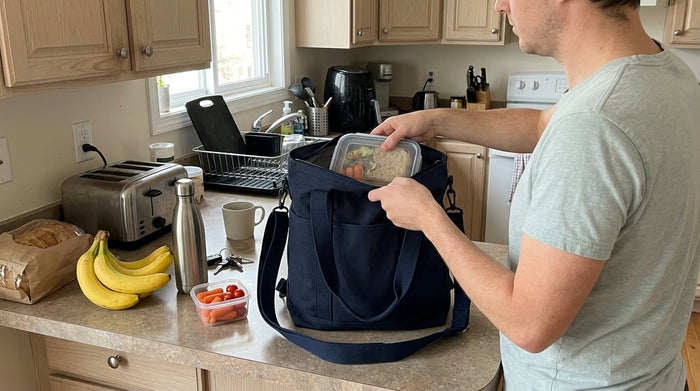
- Use a dedicated nurse lunch bag or a sealed food compartment. Food stays in one zone, everything else in another.
- Bag your spare scrubs and socks. A zip bag or washable pouch keeps clean clothes clean and gives you somewhere to put worn items at the end of the shift.
- Keep your stethoscope in its own pouch. Do not toss it loose next to snacks.
- Give your phone a home. A dedicated pocket means you are not digging through everything to find it.
- Follow your facility's policy. Some units have rules about where personal bags and food can go. Those always come first.
How to Clean Your Nurse Bag After a Shift
Cleaning is one of the most overlooked nurse bag essentials. Build a short routine so it never becomes a weekend project.
After every shift (2 minutes)
- Remove all food containers, wrappers and empty bottles.
- Take out worn socks or scrubs in their sealed bag and put them straight in the laundry.
- Wipe down your phone, badge and the handles of your bag.
- Put gel packs and your water bottle back in the freezer.
Once a week (10 minutes)
- Empty the bag completely and shake out crumbs.
- Wipe the inside lining and the food compartment with a damp cloth and mild soap, or a wipe suitable for the material.
- Let the bag dry fully with the zipper open before repacking.
- Restock your hygiene kit, snacks and pens.
This is where a wipeable lining makes a real difference. Fabric that soaks up spills is hard to keep fresh.
Best Bag for Nurses: What to Look For
The best bag for nurses tends to share a few features. Use this table as a quick filter when you shop.
| Feature | Why it matters on a 12-hour shift |
|---|---|
| Wipeable, easy-to-clean lining | Spills and crumbs wipe away instead of soaking in. |
| Waterproof or water-resistant exterior | Handles rain in the parking lot and splashes in the break room. |
| Insulated lunch compartment | Keeps food in its own zone and helps keep it at a safe temperature. |
| Multiple compartments | Separates clinical items, clean clothes, chargers and personal items. |
| Zip closure | Keeps everything in when the bag tips over in a crowded locker or car. |
| Secure inner pocket | A safe spot for keys, cards and phone, especially on the commute. |
Also think about weight. A TIME report cites a guideline that a bag should not exceed about 10% of your body weight. Pack what you use, not everything you own, and alternate shoulders.
Our Pick: The JELRIX 3-in-1 Totebag
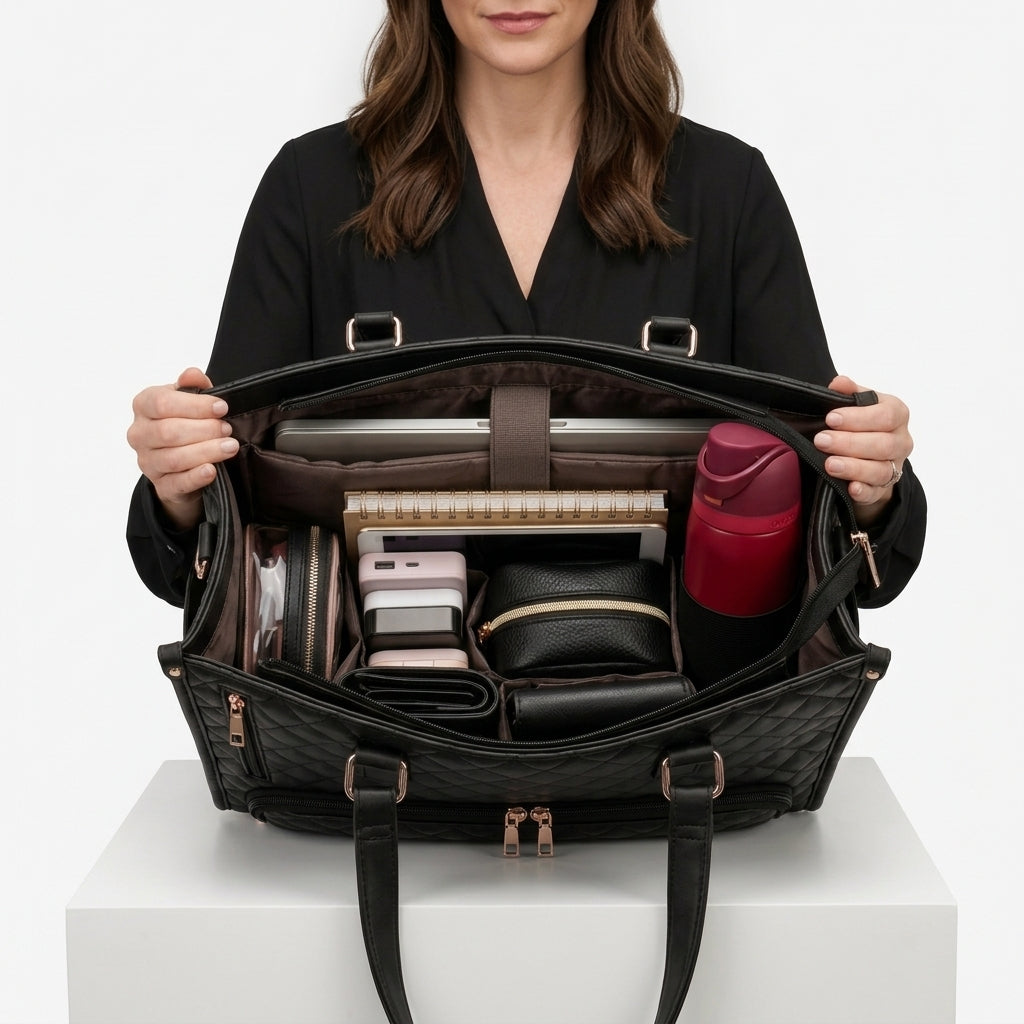
If you want one bag instead of three, the JELRIX 3-in-1 Totebag combines a work tote, an insulated lunch bag and an organizer. Its leak-proof food compartment keeps meals warm for up to 5 hours and drinks cold for up to 10 hours, so your food stays separate from your work gear.
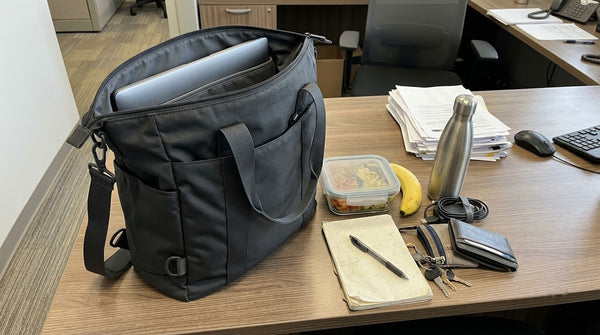
Inside, there are 7 interior compartments plus a hidden zip pocket for keys and cards. The exterior is waterproof and the lining is easy to clean, which helps with that after-shift wipe-down. It fits a laptop up to 17" if you also do charting, classes or admin from home.
It suits nurses and healthcare workers who want a structured, polished bag for the commute that still handles lunch. If you need a large backpack for heavy gear, it may not be your best fit. It comes in several colors, is designed by a woman, and is covered by a 30-day return guarantee under our refund policy. Bundle savings are available if you are buying for coworkers too.
Keep Reading
Long shifts call for smart food planning. If you want a hot meal on your break, read how to keep lunch warm without a microwave. For easy cold options, see our 25 cold lunch ideas for work, and keep your lunch bag fresh with our guide on how to clean an insulated lunch bag. Nurses returning from parental leave may also find our pump bag essentials checklist useful.
Make the most of short breaks with why you need a real lunch break, and see how much your packed meals save you with how to save money by packing lunch for work.
Frequently Asked Questions
What should a nurse pack for a 12 hour shift?
Pack your badge, pens, stethoscope and any clinical tools your role needs, plus a phone charger, a full water bottle, a main meal and several quick snacks. Add comfort items such as spare or compression socks, lip balm, hand cream, hair ties and a light layer. A small hygiene kit with deodorant and a toothbrush helps you feel fresh late in the shift.
What is the best bag for nurses?
The best bag for nurses is one that is easy to clean, keeps food separate from work items and closes securely. Look for a wipeable lining, a waterproof exterior, an insulated lunch compartment, several organizing pockets and a zip closure. A structured shape helps you find things quickly, and keeping the total weight light makes long shifts easier on your shoulders.
How do nurses keep their lunch cold without a fridge?
Use an insulated lunch bag or compartment with at least two cold sources, such as gel packs or a frozen water bottle, as the USDA recommends. Pack food straight from the fridge, eat the most perishable items first, and save shelf-stable snacks for later. If perishable food has been warm for more than two hours, throw it out.
What are good lunch ideas for nurses working 12 hour shifts?
Choose meals that taste good cold or need only one quick reheat. Grain bowls, wraps, pasta salads, soups in a preheated insulated jar and bento-style boxes all work well. Add easy snacks such as nuts, fruit, cheese sticks, yogurt and granola bars so you can eat in short bursts when your main break gets delayed.
How often should you clean your nurse bag?
Do a quick reset after every shift: remove food, wrappers and worn clothes, and wipe your phone, badge and bag handles. Once a week, empty the bag fully, wipe the lining and food compartment with mild soap and water, and let it dry with the zipper open. A wipeable lining makes this much faster.
Sources: USDA, Use an Insulated Lunch Bag to Keep Meals Safe; TIME, heavy bag health risks.