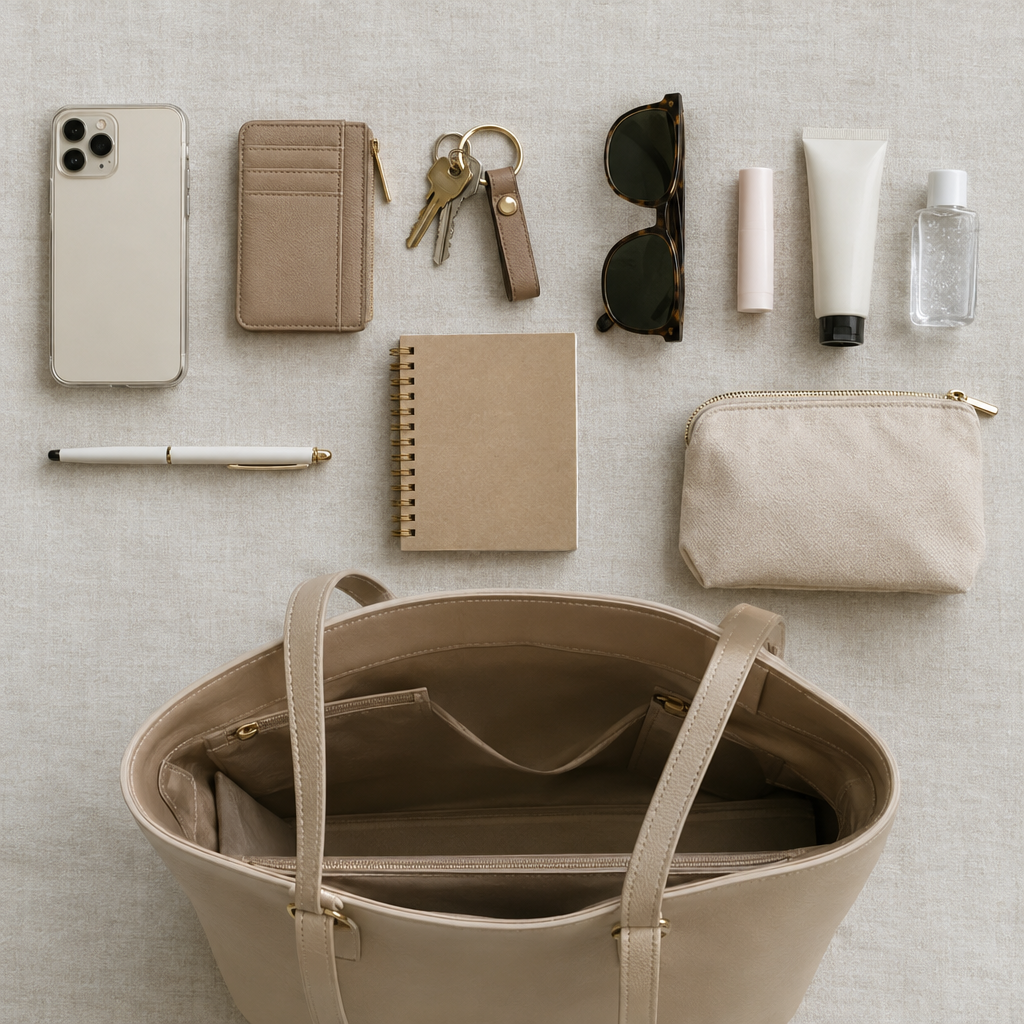
Some days your bag saves you. You have a plaster when your new shoes rub, a pen when the form needs signing, a snack when the meeting runs over. Other days you reach in for something simple, like lip balm or a hair tie, and it is not there. If you have ever wondered what the essentials really are, this guide answers the question many women type into Google: what should every woman carry in her purse?
The goal is not to carry everything. A bag stuffed with "just in case" items gets heavy fast and becomes impossible to search. The goal is a short, smart list of items that solve the most common everyday problems, packed so you can find them in seconds. Below is a practical checklist, grouped by category, plus tips on keeping it light.
The Non-Negotiables: What Goes in Every Day
These are the items you should never leave home without. If you only pack one category, make it this one.
- Phone and, if your battery struggles, a slim power bank and short cable
- Wallet or card holder with ID, one or two cards and a little cash
- Keys on a ring you can feel for without looking
- Transit card or car key fob
- Sunglasses in a case, so they do not scratch
- Lip balm
- A pen. Someone always needs one.
Keep these in fixed spots in your bag. When every item has one "home", you stop digging. Our guide on how to organize a tote bag so you can actually find things shows how to set up simple zones.
The Health and Hygiene Pouch
This small pouch solves more daily problems than anything else in your bag. Most women keep these items together in one zip pouch:
- Hand sanitizer. The U.S. Centers for Disease Control and Prevention (CDC) recommends a hand sanitizer with at least 60% alcohol, and notes that washing with soap and water is still best when hands are visibly dirty or greasy.
- Tissues or a small pack of wipes
- Period products, even if you are not expecting your period. You may help a friend or a coworker.
- Painkillers you normally use, in their original packaging
- Any daily medication you need, plus an extra dose if you might be out late
- A few adhesive bandages (plasters) for blisters and small cuts
- Mints or gum
- Mini deodorant
If you want to go a step further, the American Red Cross shares a full list of items for a home first aid kit. You do not need all of it in your purse, but it is a helpful reference for choosing a few small items to carry.
The Beauty and Touch-Up Kit
Keep it small. You are touching up, not doing a full routine.
- Sunscreen. The U.S. Food and Drug Administration (FDA) advises using a broad-spectrum sunscreen with SPF 15 or higher and reapplying at least every two hours, more often if you sweat. A mini tube makes that easy.
- Hand cream, especially in winter
- A compact mirror
- One lip color and maybe a mini concealer
- Blotting papers if your skin gets shiny
- Hair ties, bobby pins and a mini comb
The Tech Kit
Cables are the number one cause of tangled, messy bags. Put them in a small tech pouch:
- Phone cable and plug
- Slim power bank
- Earbuds in their case
- Laptop charger, if you carry a laptop
If a laptop is part of your daily load, read can you carry a laptop in a tote bag? to keep it safe from bumps and spills.
Food and Drink
Hunger is one of the most common "bag emergencies". A small snack can save you from a headache, a bad mood or an expensive impulse purchase.
- A reusable water bottle
- One or two snacks that do not melt or crush: nuts, a granola bar, crackers, dried fruit
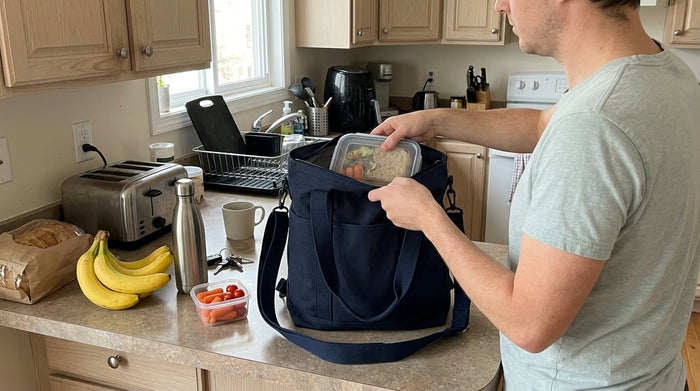
- Lunch, if you are heading to work, in a sealed, insulated section
Keep food away from your phone, papers and laptop. Perishable food also needs to stay cold. The U.S. Department of Agriculture (USDA) explains that bacteria grow fastest in the "danger zone" between 40°F and 140°F, so an insulated lunch section with an ice pack matters. Our guide on how long an insulated lunch bag keeps food cold explains more.
"Just in Case" Items Worth Their Weight
These are small, light and useful often enough to earn a spot:
- A foldable tote or shopping bag
- A stain remover pen
- A small notebook
- A safety pin and a few spare buttons
- A compact umbrella if you live somewhere rainy
- Emergency contact details written on a card, in case your phone dies
What You Can Probably Leave at Home
Every item you add makes your bag heavier. A heavy bag carried on one shoulder every day can cause shoulder and neck strain. TIME reported on the health risks of a heavy purse, and our guide on shoulder pain from a heavy purse explains how heavy a bag should be. Things that often ride along for no reason:
- Old receipts and wrappers
- A full-size makeup bag
- Multiple pens that do not work
- A heavy wallet full of loyalty cards (move them to your phone)
- Several bottles of water
- Items for a trip that already happened
Purse Essentials by Lifestyle
For office workers
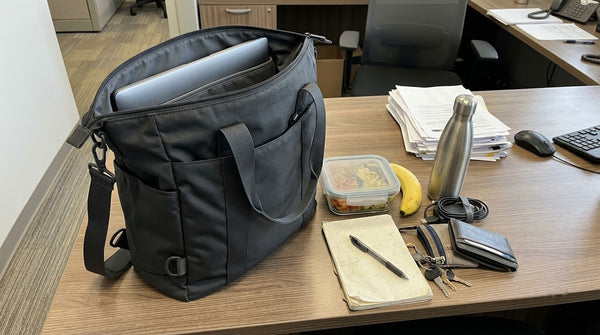
Add your badge, a notebook, laptop and charger, and lunch. For a full list of in-office day items, see our return to office essentials guide.
For moms
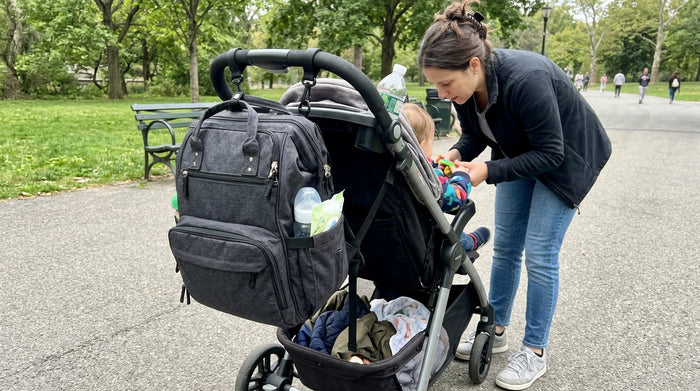
Add wipes, a snack for your child, a small toy or book, and a spare top for yourself. Our new guide on working mom bag essentials covers how to carry work and kid items in one bag.
For students
Add your student ID, highlighters and a phone stand. See our college bag essentials checklist.
For travel days
Add your passport, boarding pass, a travel-size toiletry bag and a scarf for cold planes. See our guide on what to pack in your personal item bag.
How to Keep Your Purse Essentials Organized
- Use three small pouches: health and hygiene, beauty, and tech.
- Give daily essentials fixed pockets: keys, phone and wallet should always live in the same place.
- Keep valuables in a zip pocket on the side closest to your body.
- Keep food in its own sealed section.
- Do a weekly clean-out: remove trash, restock pouches, wipe the lining.
Want a ready-made routine? Our 10-minute morning checklist walks you through packing in the same order every day.
Purse Essentials by Season
Your core kit stays the same all year, but a few seasonal swaps make a big difference.
Winter
- A rich hand cream and a tinted lip balm for dry, cold air
- Thin gloves that fold flat
- Tissues, because cold weather means runny noses
- A small travel mug for a hot drink on the commute
Summer
- Sunscreen, sunglasses and a foldable hat
- A larger water bottle
- Blotting papers and a mini deodorant
- Snacks that do not melt, such as nuts or crackers instead of chocolate
Rainy season
- A compact umbrella
- A slim pouch to keep your phone and documents dry
- A bag with a water-resistant exterior. Our guide on how to clean a tote bag and protect it from rain has more tips.
Common Purse Mistakes (and Easy Fixes)
- Everything loose at the bottom. Use three small pouches so items have a home.
- Carrying for every possible scenario. Pack for your actual day, not every day of the year.
- Food mixed with everything else. A leaking yogurt can ruin a phone or a notebook. Keep food sealed and separate.
- Never cleaning the bag. Crumbs, receipts and grit build up quickly. Clear it out weekly.
- Valuables in an open top pocket. Keep your wallet and phone in a zip pocket close to your body, especially on busy public transport.
Building Your Kit on a Budget
You do not need to buy a whole new set of products. Start with what you already have at home: a small pouch from a gift set, travel-size bottles you can refill, plasters from your first aid box, a pen from the kitchen drawer. Decant hand cream and sunscreen into small refillable tubes. Buy painkillers and plasters in larger packs and refill your pouch from them. A well-stocked purse kit can cost very little if you build it gradually.
Our Pick: A Bag With a Place for Everything
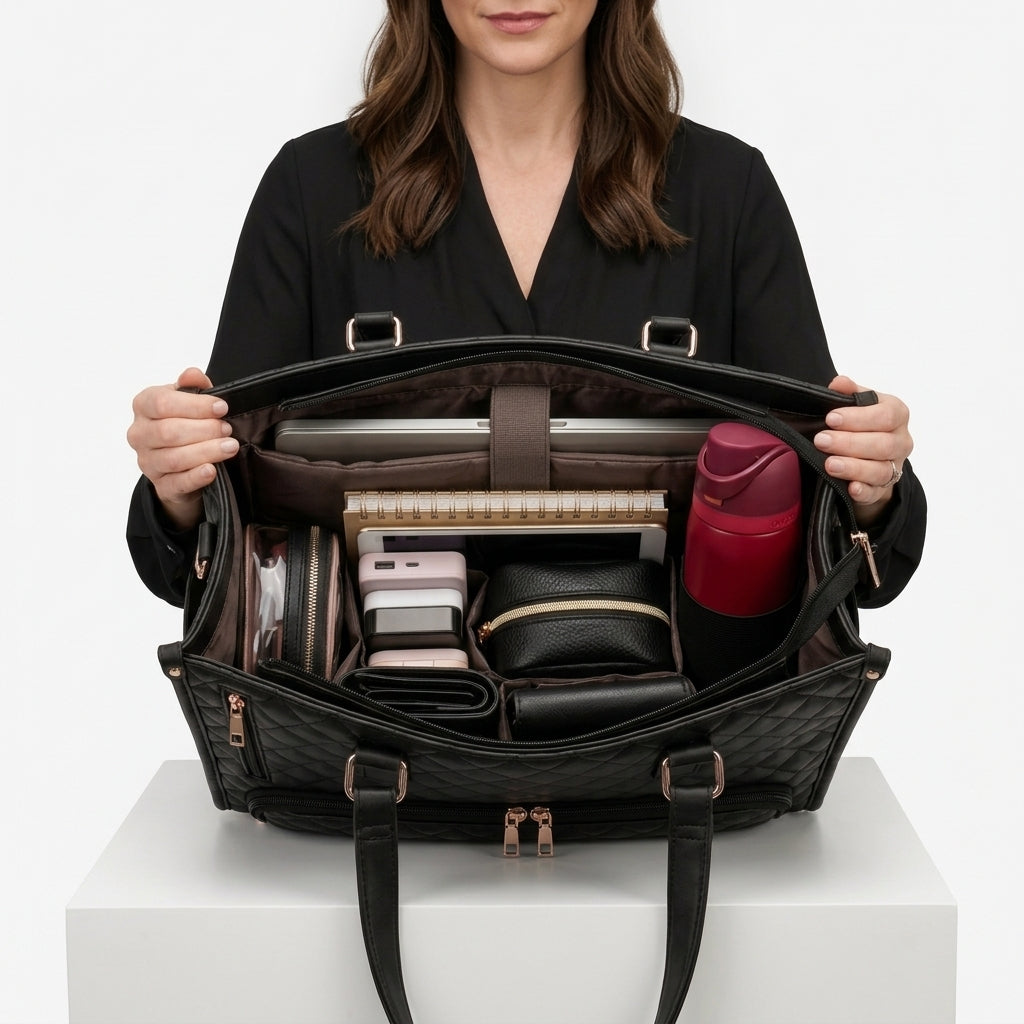
Pouches help, but a bag with built-in structure makes it much easier to keep your essentials in order. The JELRIX 3-in-1 Totebag was designed to hold a whole day in one bag:
- 7 smart compartments plus a secure zip pocket, so your essentials each have a home.
- Space for laptops up to 17".
- A leak-proof insulated food compartment that keeps meals warm for up to 5 hours or cold for up to 10, separate from everything else.
- A waterproof exterior and easy-to-clean lining.
- A stylish look that goes from work to weekends.
It ships in 3 to 5 days with tracking and comes with 30-day easy returns.
Printable Purse Essentials Checklist
- ☐ Phone + power bank
- ☐ Wallet, ID, cards, a little cash
- ☐ Keys and transit card
- ☐ Sunglasses
- ☐ Lip balm, hand cream, sunscreen
- ☐ Hand sanitizer and tissues
- ☐ Period products, painkillers, plasters
- ☐ Medication
- ☐ Pen and small notebook
- ☐ Water bottle and snack
- ☐ Hair ties
- ☐ Foldable shopping bag
Key Takeaways
- Carry a short list of essentials that solve everyday problems, not every possible "just in case" item.
- Group small items into three pouches: health and hygiene, beauty, and tech.
- Give your keys, phone and wallet fixed pockets so you never dig.
- Keep food sealed and cold, away from your phone and papers.
- Clear out your bag every week to keep it light.
Frequently Asked Questions
What is the most important thing to keep in a purse?
Your phone, ID, a payment card and your keys. After that, the most useful extras are a small health pouch with hand sanitizer, painkillers, plasters and period products, plus water and a snack.
What should every woman carry in her purse?
Phone, wallet with ID and cards, keys, sunglasses, lip balm, hand sanitizer, tissues, period products, painkillers, a few plasters, a pen, a water bottle and a snack. Add medication and sunscreen if you need them.
How do I keep my purse from getting too heavy?
Carry mini sizes, move loyalty cards to your phone, take out trash and receipts every week, and only carry items you have used in the last two weeks. Use a bag with compartments so you can see what you are carrying.
What should be in a purse emergency kit?
Plasters, painkillers, hand sanitizer, tissues, period products, a safety pin, a stain remover pen, mints and an emergency contact card. Keep them together in one small pouch.
Should I carry hand sanitizer in my purse?
It is a useful item to carry. The CDC recommends hand sanitizer with at least 60% alcohol, and washing hands with soap and water when they are visibly dirty or greasy.
How do I organize the inside of my purse?
Group small items into three pouches (health, beauty, tech), give your keys, phone and wallet fixed pockets, keep valuables in a zip pocket and keep food in a separate sealed section.