Going back to work after having a baby is a big moment. For many moms, one of the biggest worries is not the inbox, it is pumping. Where will you pump? How will you keep the milk cold? What if you forget a part and the whole session falls apart? If you are searching for pump bag essentials and a clear list of what to pack for pumping at work, take a breath. This guide walks you through everything, step by step.
A well-packed pump bag will not make the transition back to work easy, but it can make it a lot less stressful. When everything has a place and the milk has a safe, cold home, pumping becomes one more routine instead of a daily scramble.
Quick note: this article is general information, not medical advice. Your doctor, midwife or a lactation consultant (IBCLC) can give advice for your situation.
The Core Pump Bag Checklist
Start with the things you cannot pump without. If one of these is missing, the session does not happen.
- Breast pump (motor unit, or a wearable pump)
- Flanges / breast shields in the right size
- Valves and membranes
- Tubing (if your pump uses it)
- Bottles or collection cups with lids
- Charger or power cord, plus a fully charged battery if your pump has one
- Breast milk storage bags or bottles for transporting milk home
- A cooler section with ice packs to keep milk cold
Small parts like valves and membranes are the ones most often forgotten or lost. Keep a full spare set in a small zip pouch that never leaves your bag. It takes up almost no space and can save your whole day.
Comfort and Convenience Extras
These are not strictly required, but most pumping moms say they make a real difference:
- Hands-free pumping bra, so you can eat, type or rest while you pump
- Nursing pads and a spare top, in case of leaks
- Nipple cream or balm
- A large water bottle. Many moms feel very thirsty while pumping.
- Snacks, such as nuts, granola bars, cheese and crackers or fruit
- A small towel or cloth to lay out parts and catch drips
- A cover or scarf, if you will pump in a shared space
- A photo or short video of your baby on your phone. Many moms find this helps with letdown.
- Headphones, to relax or catch up on a podcast
Cleaning Supplies for Pumping at Work
Cleaning pump parts at work can be the trickiest part, especially if there is no private sink. Pack:
- Microwave steam bags (if you have access to a microwave)
- Pump part wipes made for breast pump parts
- A small bottle brush and a travel-size bottle of dish soap
- A clean, dedicated drying mat or paper towels
- Two wet bags or zip bags: one for clean parts, one for used parts
- Hand sanitizer. Always wash or sanitize your hands before handling parts.
Some moms find it easier to bring several sets of parts for the day and take them all home to wash, instead of cleaning between sessions at work. Follow your pump manufacturer's instructions and your healthcare provider's advice on cleaning.
How to Keep Breast Milk Cold at Work
This is the question most moms worry about. Here is what the U.S. Centers for Disease Control and Prevention (CDC) says about storing freshly expressed breast milk:
- At room temperature (77°F / 25°C or colder): up to 4 hours
- In the refrigerator (40°F / 4°C): up to 4 days
- In an insulated cooler bag with frozen ice packs: up to 1 day (24 hours) when you are traveling
So if your workplace has a fridge you are comfortable using, you can store milk there and move it to your cooler for the trip home. If there is no fridge, or you prefer not to use a shared one, an insulated section with frozen ice packs keeps milk safely cold until you get home.
A few tips to make the cold section work better:
- Freeze ice packs overnight, every night. Keep two sets so one is always frozen.
- Put ice packs above and below the milk, not just to one side.
- Keep the cooler closed as much as possible.
- Label each bag or bottle with the date and time you pumped.
- Keep milk away from your hot lunch. If you bring hot food, it needs its own space.
Want to know how long your bag will actually stay cold? Our guide on how long an insulated lunch bag keeps food cold explains what affects cooling time and how to make ice packs last longer.
Know Your Rights About Pumping at Work
In the United States, the PUMP for Nursing Mothers Act expanded federal protections for workers who need to pump. Under the federal law, most employees are entitled to reasonable break time to pump for up to one year after the child's birth, and a private space to pump that is shielded from view, free from intrusion, and is not a bathroom. The U.S. Department of Labor has details on who is covered.
If you work in Canada, the UK or Australia, the rules are different and depend on where you live and work. Check your government's official guidance, and talk to your HR team before you return so a space and schedule are ready on your first day.
Pumping on the Commute
Some moms with long commutes pump in the car or on the train using a wearable or hands-free pump. If you do this, keep a cover or scarf handy, pack an extra set of parts, and keep milk in your insulated section with frozen ice packs for the trip. Never pump in a way that distracts you while driving. A quiet, organized bag makes commute pumping much easier. Our commuting tips for city workers also help keep your pump and laptop safe on busy transit.
How to Plan Your Pumping Schedule
Many moms try to pump at around the times their baby would normally feed. A lactation consultant can help you set a schedule that protects your supply. Practical tips:
- Block pumping time in your calendar as recurring meetings, so colleagues do not book over it.
- Allow time for setup and cleanup, not just the pumping itself.
- Pump right before you leave work if you have a long commute.
- Do a practice run at home or during a trial day before your first full week back.
How to Organize Your Pump Bag
A pump bag gets messy fast because there are so many small parts. Use zones:
- Pump zone: motor, charger and tubing in one section.
- Parts zone: clean parts in one labeled pouch, used parts in another.
- Cold zone: ice packs and milk storage, in an insulated section.
- Comfort zone: nursing pads, nipple cream, spare top.
- Food zone: snacks and water bottle.
For more ideas on zones and pouches, see our guide on how to organize a tote bag so you can actually find things.
One Bag Instead of Three
Many pumping moms end up carrying a pump bag, a cooler bag, a laptop bag and a handbag. That is a lot to carry, especially on a commute, and it can lead to shoulder and back strain. If that sounds like you, our article on the hidden cost of the morning juggle will feel familiar.
Look for one bag that can do several jobs. Key features:
- A separate insulated, leak-proof section for milk and ice packs
- A padded space for your laptop
- Several interior pockets for pump parts and pouches
- A zip closure for privacy and security
- A wipe-clean lining, because spills of milk or water happen
- A professional look, so you do not feel like you are carrying a "baby bag" into a meeting
Our Pick: A Work Tote With an Insulated Section
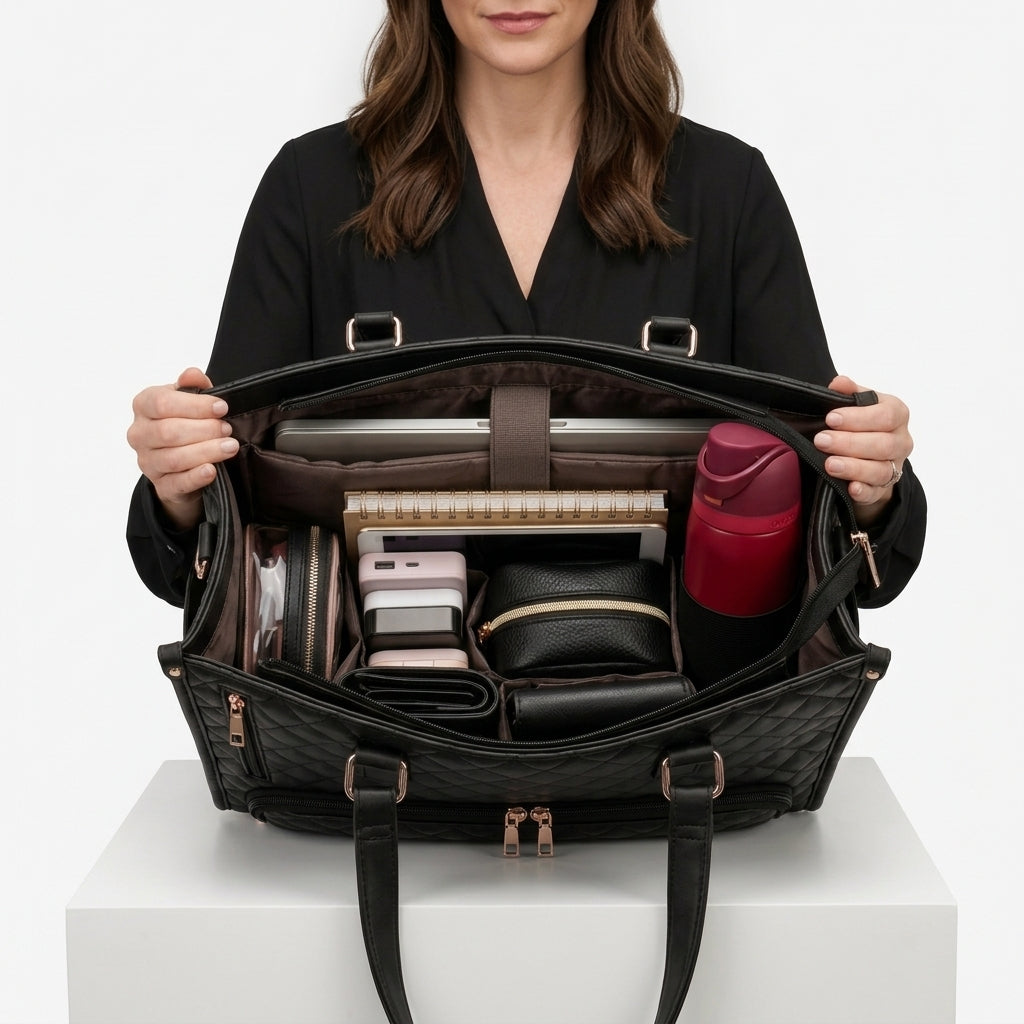
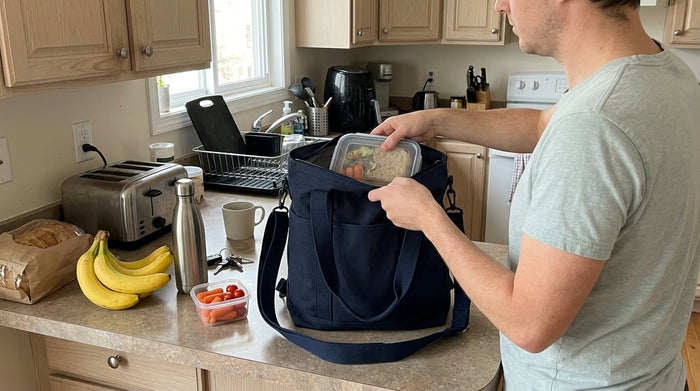
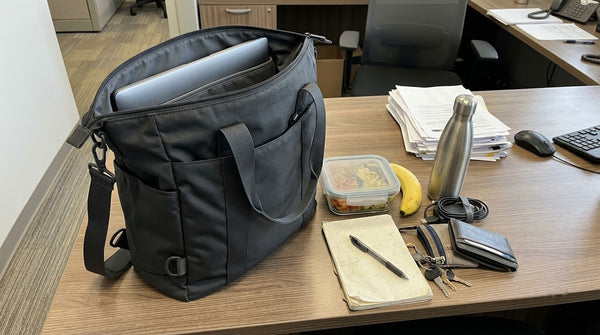
The JELRIX 3-in-1 Totebag was designed by a woman for days when you need to carry more than one bag's worth of life. It combines a work tote, an insulated lunch bag and an organizer in one.
- Insulated, leak-proof compartment that keeps contents cold for up to 10 hours. Use it with frozen ice packs, and follow CDC guidance for milk storage.
- Fits laptops up to 17", so you can head straight from pumping to your desk.
- 7 smart compartments plus a secure zip pocket for pump parts, pouches and personal items.
- Waterproof exterior and easy-to-clean lining.
- A stylish, professional look that goes from the office to the weekend.
Depending on your pump, you may still want a dedicated pump case inside, and the tote gives it a home. It ships in 3 to 5 days with tracking and comes with 30-day easy returns.
A Thoughtful Gift for a Mom Going Back to Work
If you are shopping for a friend or coworker who is returning from parental leave, a practical bag can be one of the most useful gifts she gets. Add a few frozen ice packs, a pack of storage bags and her favorite snacks. For more ideas, see our practical gifts for working women guide.
The Night-Before Pump Bag Routine
- Wash and dry all pump parts.
- Pack clean parts into the "clean" pouch.
- Check the spare valves and membranes pouch.
- Charge the pump.
- Freeze the ice packs.
- Pack snacks and fill your water bottle.
- In the morning, add the ice packs and your lunch, and go.
Keep Reading
Carrying for your baby and your job in one bag? Our working mom bag essentials guide covers the two-layer packing system. Short on breaks? Read why you need a real lunch break.
Frequently Asked Questions
What should I pack in my pump bag for work?
Pack your pump, flanges, valves and membranes, tubing, bottles, charger, milk storage bags, an insulated cooler section with frozen ice packs, a spare set of small parts, cleaning wipes or supplies, nursing pads, a hands-free pumping bra, water and snacks.
How long can breast milk stay in an insulated bag with ice packs?
According to the CDC, freshly expressed breast milk can be stored in an insulated cooler bag with frozen ice packs for up to 1 day (24 hours) when traveling. Move it to a fridge or freezer as soon as you get home.
Do I need a fridge at work to store breast milk?
Not necessarily. An insulated cooler bag with frozen ice packs can keep milk cold during the workday, according to CDC guidance. Many moms still use a workplace fridge when one is available.
Where should I pump at work?
In the U.S., the federal PUMP Act requires most employers to provide a private space that is shielded from view, free from intrusion and not a bathroom. Talk to your HR team before you return. Rules in Canada, the UK and Australia differ, so check local guidance.
How do I clean pump parts at work?
Options include washing with a small brush and dish soap at a sink, using microwave steam bags, using pump part wipes, or bringing extra sets of parts and washing them all at home. Always follow your pump manufacturer's instructions.
Sources: CDC, "Breast Milk Storage and Preparation": cdc.gov; U.S. Department of Labor, "FLSA Protections to Pump at Work": dol.gov. This article is general information and not medical or legal advice.