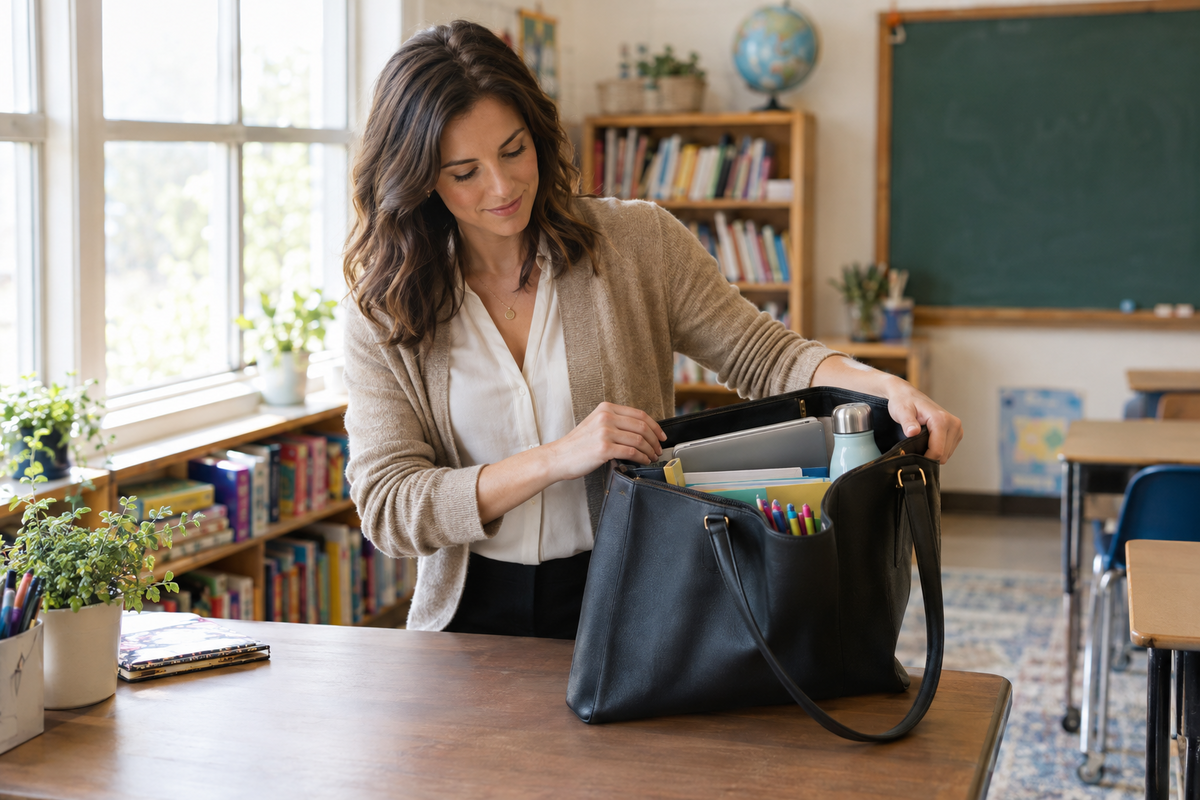
You leave the house with a laptop, a stack of ungraded essays, a water bottle, your lunch, a bag of markers you bought with your own money, and a sweater because the classroom thermostat has a mind of its own. By second period you need a pen that actually works, and it is somewhere at the bottom of a bag that has turned into a junk drawer.
Getting your teacher bag essentials right is not about owning more stuff. It is about carrying the right things, in the right order, so you can grab what you need in the 30 seconds between bells. This guide walks through a teacher's real day, gives you a complete checklist, and shows you how to pack lunch, organize your tote and choose a bag that survives the school year.
A Teacher's Day, Seen Through Your Bag
Most work bags handle a commute and a desk. A teacher bag has to keep up with a longer, messier day:
- Before school: laptop, charger, lesson materials, photocopies, coffee or tea.
- During class: pens, sticky notes, a clicker or adapter, tissues, hand sanitizer, a quick snack you can eat at your desk.
- Lunch: a meal that has to stay cold or warm until a short break, often eaten in the classroom.
- Planning period: your grading kit, planner and whatever you are photocopying next.
- After school: clubs, coaching, meetings, parent conferences, then the grocery store on the way home.
That is a lot of jobs for one bag. Smart teacher bag essentials are grouped by when you use them, so nothing hides behind anything else.
The Complete Teacher Bag Essentials Checklist
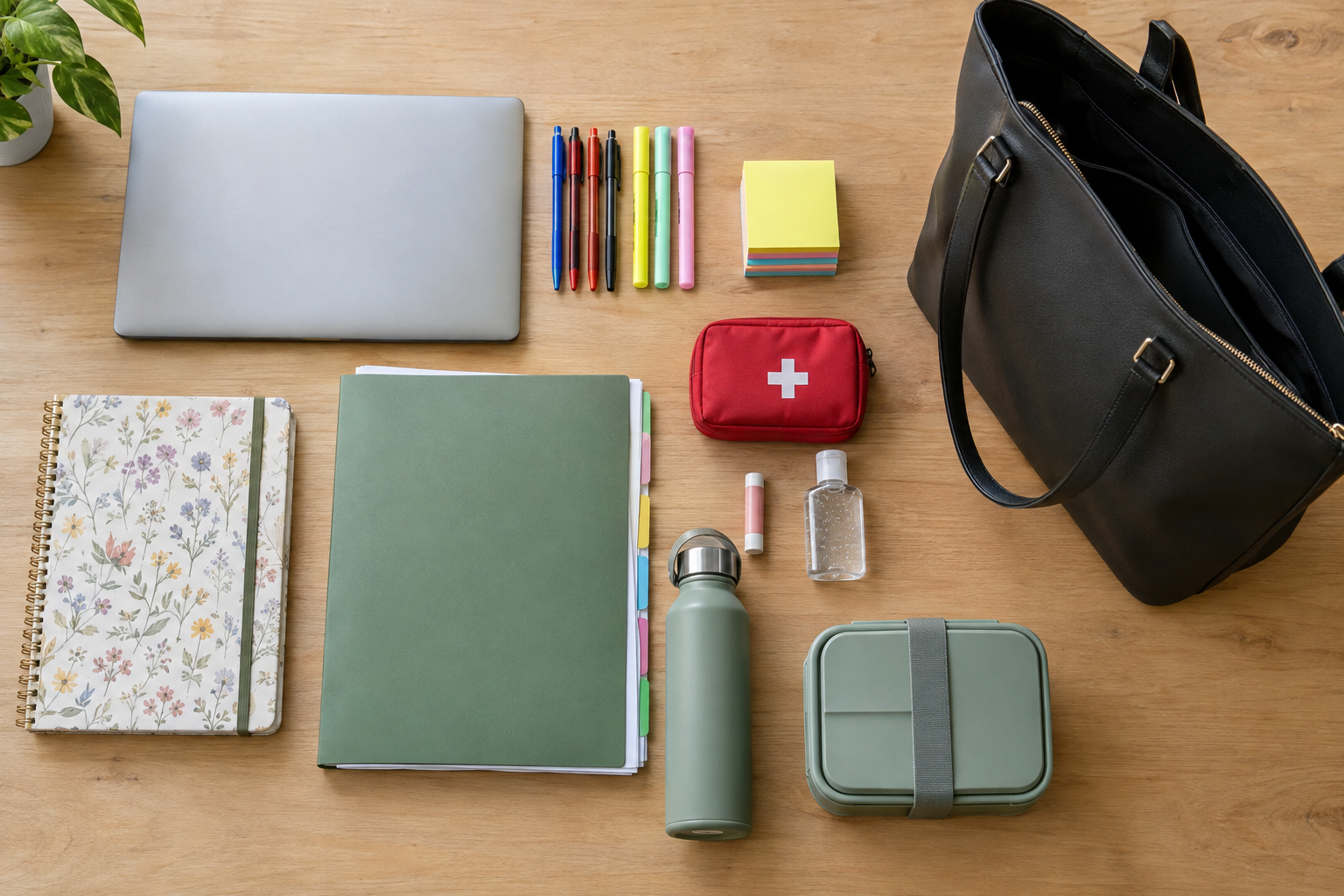
Use this as your master list of what to keep in your teacher bag. Pick what fits your grade level and subject.
Classroom basics
- Pens in two colors, pencils, a couple of dry-erase markers
- Sticky notes and a small pad of paper
- Highlighters
- Paper clips and a mini stapler or binder clips
- Lanyard or ID badge and your classroom keys
- A slim folder for today's handouts
Grading kit
- Your favorite grading pens (and a backup)
- A sturdy folder or expanding file for papers going home
- Rubrics or answer keys
- Stamps or stickers if you teach younger students
- Planner or notebook for tracking grades and to-dos
Tech
- Laptop or tablet in a padded sleeve or compartment
- Charger and a spare cable
- Small power bank for your phone
- Any adapter you need for the classroom projector or screen
- Earbuds for planning periods or the commute
Personal care
- Refillable water bottle (talking all day is thirsty work)
- Throat lozenges or lip balm
- Hand sanitizer and hand cream
- Tissues
- A cardigan or light layer
- Comfortable flats if you wear heels for meetings
Emergency kit
- Pain reliever you normally use
- Bandages
- Stain-remover pen
- Safety pins, a hair tie and a small sewing kit
- Spare face mask
- Period products
Snacks
- Nuts, trail mix or a granola bar
- Fruit that travels well, like apples or clementines
- Cheese sticks or yogurt (these need to stay cold)
If you want a general work-bag routine for the morning rush, our 10-minute morning checklist for packing a work tote pairs well with this list.
How to Organize Your Teacher Tote Bag So You Can Grab Things Between Periods
A checklist only works if you can find things fast. Try organizing your teacher tote bag in zones:
- Grab zone (top or outer pocket): keys, badge, phone, a pen, lip balm. Anything you reach for more than three times a day.
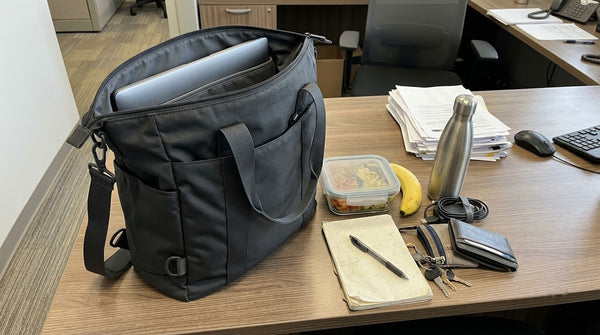
- Work zone (main compartment): laptop against the back panel, folders standing upright next to it, planner in front.
- Small-items zone (interior pockets): chargers, sticky notes, emergency kit, hand sanitizer. Give each item a fixed pocket and keep it there.
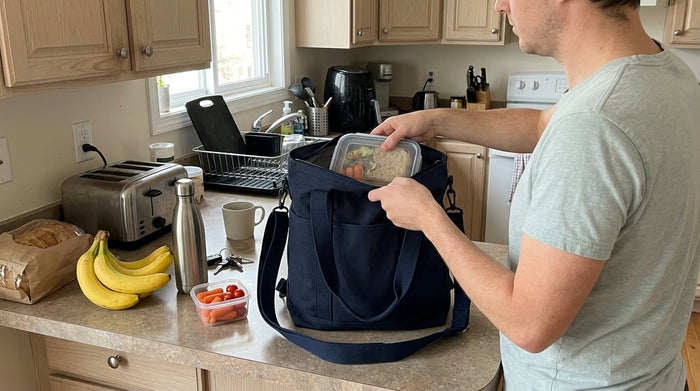
- Food zone (separate compartment): lunch, snacks and anything that needs to stay cold, kept away from papers and electronics.
- Secure zone (zip pocket): wallet, cards and anything valuable you do not want visible when your bag sits next to your desk.
A few habits make the zones stick:
- Use small pouches in different colors for tech, first aid and personal care.
- Keep papers in one folder only. Loose papers are what turn a bag into chaos.
- Do a two-minute reset every Friday: empty crumbs, toss old handouts, restock.
Teacher Lunch Ideas When the Staff Fridge Is Full and Lunch Is Short
The staff room fridge is packed, the microwave line is long, and your short break may also include bus duty or a student who needs help. Pack for that reality.
Plan for no fridge
If you cannot count on the shared fridge, your bag becomes your fridge. The USDA recommends using an insulated lunch bag with at least two cold sources, such as gel packs or a frozen water bottle, because bacteria multiply quickly between 40°F and 140°F (4°C to 60°C). Perishable food should not sit at room temperature for more than two hours. For more on keeping food safe until noon, see our guide to meal prep for busy workdays.
Plan for no microwave
If you want something warm, preheat an insulated food container with boiling water for a few minutes, empty it, then add your food hot. The USDA suggests this approach for keeping hot food hot. Soups, chili, pasta and rice bowls work well.
Fast teacher lunch ideas you can eat in minutes
- Bento-style box: crackers, cheese, sliced turkey, cucumber and grapes. No reheating, easy to eat between tasks.
- Grain bowl: rice or quinoa, roasted vegetables, chickpeas or chicken, dressing in a small separate pot.
- Wrap cut in halves: eat one half at lunch and save the other for your planning period.
- Hot soup in a preheated container: comforting on cold days and quick to finish.
- Pasta salad: make a big batch on Sunday and portion it out for several days.
Pick foods you can eat in a few minutes and finish later if lunch gets interrupted.
What Not to Carry Home Every Night
One of the most common teacher habits is carrying everything, every day, just in case. That adds weight fast. TIME, citing a guideline from the Journal of Physical Therapy Science, notes that a bag should not exceed about 10% of your body weight. Orthopedic surgeon Dr. Sabrina Strickland of the Hospital for Special Surgery suggests considering a second bag once a load reaches around 6 to 7 pounds, and recommends alternating shoulders.
To lighten your load, leave these at school:
- Classroom supply backups: keep a full stash of pens, markers and sticky notes in a desk drawer instead of your bag.
- A spare charger: one at school, one at home, so you never carry it.
- Textbooks and teacher editions: use digital copies at home when you can.
- A desk emergency kit: a fuller version of your first-aid and personal care items lives in a drawer. Your bag only carries the mini version.
- Grading you will not actually do tonight: be honest. Bring home one stack, not three.
Your bag should carry only what moves between home and school.
How to Choose the Best Teacher Bag
The best teacher bag is the one that matches your day, not the one with the most pockets. Use these features as a checklist when you shop:
| Feature | Why it matters for teachers |
|---|---|
| Fits a laptop and folders | You need room for a school laptop plus papers without bending them. |
| Wipeable or water-resistant outside | Classroom floors, art supplies, rainy bus duty and spilled juice happen. |
| Easy-to-clean lining | Crumbs, marker ink and leaky pens are part of the job. |
| Separate food compartment | Keeps lunch away from student papers and electronics. |
| Sturdy straps and structure | A full teacher bag is heavy. Weak straps and slouchy bags fail early. |
| Interior organization | Fixed pockets let you grab things in seconds between classes. |
| A zip closure and secure pocket | Your bag often sits open near students and in shared spaces. |
| Looks professional | You go from the classroom to parent conferences and meetings. |
Also decide whether you want one bag or three. Many teachers carry a tote, a lunch bag and a grading bag. A single tote with a built-in insulated section can cut that to one.
Teacher Gift Idea: A Practical Bag for Teacher Appreciation or End of Year
If you are a parent or colleague looking for a teacher gift, practical often beats decorative. A useful bag, good grading pens or a small personal care kit gets used every day. A few tips:
- Pick neutral colors that work with most wardrobes.
- Add a handwritten note from the student. Teachers often keep these for years.
- A group gift from the class stretches the budget further.
- Fill the bag with teacher bag essentials from the checklist above, like snacks, lip balm or nice pens.
Our Pick: The JELRIX 3-in-1 Totebag
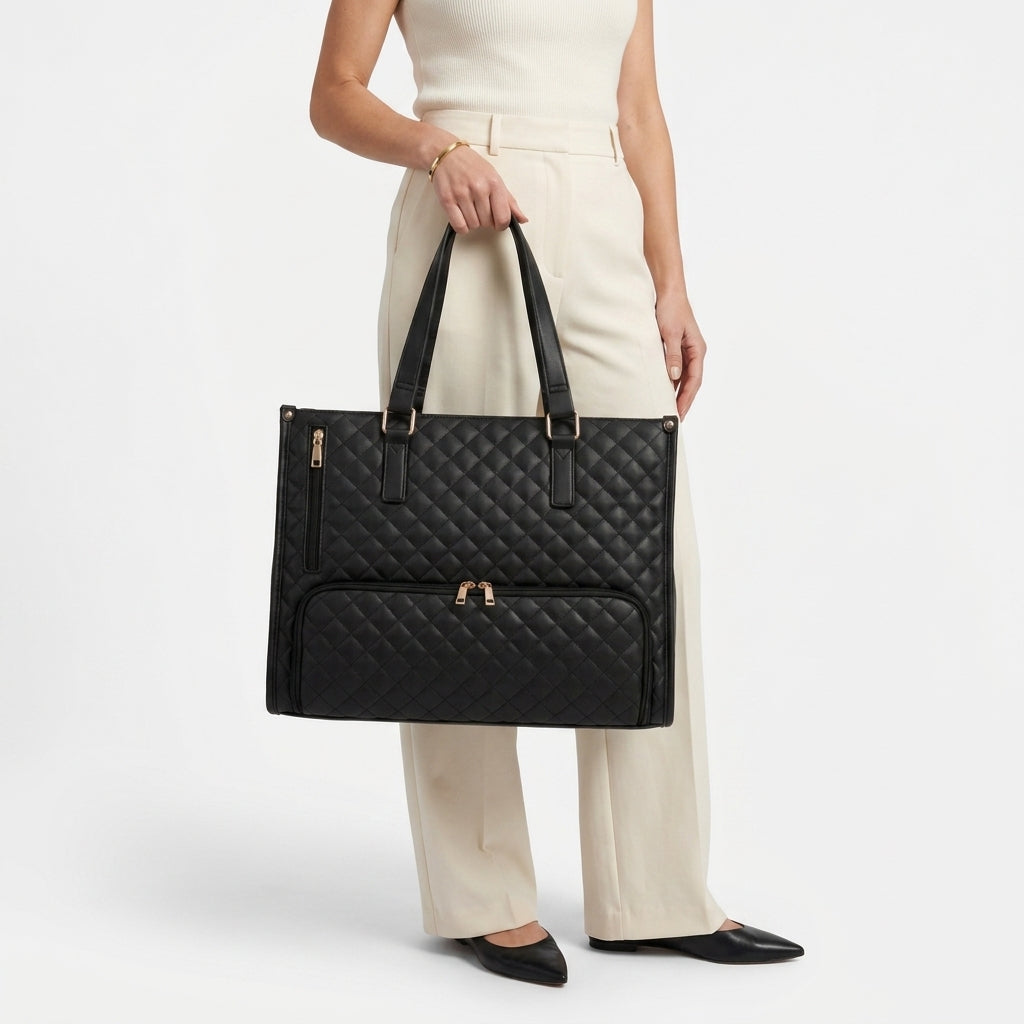
If your current setup involves a tote, a lunch bag and a folder bag, the JELRIX 3-in-1 Totebag was designed by a woman to combine a work tote, an insulated lunch bag and an organizer in one. It fits laptops up to 17", has 7 interior compartments for pens, chargers and your mini emergency kit, and includes a hidden anti-theft zip pocket for your wallet and keys.
The food section is insulated and leak-proof, and it keeps meals warm up to 5 hours and drinks cold up to 10 hours, which helps on days the staff fridge is full. The exterior is waterproof and the inside lining is easy to clean. It has a structured leather finish, so it looks right at a parent conference too.
It suits teachers who want one bag instead of three. If you only carry a light planner, it may be more bag than you need. It comes with a 30-day money-back guarantee, and there are bundle savings if you are buying for coworkers or as a group teacher gift.
Keep Reading
A teacher tote fills up fast, so a simple system helps. Our guide on how to organize a tote bag shows how to set up zones for papers, supplies and lunch. For quick, no-reheat meals between classes, try our 25 cold lunch ideas for work. And if your shoulder aches by Friday, read shoulder pain from a heavy purse and how to fix it.
Teachers often get the shortest breaks of all. Read why you need a real lunch break (and how to take one), and keep your tote looking fresh with how to clean a tote bag.
Frequently Asked Questions
What should a teacher keep in their bag?
Core teacher bag essentials are pens, sticky notes, a planner, a laptop and charger, a folder for papers, a water bottle, snacks and lunch, hand sanitizer, tissues, lip balm and a small emergency kit with bandages and a pain reliever. Keep backup supplies at school so your bag stays lighter.
What is the best teacher bag?
The best teacher bag fits a laptop and folders, has a wipeable exterior and easy-to-clean lining, sturdy straps and a separate food compartment. Interior pockets help you find things quickly, and a zip closure keeps belongings secure. Choose one that matches how much you actually carry each day.
How do teachers keep their lunch cold without a fridge?
Use an insulated lunch bag with at least two cold sources, such as gel packs or a frozen water bottle, as the USDA recommends. Perishable food should not stay at room temperature longer than two hours. Pack foods that stay safe and tasty cold, like grain bowls, wraps and bento-style boxes.
How do I organize my teacher tote bag?
Organize your teacher tote bag into zones: an outer pocket for keys and your badge, the main compartment for laptop and folders, interior pockets for small items, a separate section for food and a zip pocket for valuables. Use color-coded pouches and do a quick reset every Friday.
What is a good gift for a teacher at the end of the year?
Practical gifts tend to be appreciated most: a sturdy work tote, quality grading pens, a refillable water bottle or a small self-care kit. Pair the gift with a handwritten note from the student. A group gift from the class lets families pool money for something the teacher will use daily.
Sources: USDA, "Use an Insulated Lunch Bag to Keep Meals Safe"; TIME, "Heavy Purse Health Risks".