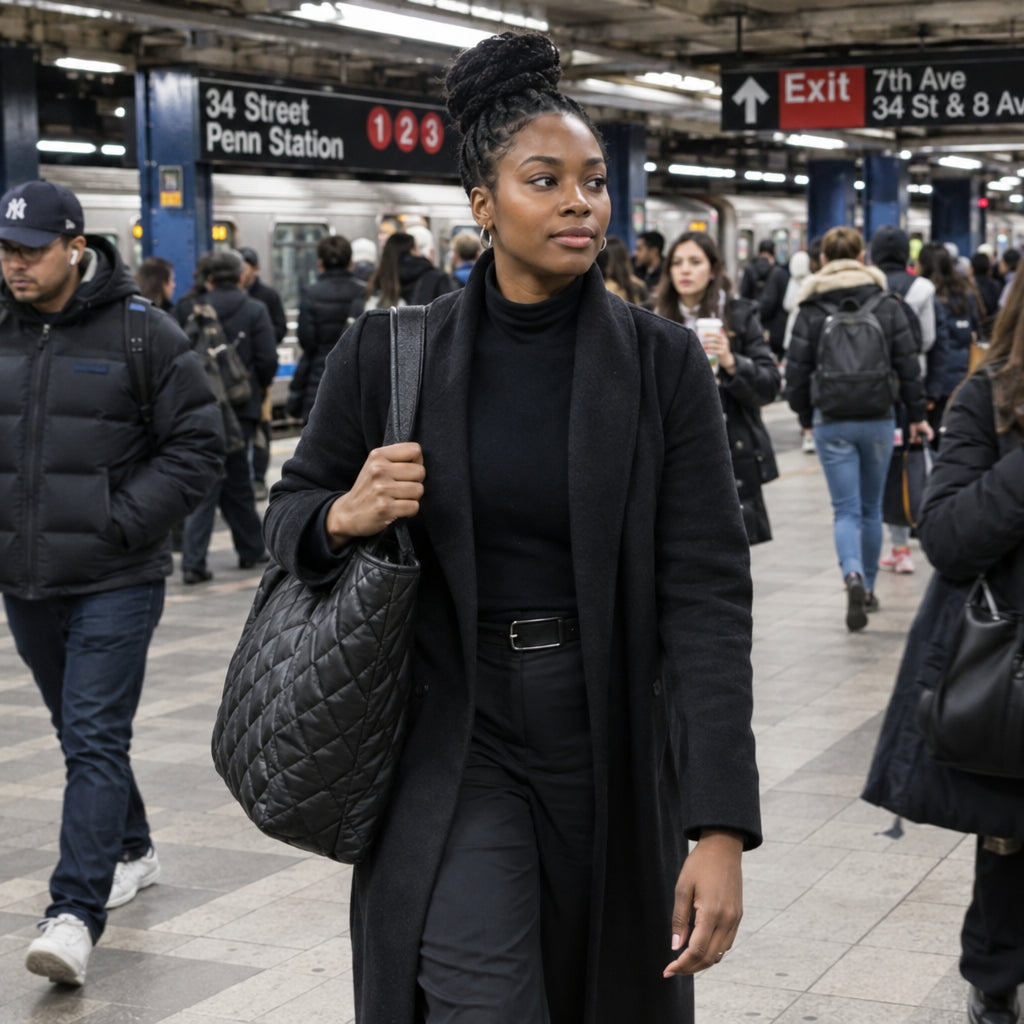
City commuting has its own rhythm: packed subway cars, crowded bus stops, escalators at rush hour, a quick coffee stop on the way in. That rhythm is exactly what pickpockets rely on. Crowds hide quick hands, and a distracted commuter with an open tote is an easy target.
The good news: most commuter theft is a crime of opportunity. You don't need to be paranoid. You need a few habits that remove the opportunity. Here are seven practical anti-theft habits for city workers, plus what to look for in an anti-theft bag and what to do if something does go missing.
Why Commuters Are Easy Targets
Pickpocketing and bag snatching thrive where three things meet: crowds, distraction and routine.
- Crowds make bumping into someone completely normal, so a hand near your bag doesn't raise alarms.
- Distraction is built into commuting: you're checking the train board, answering a text, juggling a coffee.
- Routine makes you predictable. Same platform, same car, same time, same habit of dropping your phone into an outside pocket.
Thieves look for the easiest option, not the most valuable one. An open tote, a phone sticking out of a back pocket or a bag hanging off a café chair says "easy." The habits below make you the harder option, and that is usually enough.
Habit 1: Wear Your Bag in Front in Crowds
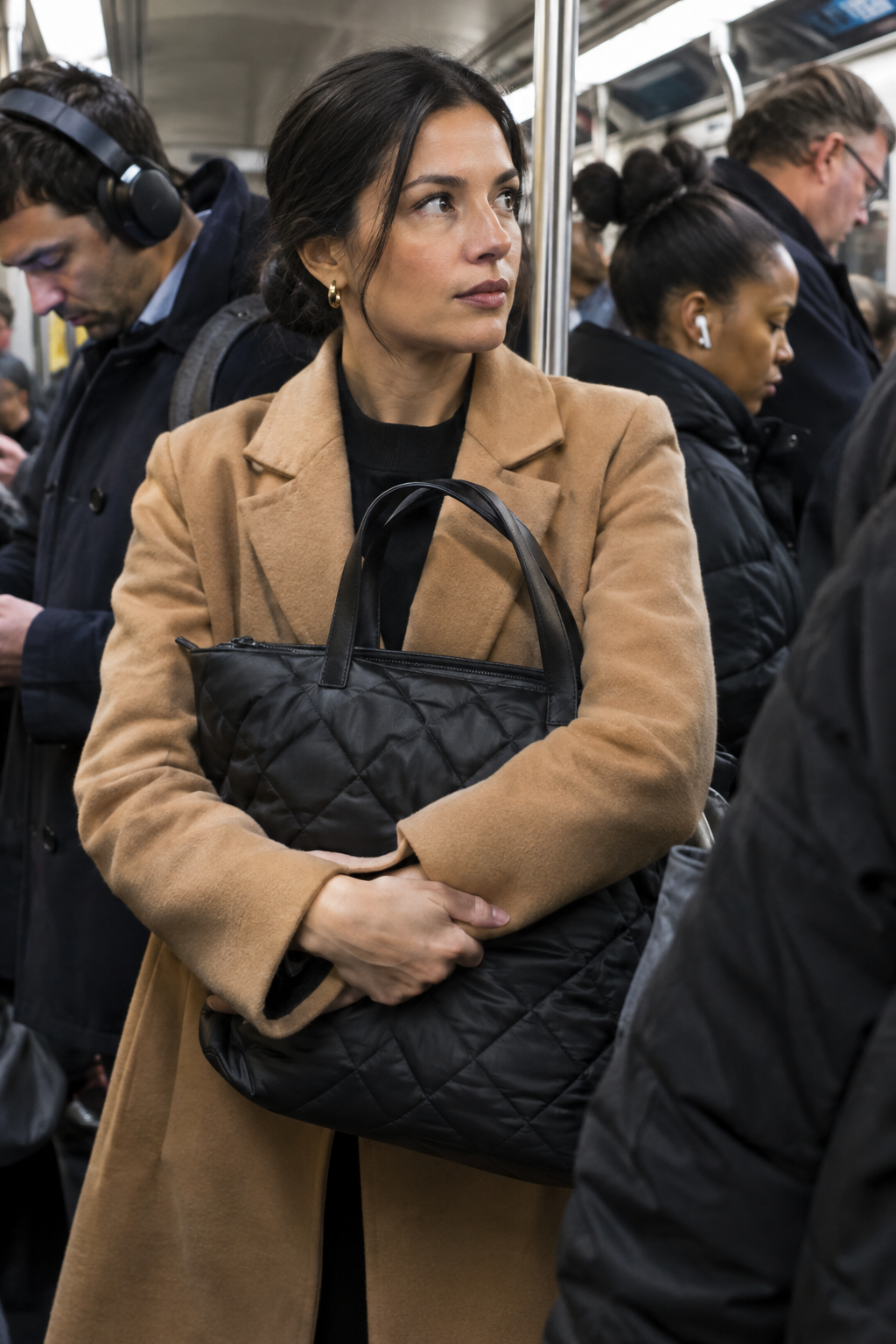
On a crowded train or platform, the safest place for your bag is where you can see and feel it. Before you step into the crowd, slide your tote or backpack around to the front of your body, with the zipper and opening facing you.
- Tote bags: hold the handles in your hand or tuck the bag under your arm, with the opening against your side.
- Backpacks: wear them on your chest on packed trains. A thief can open a back panel without you feeling a thing.
- Crossbody bags: keep the bag in front of your hip, not behind you, with your hand resting on the flap.
Once you're out of the crowd, you can move it back. The point is simple: in the tightest moments of your commute, nobody should be able to reach your bag without reaching past you.
Habit 2: Keep Valuables in a Hidden Anti-Theft Pocket
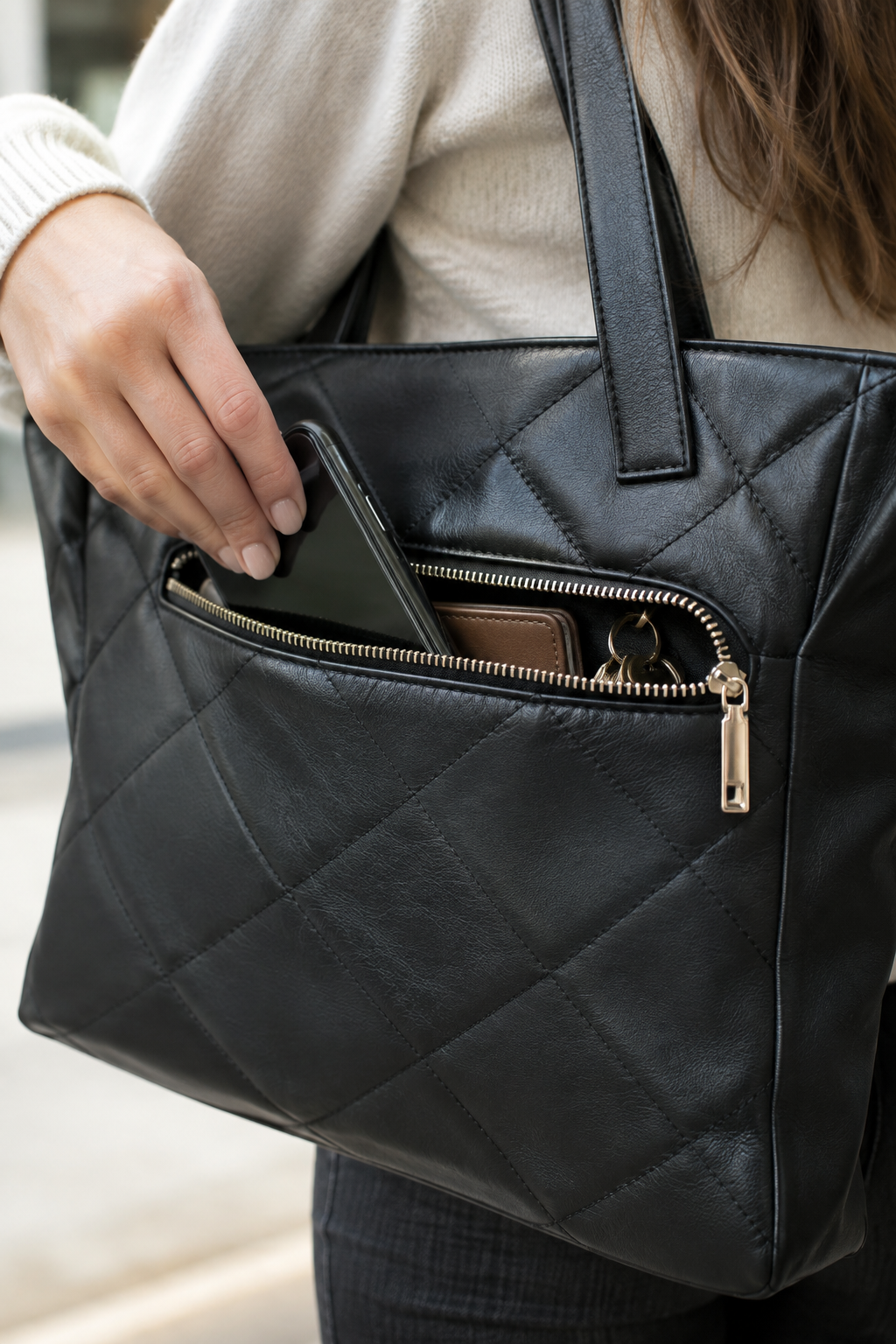
Your phone, wallet, cards and keys are what thieves want. They shouldn't be loose at the top of your bag or in an open outer pocket.
The best place for them is a hidden zip pocket that sits against your body, usually on the back panel of the bag. Because the pocket faces you, it's almost impossible to unzip without you noticing. This is the single biggest feature that separates an anti-theft bag from a regular tote.
A good rule: if you'd be upset to lose it, it lives in the hidden pocket. Everything else (snacks, a book, your umbrella) can go in the main compartment.
Habit 3: Zip Everything Before You Leave Home
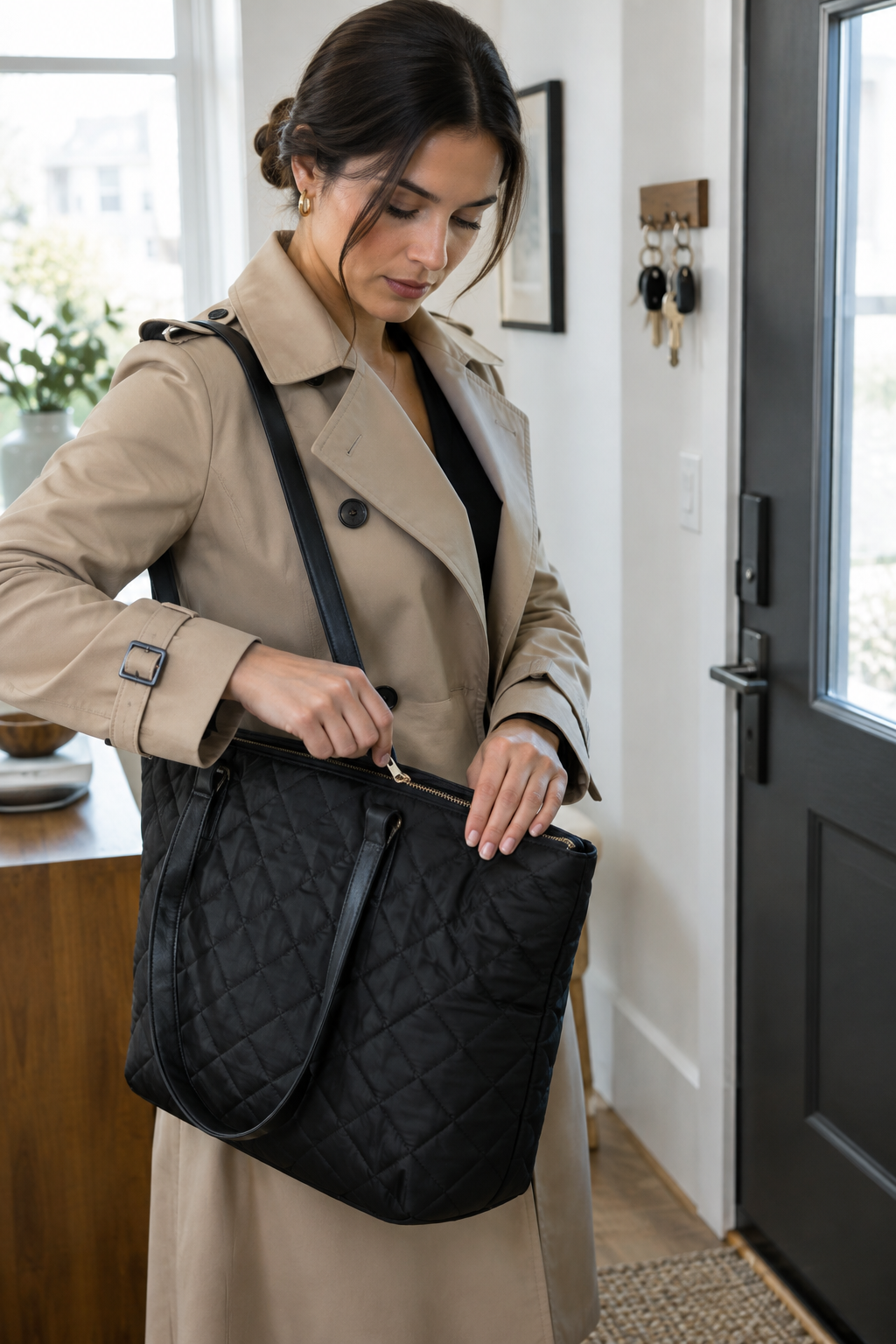
An open tote is an invitation. Make closing your bag part of your routine, the same way you check for your keys.
Try a simple "zip, tap, go" check at the door:
- Zip the main compartment and every outer pocket.
- Tap the hidden pocket to feel your phone, wallet and keys.
- Go, without having to open the bag again until you reach your desk.
The less often you open your bag in public, the fewer chances anyone has to see what's inside or where you keep it. That's why an organized bag is also a safer bag: when everything has its own spot, you're not rummaging on the platform with the bag wide open.
Habit 4: Never Hang Your Bag on a Chair or Leave It on the Floor

Some of the most common bag thefts don't happen on the train at all. They happen at the coffee shop, the food court or the restaurant where you grab lunch.
- Chair backs are the classic mistake. A bag hanging behind you can be lifted or unzipped while you're looking at your screen.
- The floor isn't much better. A bag at your feet can be slid away with a foot, especially at outdoor tables.
- Hooks under the counter are better than nothing, but keep the bag in your line of sight.
Instead, keep your bag on your lap or on the chair next to you, between you and the wall. If it has to go on the floor, loop the strap around your leg or the chair leg so it can't move without you feeling it.
Habit 5: Protect Your Phone on Public Transportation
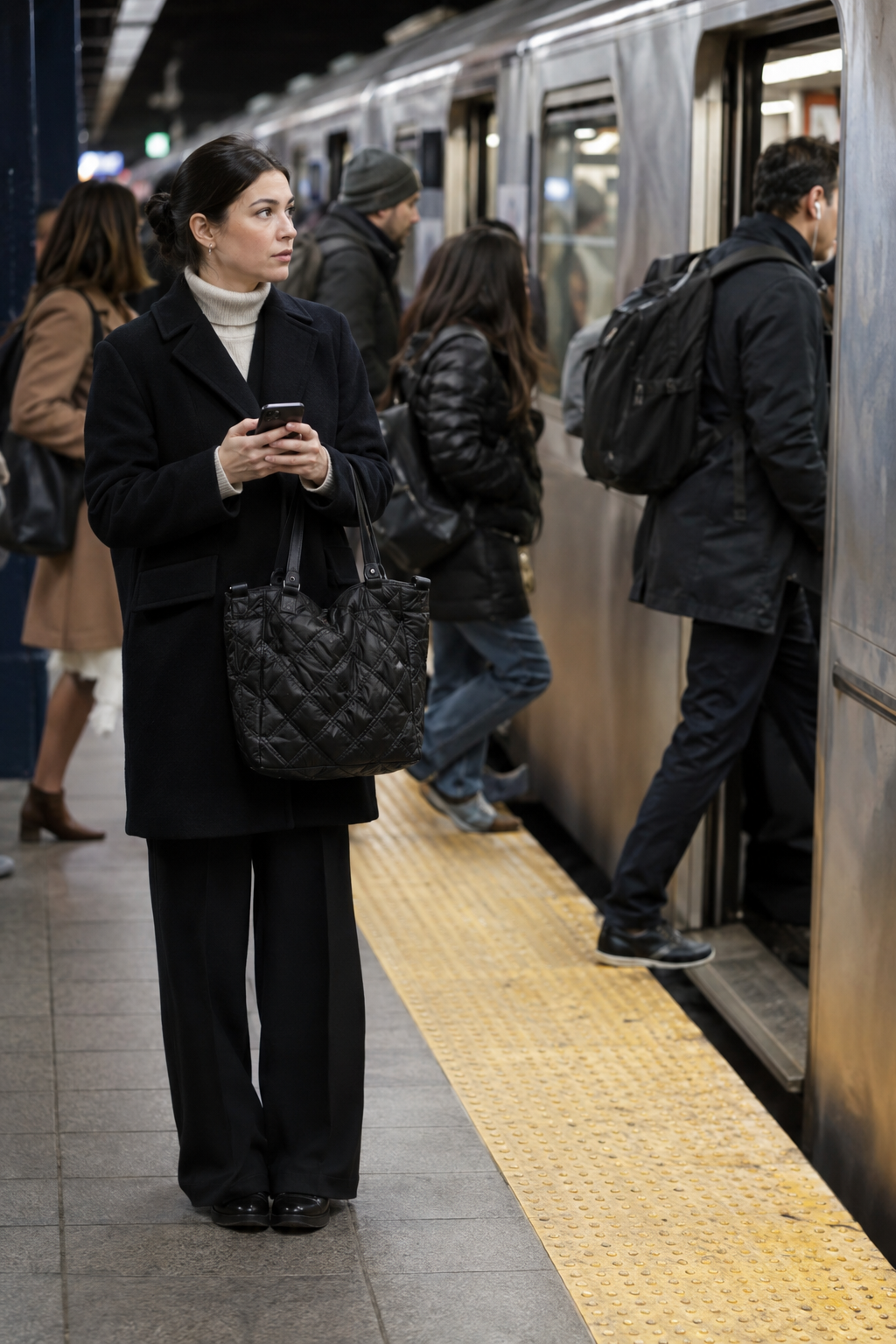
Phones are a top target on public transportation, and they're taken in two ways: quietly from pockets, or fast from hands.
To avoid pickpockets: never keep your phone in a back pocket or an open outer pocket. Back pockets are the easiest lift in any crowd.
To avoid phone snatching:
- Don't stand right next to the train doors scrolling your phone. A snatch-and-run just as the doors close is a common trick.
- On the street, step back toward a wall before checking your phone, and keep it away from the curb, where someone can grab it from a bike or scooter.
- Hold your phone with both hands in crowded spots, or use a phone grip or wrist strap.
- When you're done, put it back in the hidden pocket instead of holding it loosely while you walk.
Habit 6: Learn the Common Distraction Tricks
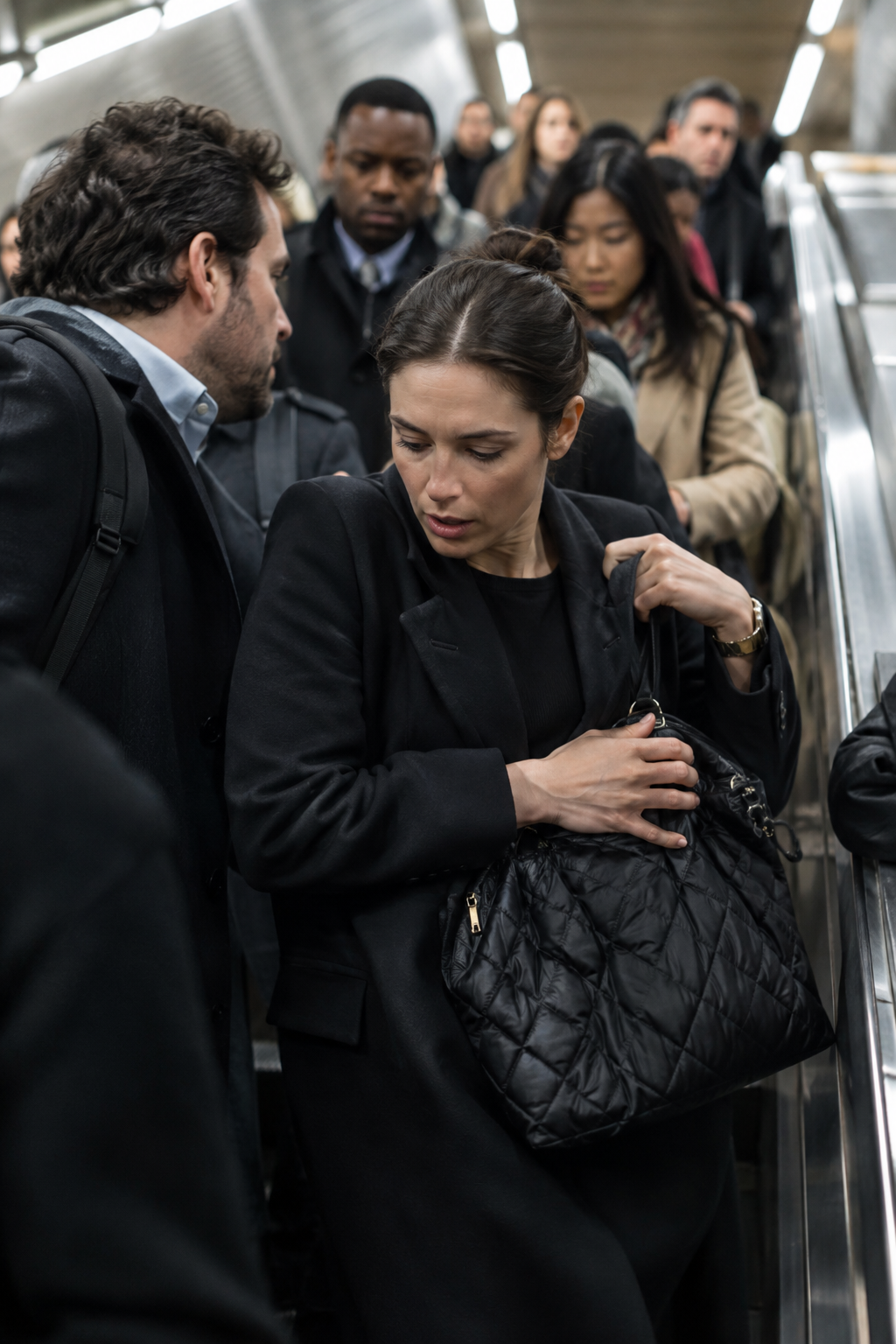
Most pickpockets work by pulling your attention somewhere else for a few seconds. Knowing the playbook makes it much easier to spot.
- The bump: someone bumps into you or stumbles against you while another person reaches into your bag.
- The spill: a stranger "accidentally" spills a drink on you and helps you clean up, very close to your bag.
- The question: someone asks for directions with a map or phone held right over your bag.
- The squeeze: a sudden crush of people at train doors or the top of an escalator.
- The dropped item: someone drops coins or keys in front of you so you stop and look down.
When any of these happen, your first move is the same: put a hand on your bag. You don't need to be rude or assume the worst. Just protect your things first, then help.
Habit 7: Have a Plan B Before Anything Happens
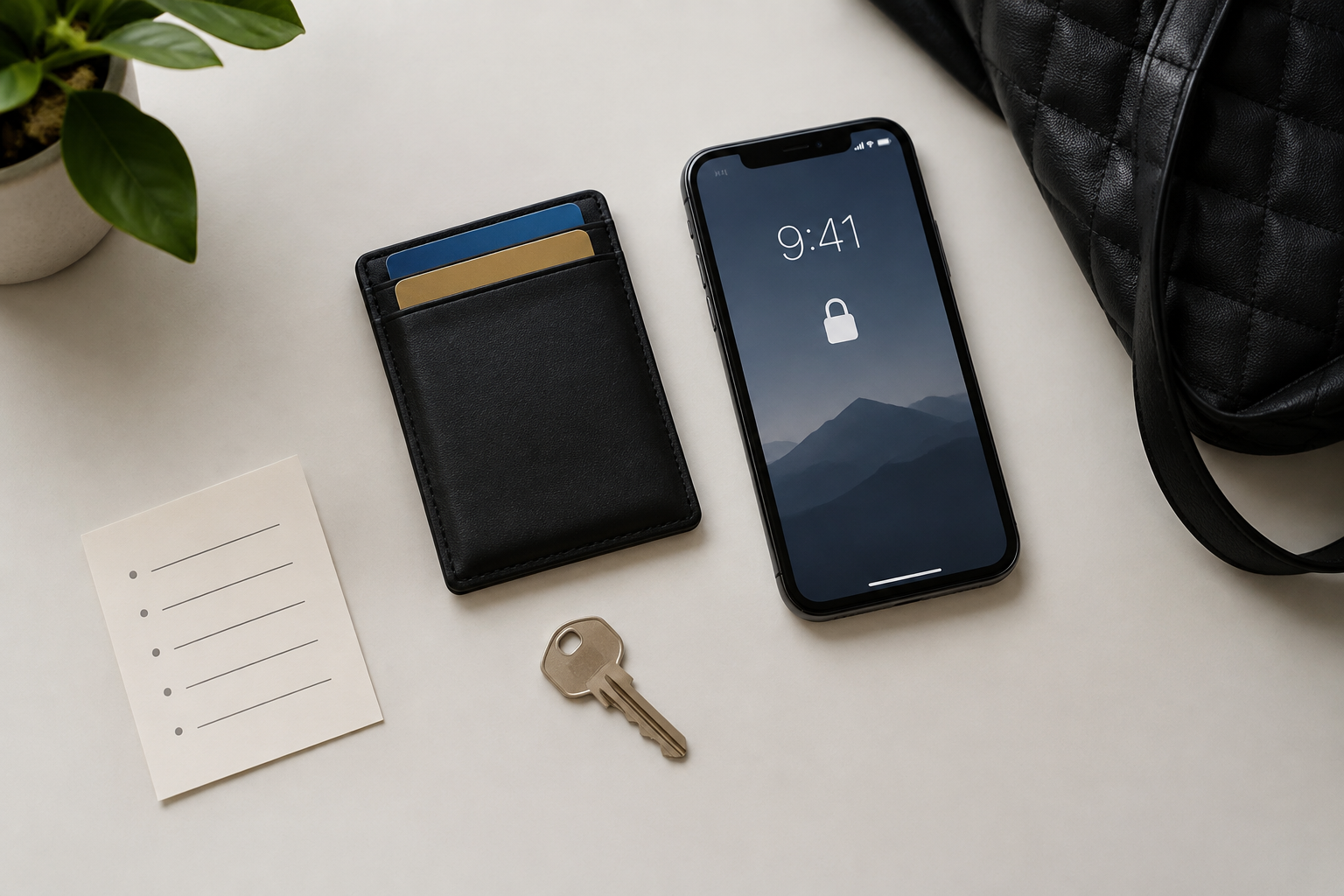
Even careful people lose things. A little preparation turns a stressful day into a minor inconvenience.
- Carry less: keep only the cards you need for the day. Leave spare cards and documents at home.
- Use an RFID-blocking wallet or sleeve if you carry contactless cards, for extra peace of mind.
- Turn on device tracking and a strong lock screen, so a lost phone can be located and wiped.
- Save your bank's card-freeze option in your banking app, so you can lock a card in seconds.
- Keep a backup list of important numbers somewhere other than your phone.
If your bag or phone is stolen: stay safe first and don't chase anyone. Freeze your cards, use device tracking to lock your phone, report it to transit staff or local police, and change key passwords. Acting quickly limits the damage.
What Makes a Bag Truly Anti-Theft?
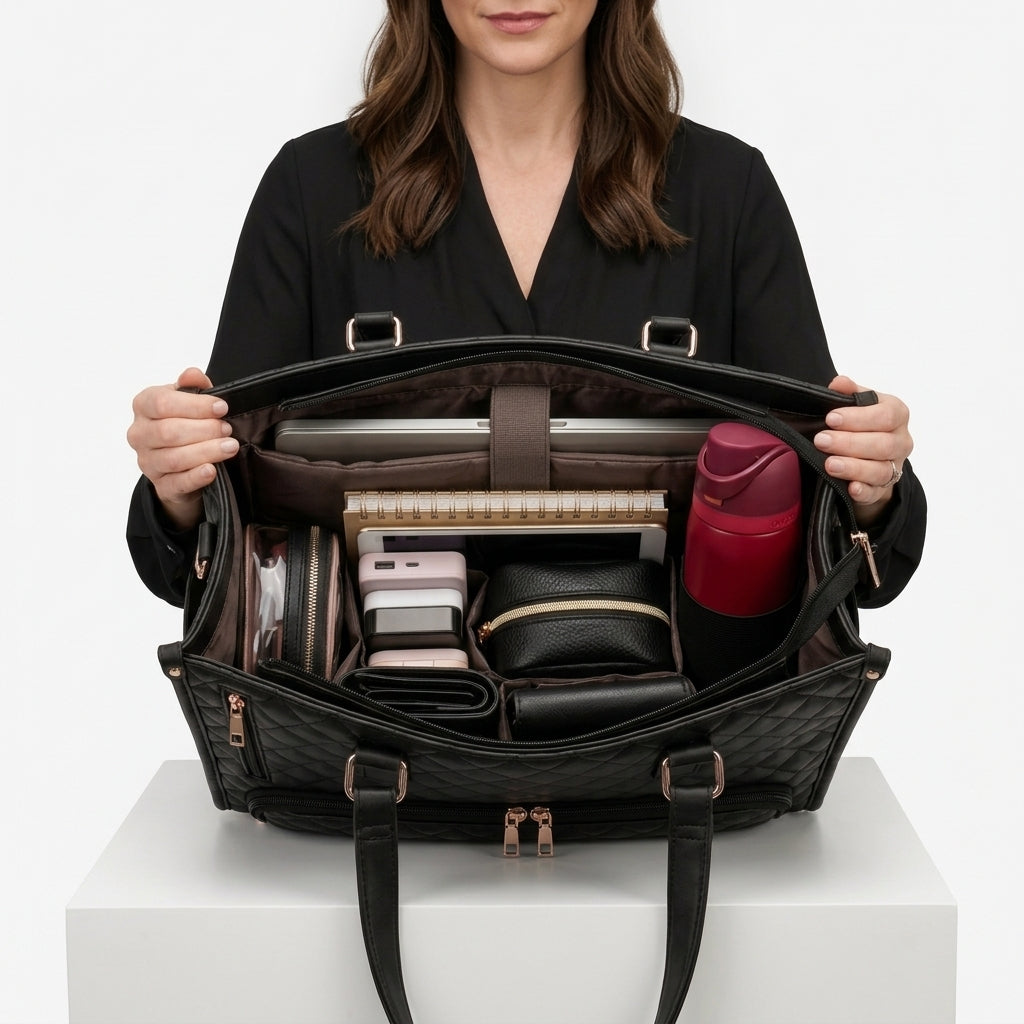
"Anti-theft bag" is a popular label, but the features that actually help are simple. When you're choosing a work tote or commuter bag, look for:
- A hidden back-panel zip pocket that sits against your body for your phone, wallet and keys.
- A zip-close main compartment, not an open top. Open totes look great but are the easiest bags to dip into.
- Organized interior pockets, so you can find things quickly without opening the bag wide in public.
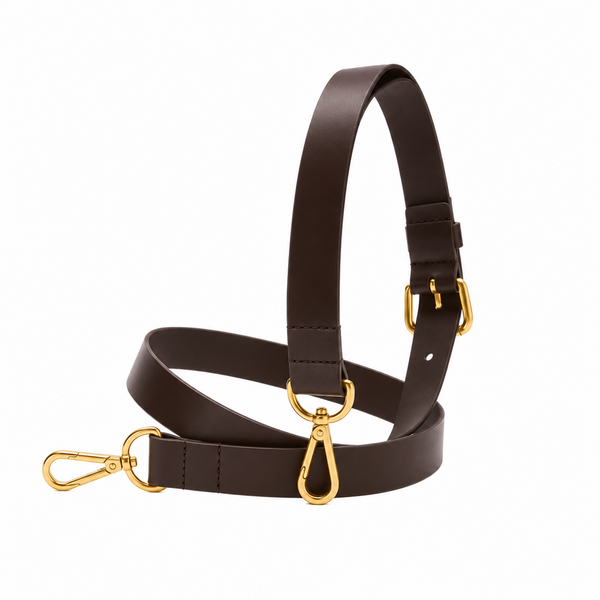
- Sturdy handles and a comfortable strap, so you can hold the bag close in front of you.
- A durable, water-resistant exterior for rainy platforms and wet sidewalks.
No bag is theft-proof. But a bag with these features, combined with the habits above, makes you a much harder target than the commuter next to you.
Our Pick for City Commuters
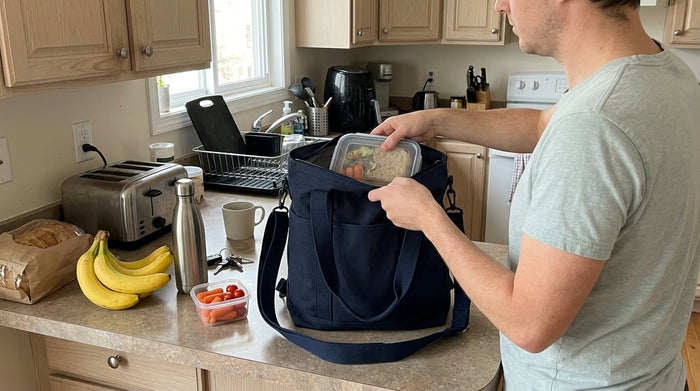
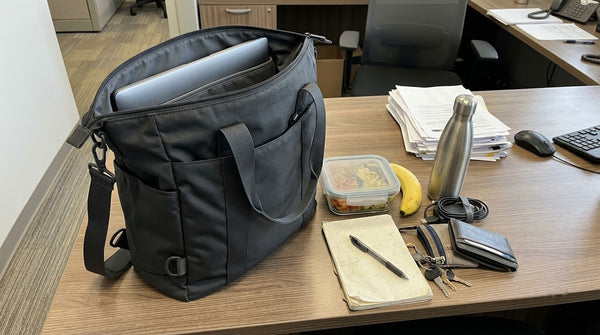
We designed the JELRIX 3-in-1 Totebag for women who carry their whole day on the train. It has a hidden anti-theft zip pocket for your phone and wallet, a zip-close main compartment, 7 interior pockets so you're not digging on the platform, room for laptops up to 17" and a waterproof exterior. It also includes a leak-proof insulated lunch compartment, so your lunch rides in the same bag instead of a second bag swinging from your hand.
Not sure it fits your routine? Read our 10-minute work tote packing checklist and our guide to keeping lunch fresh until noon.
Your Anti-Theft Commute Checklist
- Bag in front, opening facing you, in every crowd.
- Phone, wallet and keys in the hidden zip pocket.
- "Zip, tap, go" before you leave home.
- Bag on your lap or strap around your leg, never on a chair back.
- No phone in back pockets, no scrolling next to train doors.
- Hand on your bag whenever someone bumps, spills or crowds you.
- Cards frozen and phone locked within minutes if anything goes missing.
What the Experts Say
Police services give similar advice. Montreal police (SPVM), for example, recommend carrying your bag close to your body, in front of you, with all compartments closed, and keeping only the documents you need. A lighter bag also helps: TIME has reported on the health risks of a heavy purse.
Keep Reading
Your laptop is often the most valuable thing in your bag. Our guide on can you carry a laptop in a tote bag? covers how to keep it safe from bumps, spills and theft. For a smooth office-day routine, see our return to office essentials guide, and if you are still deciding what to carry on your commute, compare tote bags vs backpacks for work.
Flying instead of commuting? See our personal item bag checklist. Commuting in the rain? Read how to protect your tote from rain and stains.
Frequently Asked Questions
Do anti-theft bags really work?
They help a lot when you use them properly. Hidden zip pockets and zip-close compartments make it much harder to take something without you noticing. They work best combined with good habits, like wearing the bag in front in crowds.
Where is the safest place to keep my phone on the subway?
In a zipped pocket that sits against your body, such as the hidden back pocket of an anti-theft bag or an inside jacket pocket. Avoid back pockets and open outer pockets, and don't use your phone right next to the doors.
Is a tote bag safe for commuting?
An open-top tote is one of the easiest bags to pick. A tote with a zip-close main compartment and a hidden anti-theft pocket is a safe, stylish option for work.
Is a backpack or a tote better for avoiding pickpockets?
Either can work. Backpacks are riskier because they sit behind you, so wear them on your chest in crowds. A zip-top tote held in front of you keeps everything in view.
This article offers general safety tips. Always follow guidance from your local transit authority and police.