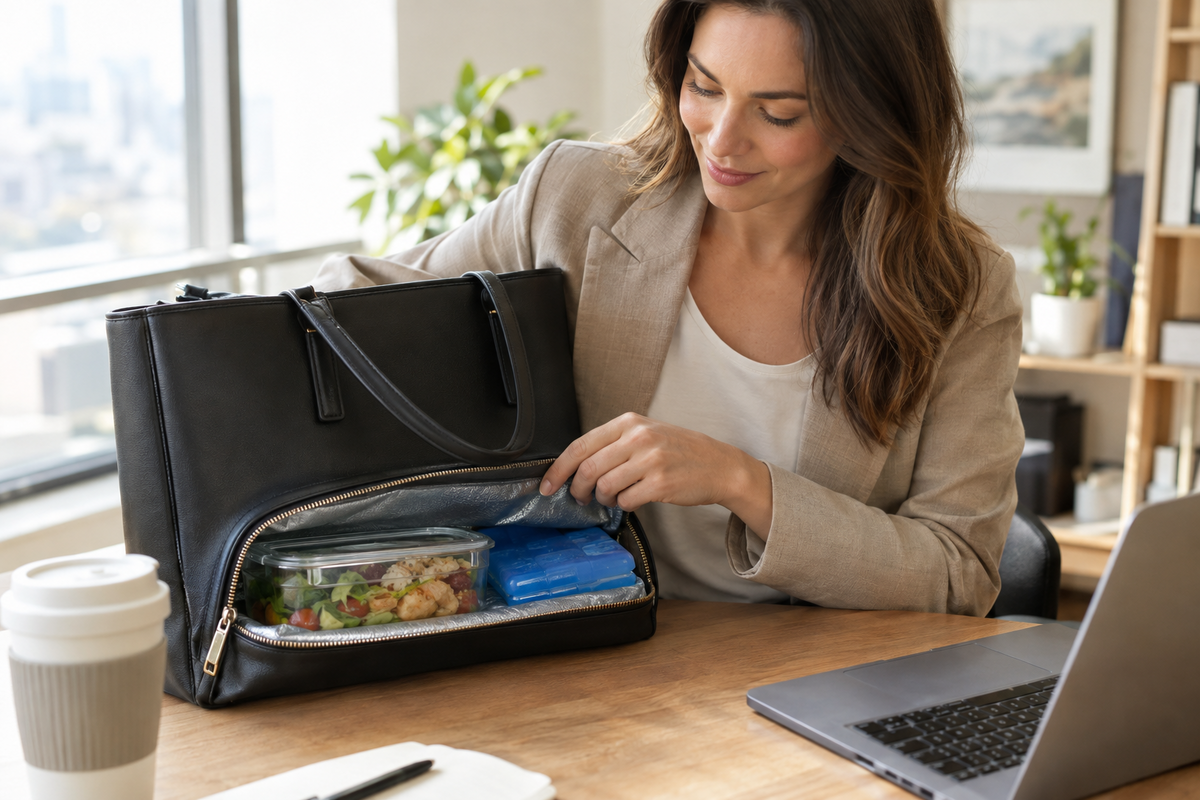
You packed a good lunch this morning. By noon, the yogurt is lukewarm, the salad has gone limp, and you're quietly wondering whether that chicken wrap is still safe to eat. So you start asking the obvious question: how long does an insulated lunch bag keep food cold, really?
The honest answer is "it depends," but not in a vague way. A few specific things decide whether your lunch stays cold until noon. Once you know them, you can make any lunch bag work much harder, with or without a fridge at work.
How Long Does an Insulated Lunch Bag Keep Food Cold?
There is no single number for every bag. An insulated lunch bag doesn't make cold; it only slows how fast outside heat gets in. So hold time depends more on what you put inside, and where you leave the bag, than on the bag itself.
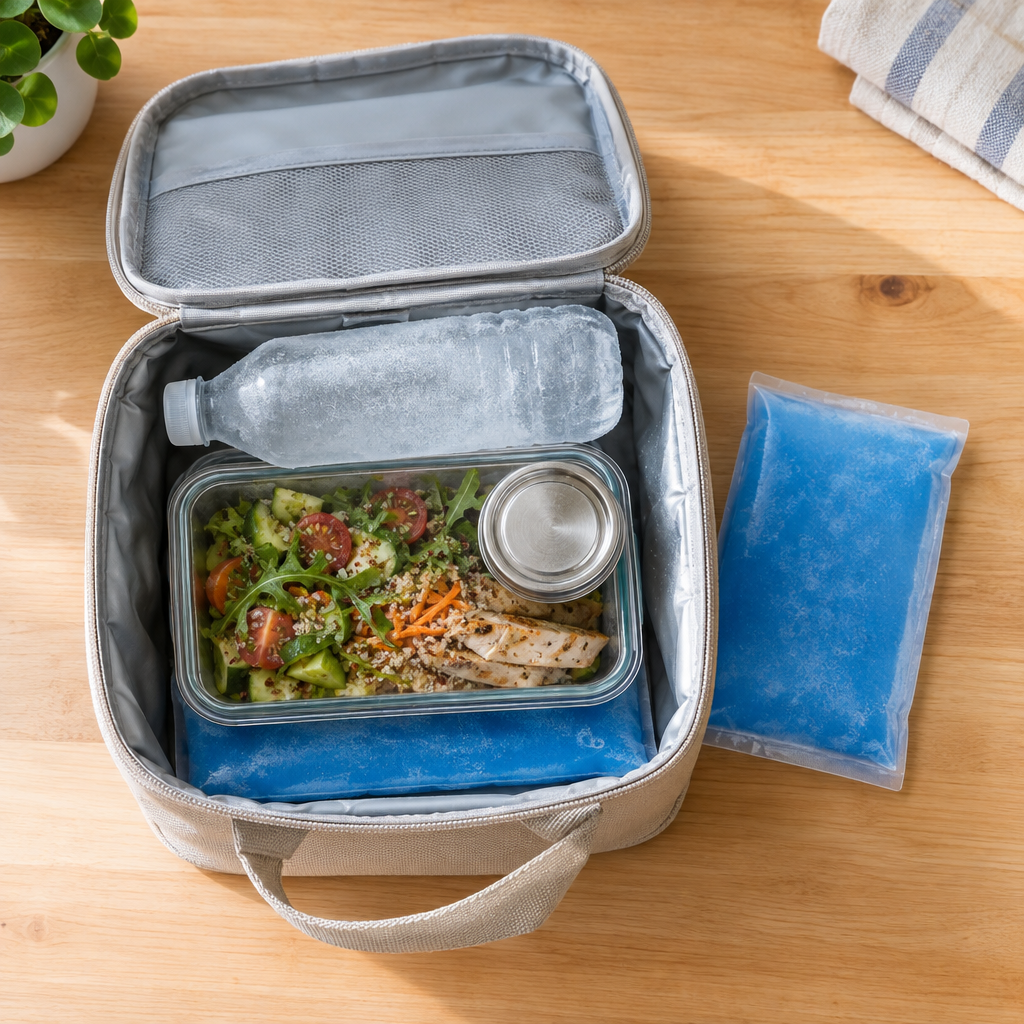
Here's what food safety guidance actually says. The USDA notes that bacteria multiply rapidly between 40°F and 140°F (4°C to 60°C). Perishable food shouldn't sit at room temperature for more than 2 hours, or more than 1 hour when it's above 90°F (32°C). To keep a packed lunch out of that range, the USDA recommends using an insulated bag with at least two cold sources, such as ice packs, gel packs or a frozen water bottle.
So, how long does an insulated lunch bag keep food cold in practice? With no ice pack, not long at all. With two good cold sources, chilled food and some shade, it can hold safe temperatures through a typical morning. Treat manufacturers' claims (such as "cold up to 10 hours") as a best case under their own test conditions, not a promise.
Do Insulated Lunch Bags Work? How Insulation Actually Works
Yes, as long as you understand their job. Heat moves from warm to cold, so your office, car or train is always pushing heat into your lunch. Insulation slows that in three ways:
- Trapped air or foam. Padding between the outer shell and inner lining traps air, which is a poor conductor of heat.
- Reflective lining. Many bags use a foil-style lining that reflects some radiant heat back out.
- A good seal. A zipper that closes fully stops warm air from drifting in through gaps.
Your ice packs are the real "cooling engine." Insulation just makes their cold last longer.
What Affects How Long Your Lunch Stays Cold
If your lunch keeps warming up too fast, one of these is usually the reason:
- Number and size of cold sources. One small gel pack fades quickly. Two packs, or one pack plus a frozen water bottle, hold much longer. Bigger and colder is better.
- Pre-chilling. Food straight from the fridge stays cold far longer than food packed at room temperature. A warm container eats into your ice pack's cold before you even leave home.
- How full the bag is. A half-empty bag holds a lot of warm air. A snugly packed bag, with gaps filled by a frozen bottle or extra pack, keeps temperatures steadier.
- How often you open it. Every time you unzip the bag for a snack, warm air rushes in. Try to open it once, at lunch.
- Outside heat and sun. A cool office is easy. A hot commute, a sunny desk by the window or a parked car is very different. Keep the bag in the shade, under your desk or in a drawer.
How Many Ice Packs in a Lunch Bag?
Use at least two. This is the USDA's own recommendation, and it's the single biggest upgrade most people can make.
Where you place them matters too. Cold air sinks, so a pack on top of your food helps chill what's below it. A good pattern is one pack underneath your main container and one on top, with the most perishable items (meat, dairy, eggs, cut fruit) sandwiched in between.
No second gel pack? A frozen water bottle works well and becomes a cold drink by the afternoon.
How to Keep Lunch Cold Without a Fridge: Step-by-Step Setup
If there's no fridge at work, or the shared one is always full, this routine gives your lunch bag the best possible start.
- Freeze your cold sources overnight. Keep a spare set so one is always frozen.
- Pack food cold. Make lunch the night before and refrigerate it in its container, so it goes into the bag already chilled.
- Layer it. Ice pack on the bottom, perishable food next, second ice pack or frozen bottle on top.
- Fill the gaps. Use a napkin, a frozen bottle or snack packs to cut down empty air space.
- Zip it fully. Check the zipper runs all the way to the end. A small gap lets warm air in all day.
- Store it smart. Keep the bag out of direct sun, away from heaters and windows, and never on a hot car seat.
- Eat perishables first. Save sturdy snacks like whole fruit or crackers for later.
For ideas on what to pack and how to prep a week of lunches, see our guide to meal prep for busy workdays.
Lunch Bag vs Lunch Box vs Cooler: Which Keeps Food Cold Best?
The words get used loosely, and in the UK and Australia a "lunch box" often means any packed-lunch container. Here's how the common options compare for keeping food cold.
| Option | Cold performance | Best for | Trade-offs |
|---|---|---|---|
| Insulated lunch bag | Good with two cold sources; depends on setup | Daily office lunch, commuting | Soft sides compress; quality varies a lot |
| Hard lunch box (non-insulated) | Poor on its own; needs a bag around it or ice packs inside | Protecting food from being squashed | Bulky; little temperature control |
| Insulated hard lunch box | Good; rigid walls protect food | Kids, fragile meals | Heavier, takes more room in your bag |
| Small cooler | Best for long hold times with plenty of ice | Long shifts, road trips, hot days outdoors | Heavy and awkward on a commute |
| Tote with built-in insulated compartment | Good with ice packs; works like a lunch bag | Commuters who want one bag instead of two | Food space is fixed; pack to fit it |
For most office workers, an insulated lunch bag or a tote with an insulated section is the sweet spot. A cooler suits long shifts or hot days outdoors.
Keeping Hot Food Hot
Insulated bags work in both directions. If you'd rather bring soup, chili or leftovers, the trick is heat, not cold.
- Preheat your thermos. The USDA suggests filling an insulated food container with boiling water, letting it stand for a few minutes, then emptying it.
- Pack food piping hot. Heat it thoroughly on the stove or in the microwave, then add it straight to the preheated container and seal it.
- Keep the lid closed until you're ready to eat.
- Don't mix hot and cold. Keep the hot thermos away from your ice packs. Each one weakens the other.
Leak-Proofing Your Lunch Bag
Cold bags create condensation, and a loose lid can turn into a mess.
- Choose containers with locking or gasket-sealed lids for soups, dressings and yogurt.
- Put dressings and sauces in small separate pots.
- Wrap ice packs in a thin cloth or paper towel to catch condensation.
- Empty and wipe the bag every evening, then leave it unzipped to dry so it doesn't smell.
Signs Your Lunch Is No Longer Safe to Eat
Unsafe food doesn't always look or smell bad, so judge by time and temperature first.
- Your ice packs are fully melted and warm, not just softened.
- The food feels room temperature or warmer to the touch.
- Perishable food has been out of the cold for more than 2 hours (or 1 hour above 90°F/32°C).
- The bag sat in a hot car or in direct sun.
- Dairy, meat, eggs, rice or cut fruit smell sour or look slimy.
When in doubt, throw it out. It's a cheap lunch to lose compared with a sick day.
How to Choose an Insulated Lunch Bag for Adults
Kids' lunch boxes rarely suit an adult workday. Whether you're shopping for an insulated lunch bag for women or for yourself, here's what to look for:
- Room for two ice packs plus a real meal. Adult portions and full-size containers need more space than a sandwich bag.
- Proper insulation and lining. Padded walls and a wipe-clean, water-resistant lining.
- A full zipper closure. Velcro and drawstrings leak cold air.
- Leak resistance. Especially if your lunch bag sits next to a laptop or documents.
- A look you'll actually carry. If it looks like a kids' cooler, you'll leave it at home.
- Fewer bags overall. A separate lunch bag is one more thing to juggle and forget on the train (or tube).
Our Pick: A Work Tote With an Insulated Lunch Compartment
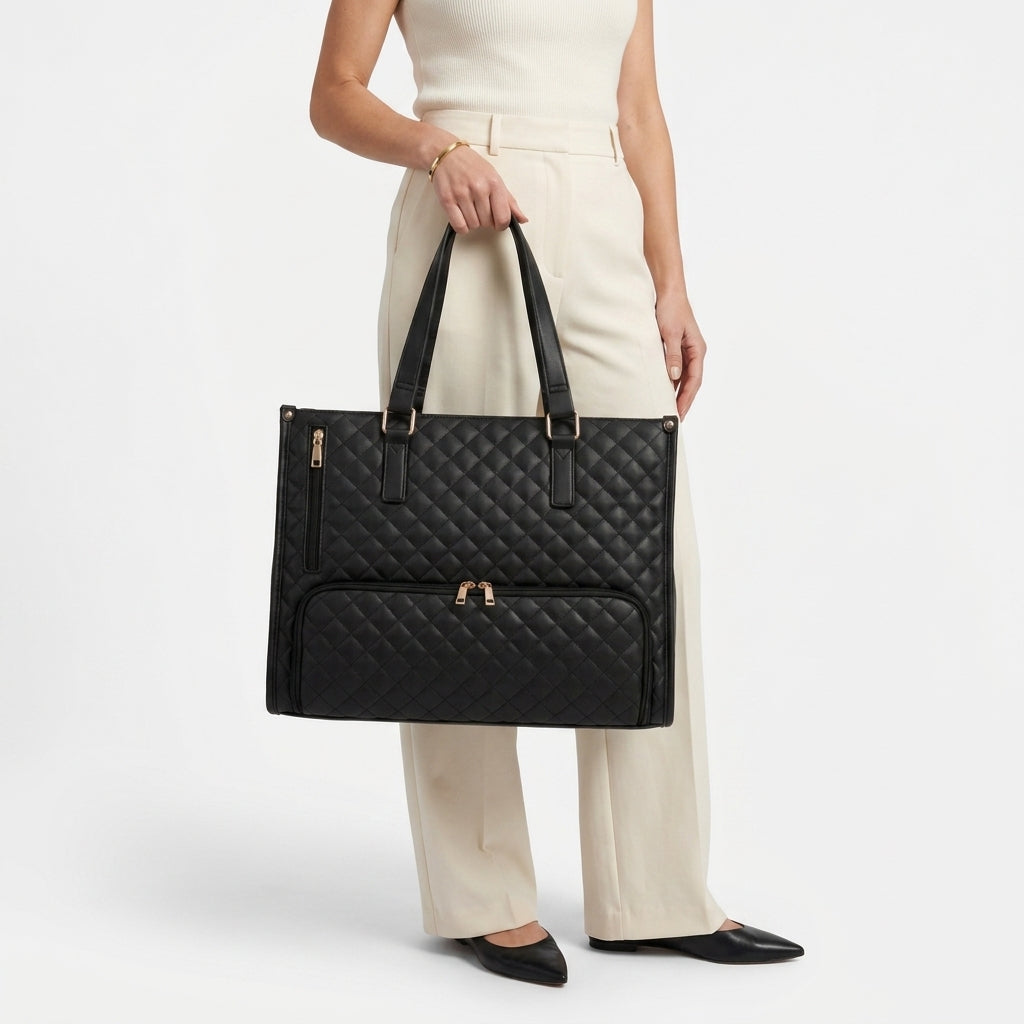
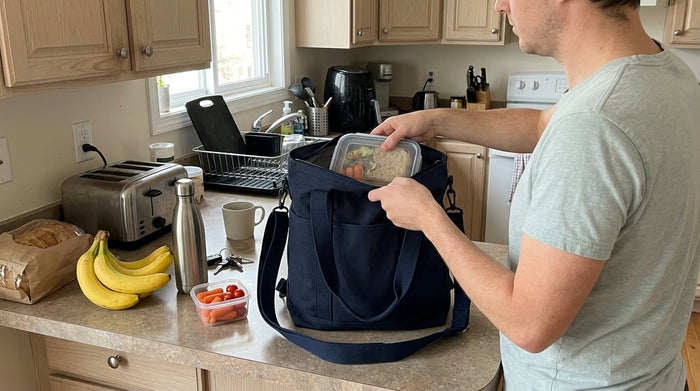
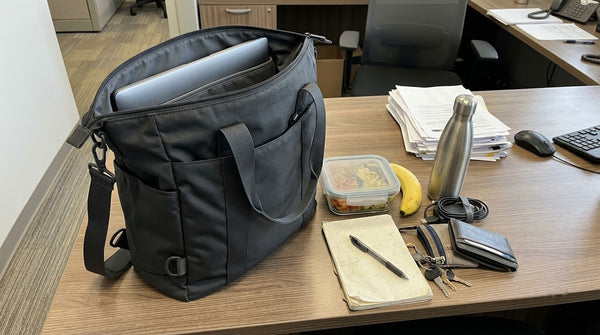
If you're tired of carrying a work bag in one hand and a lunch bag in the other, the JELRIX 3-in-1 Totebag combines a work tote, an insulated lunch bag and an organizer in one structured bag. It has a leak-proof insulated food compartment that, according to the product page, keeps drinks cold up to 10 hours and meals warm up to 5 hours. As with any bag, your results depend on the setup above, so pack it with two cold sources.
It fits laptops up to 17", has a hidden anti-theft zip pocket plus 7 interior compartments, a waterproof exterior and an easy-to-clean lining. It's designed by a woman and comes in eight colors.
It suits office workers, teachers, nurses and commuters who want one polished bag for the whole day. If you only need a small lunch carrier, a basic lunch bag is simpler. It comes with a 30-day money-back guarantee (see our Refund Policy), plus free shipping on orders over $80 and bundle savings for coworkers or friends.
What the Experts Say
The key number to remember comes from the USDA: bacteria grow fastest between 40°F and 140°F (4°C to 60°C), so cold food should stay at 40°F or below. Traveling with your lunch? In the U.S., TSA allows frozen items through airport security if they are frozen solid when screened.
Keep Reading
Insulation works both ways. If you want your lunch hot instead of cold, read how to keep lunch warm without a microwave. Pumping moms can find CDC-based tips for keeping milk cold in our pump bag essentials checklist. For no-reheat meal ideas, try our 25 cold lunch ideas for work, and to keep your bag fresh, see how to clean an insulated lunch bag and get rid of the smell.
Taking lunch on the road? Read our personal item bag checklist for flights. And to see what your packed lunches are really saving you, try how to save money by packing lunch for work.
Frequently Asked Questions
How long does an insulated lunch bag keep food cold?
It depends on your setup more than the bag. With two frozen cold sources, chilled food, a full zipper and shade, an insulated lunch bag can keep food cold through a typical morning. Without ice packs, it warms up quickly. Follow the USDA's rule: perishables shouldn't sit above 40°F for more than 2 hours.
Do insulated lunch bags work without ice packs?
Not for long. Insulation only slows the flow of heat; it doesn't create cold. Without an ice pack or frozen bottle, chilled food will gradually reach room temperature. For perishable food like meat, dairy or eggs, the USDA recommends at least two cold sources in an insulated bag.
How many ice packs do I need in a lunch bag?
Use at least two, as the USDA recommends. Place one under your food and one on top, with the most perishable items in between. A frozen water bottle can stand in for a second ice pack, and it gives you a cold drink later in the day.
How can I keep my lunch cold without a fridge?
Freeze two cold sources overnight, refrigerate your food before packing, and layer ice pack, food, ice pack. Fill empty space, zip the bag fully, and keep it in the shade, away from heaters, windows and hot cars. Open it only at lunchtime and eat perishables first.
Is a lunch bag or lunch box better for keeping food cold?
An insulated lunch bag usually beats a plain hard lunch box, which has little temperature control. An insulated hard lunch box performs well and protects food from squashing but is bulkier. For commuting adults, a soft insulated bag with two ice packs is often the most practical choice.
Sources: USDA, "Use an Insulated Lunch Bag to Keep Meals Safe".