It is 1 p.m. You are eating a sandwich with one hand and answering emails with the other. Crumbs on the keyboard, half your attention on lunch and half on work, and by 3 p.m. you feel more tired than you did in the morning. For many women, the "lunch break" has quietly turned into "lunch at the desk". If you have wondered whether you really need a lunch break, and how to take one when your day is packed, this guide is for you.
The short answer: a real break can help you recharge, and it does not have to be long. The key is making it a break that actually restores you. Below is what research says, why desk lunches are so common, and practical ways to take a better break, even on a busy day.
Quick answer: yes, a real lunch break is worth taking. Research from the University of Toronto found that relaxing lunch activities that people chose freely were linked to less fatigue at the end of the day. To make it happen, block lunch in your calendar, pack your lunch the night before so it is ready to grab, eat away from your desk and add a short walk if you can. Even 15 to 30 minutes can make your afternoon feel very different.
What the Research Says About Lunch Breaks
A study led by John Trougakos at the University of Toronto, published in the Academy of Management Journal, looked at how employees spent their lunch breaks and how tired they seemed at the end of the day. As summarized by ScienceDaily, the researchers found that relaxing activities that people chose freely were linked to the lowest fatigue. Working through lunch made people appear more tired, though this effect was smaller when it was their own choice.
In other words, what matters most is not just taking a break, but having control over it and using it to do something that actually rests you.
Movement helps too. The CDC recommends that adults get at least 150 minutes of moderate-intensity activity a week, such as brisk walking. A 15-minute walk at lunch on five days covers half of that.
Why So Many of Us Eat at Our Desks
- Workload. There is always one more email.
- Culture. If nobody else takes a break, it can feel uncomfortable to be the one who does.
- Hybrid schedules. On office days, meetings fill every gap. At home, the kitchen is three steps from the laptop.
- No good food. If you did not pack lunch, buying it can take your whole break.
- Childcare and errands. Many working moms use lunch for life admin.
The Hidden Costs of Desk Lunches
Eating at your desk is sometimes unavoidable, and it is fine now and then. But making it a daily habit can mean:
- No mental reset before the afternoon
- More sitting in an already sedentary day
- Distracted eating, where you barely notice what you ate
- A messier workspace, with crumbs in the keyboard and spills near your laptop
If your workspace is also your lunch table, it is worth reviewing your setup. OSHA's computer workstations guide has practical tips on posture and desk layout for the hours you are working.
How to Take a Real Lunch Break: 8 Practical Ideas
1. Put it in your calendar
Block 30 minutes as a recurring meeting. If it is in the calendar, people are less likely to book over it.
2. Pack your lunch the night before
When lunch is ready, you do not lose your break to a queue. It also saves money. See our guide on how to save money by packing lunch for work.
3. Leave your desk, even briefly
Eat in the break room, a park, a quiet meeting room or even a bench outside. A change of place helps your brain switch off work mode.
4. Walk for 10 to 15 minutes
Eat first, then walk. Fresh air and daylight can make a big difference to how you feel in the afternoon.
5. Choose something that restores you
The Toronto study suggests that the activity you choose matters. That might be reading, a podcast, a short call with a friend, a crossword or simply sitting quietly.
6. Put your phone face-down
Scrolling work messages is not a break. If you want your phone, use it for something unrelated to work.
7. Eat food that keeps you going
A balanced lunch with protein, fiber and vegetables is more likely to carry you through the afternoon than a sugary snack. For ideas, try our 25 cold lunch ideas or our guide on keeping lunch warm without a microwave.
8. Start small
If 30 minutes feels impossible, start with 15. A short, real break is better than a long, distracted one.
Lunch Breaks for Shift Workers
Nurses, teachers and retail workers often have short, unpredictable breaks. In those jobs, preparation is everything: a lunch you can eat quickly, kept cold until you are ready, and a water bottle you can reach. Our guides for nurses on 12-hour shifts and teachers have packing tips for these situations.
Lunch Breaks When You Work From Home
- Close the laptop, do not just minimize the window.
- Eat away from your workspace, even if it is just another chair.
- Step outside for a few minutes.
- Avoid using lunch for chores every day. Some days, rest is the job.
Keeping Packed Lunch Safe
If you pack lunch, keep it cold until you eat. The USDA explains that bacteria grow fastest between 40°F and 140°F, and recommends keeping perishable foods cold with ice packs. Read our guide on how long an insulated lunch bag keeps food cold to plan for long mornings.
Make Your Break Easy to Take
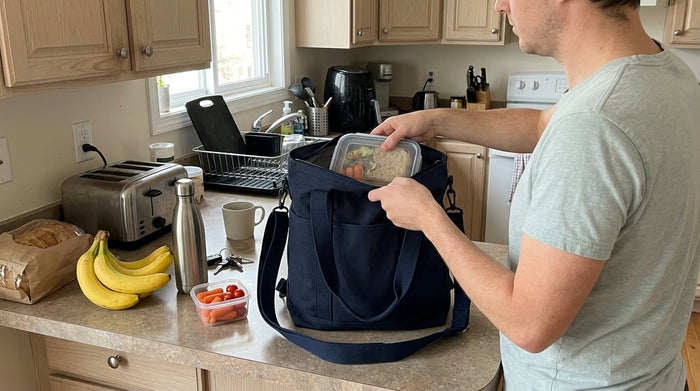
The easier it is to grab your lunch and go, the more likely you are to actually leave your desk. If your lunch, water bottle and phone are all in one bag, you can pick it up and walk out in seconds. That is the idea behind carrying one well-organized bag instead of juggling several. Read the hidden cost of the morning juggle for more.
20 Lunch Break Ideas That Actually Recharge You
- Eat outside in a park or courtyard
- Take a 15-minute walk around the block
- Read a few chapters of a novel
- Listen to a podcast or an album
- Call a friend or family member
- Eat with a coworker and agree not to talk about work
- Do a short stretching routine
- Sit quietly with your eyes closed for five minutes
- Try a breathing exercise
- Do a crossword or puzzle
- Sketch or doodle
- Visit a nearby library, gallery or bookshop
- Run a pleasant errand, such as buying flowers
- Write in a journal
- Plan something fun for the weekend
- Try a new lunch spot with your packed lunch
- Learn a few words of a new language
- Sit near a window and watch the world go by
- Take the stairs to a different floor and back
- Do nothing at all
How to Talk to Your Manager About Breaks
If your workplace culture makes it hard to take a break, you are not alone. A few approaches that can help:
- Frame it around performance: you do better work in the afternoon after a real break.
- Suggest a team norm, such as no meetings between 12:30 and 1:30.
- Lead by example: let colleagues see you step away and come back refreshed.
- Check your local employment rules. Rules on breaks vary by country, state and industry.
Signs You Need a Better Break
- You feel more tired after lunch than before
- You cannot remember what you ate
- You regularly skip lunch and snack on sugar at 3 p.m.
- Your keyboard is full of crumbs
- You check work messages during every break
If several of these sound familiar, try the one-week challenge below. Small changes can make your afternoons feel noticeably different.
Our Pick: A Bag That Makes Lunch Easy
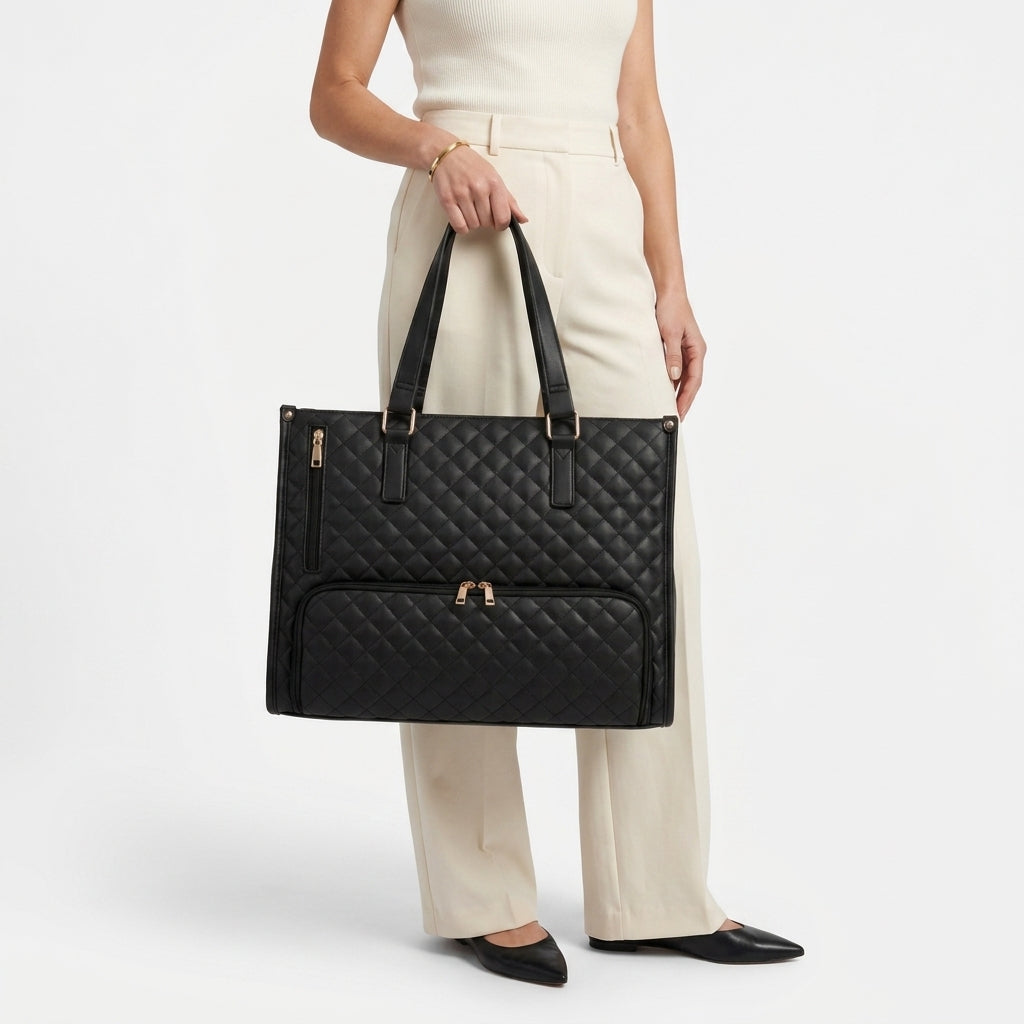
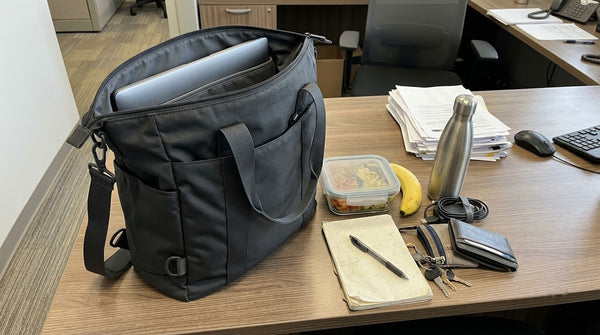
The JELRIX 3-in-1 Totebag combines a work tote, an insulated lunch bag and an organizer, so your lunch is always packed and ready:
- A leak-proof insulated food compartment that keeps meals warm for up to 5 hours or cold for up to 10.
- Space for laptops up to 17", kept separate from your food.
- 7 smart compartments plus a secure zip pocket.
- An easy-to-clean lining and waterproof exterior.
- A chic look you will be happy to carry to the park at lunchtime.
It ships in 3 to 5 days with tracking and comes with 30-day easy returns.
A One-Week Lunch Break Challenge
- Monday: block lunch in your calendar for the whole week.
- Tuesday: eat away from your desk.
- Wednesday: take a 15-minute walk after eating.
- Thursday: eat lunch with a coworker or call a friend.
- Friday: notice how your afternoons felt this week.
Key Takeaways
- Research suggests freely chosen, relaxing lunch activities are linked to lower end-of-day fatigue.
- Even 15 to 30 minutes away from your desk can help you reset.
- A short walk adds to the CDC's weekly activity recommendation.
- Packing lunch the night before stops your break disappearing into a queue.
- Block your break in your calendar and protect it like a meeting.
Taking a real lunch break is not a luxury or a sign that you are not working hard. It is one of the simplest ways to look after your energy across a long week. Start with one day, notice how your afternoon feels, and build from there.
If you manage a team, you can help too. Taking your own lunch break where others can see it, avoiding lunchtime meetings and encouraging people to step outside sends a clear message that rest is part of doing good work.
Frequently Asked Questions
Is it OK to skip lunch if I am busy?
Skipping lunch regularly can leave you tired and hungry later in the day. If you are very busy, try a short break with a packed lunch you can eat quickly, rather than no break at all.
Is it bad to eat lunch at your desk?
Not occasionally, but making it a daily habit means you miss a chance to rest and move. Research from the University of Toronto found that relaxing, freely chosen lunch activities were linked to lower end-of-day fatigue.
How long should a lunch break be?
It depends on your job and local employment rules. Even 15 to 30 minutes away from your desk, with food and a short walk, can help you reset.
What should I do on my lunch break?
Eat a balanced lunch away from your desk, take a short walk, get some fresh air and do something you enjoy, such as reading or chatting with a friend.
Does walking at lunch help?
A short walk adds to the CDC's recommendation of at least 150 minutes of moderate activity per week for adults, and gets you away from your screen.
How can I make sure I take a lunch break?
Block it in your calendar, pack lunch the night before, keep your lunch ready to grab in your bag and start with short breaks if long ones feel impossible.