It is 12:30, you are starving, and the line for the office microwave is five people deep. Or maybe there is no microwave at all: you work on a job site, in a school, on the road, or in an office that removed it "for hygiene reasons." Either way, you end up eating a cold, sad version of last night's dinner, or you give up and spend money on takeout. If you have been searching for how to keep lunch warm without a microwave, this guide is for you.
The good news: a hot lunch without a microwave is very doable. It just takes the right container, a few minutes of prep in the morning and a little understanding of how heat works. Below are the methods that actually work, plus the food safety basics you need to know.
First, the Food Safety Basics
Before we talk about tricks, here is the most important rule. According to the U.S. Department of Agriculture (USDA), bacteria grow fastest between 40°F and 140°F (about 4°C to 60°C). This range is often called the "danger zone." The USDA advises keeping hot food at 140°F (60°C) or above, and not leaving perishable food in the danger zone for more than 2 hours (or 1 hour if the temperature around it is above 90°F / 32°C).
What this means for your lunch: if you want to eat a hot meal hours after you pack it, the food needs to start very hot and stay hot. Lukewarm food that sits for hours is not a safe middle ground. If your food has cooled down a lot by lunchtime, it is safer to treat it as a cold meal that was kept cold, or to choose a lunch that is meant to be eaten cold.
This article is general information. For full guidance, see the USDA's food safety resources linked at the end.
Method 1: Use a Pre-Heated Food Jar (Thermos)
A vacuum-insulated food jar, often called a thermos, is the single best tool for a hot lunch without a microwave. But most people use it wrong. The trick is to pre-heat it.
- Boil water in a kettle.
- Fill the empty food jar with the boiling water and close the lid.
- Let it sit for 5 to 10 minutes while you heat your food.
- Heat your food on the stove or in the microwave at home until it is steaming hot all the way through.
- Pour out the water, quickly add the hot food and close the lid tightly.
Pre-heating warms the inside walls of the jar, so they do not steal heat from your food. Skipping this step is the most common reason a "hot" lunch is lukewarm by noon.
Method 2: Fill the Container to the Top
Air is the enemy of warmth. A half-empty food jar has a lot of air inside, and that air cools down fast and pulls heat out of your food. Fill your container as close to the top as you can. If you have a small portion, use a smaller jar. A full small jar stays warm longer than a half-full big one.
Method 3: Choose Foods That Hold Heat Well
Some foods hold heat much better than others. Dense, wet foods stay warm longest. Dry or crispy foods cool quickly and often go soggy anyway.
Foods that stay warm well:
- Soups, stews and chili
- Curries and dal
- Pasta in sauce, mac and cheese
- Rice dishes, risotto and fried rice
- Oatmeal and porridge (great for breakfast at your desk)
- Mashed potatoes or sweet potatoes
- Shredded meat in sauce, such as pulled chicken or beef
Foods that do not travel well hot: fried foods, toasted sandwiches, crispy roast vegetables and anything breaded. These are better eaten cold, or packed separately and added as a topping.
If your workplace has no way to heat food at all, it is also worth having a few great cold options in rotation. Our list of 25 cold lunch ideas for work (no microwave needed) has plenty that taste better cold than reheated.
Method 4: Add a Little Extra Liquid
Liquid holds heat better than dry food. When you reheat food for your thermos, add a splash of broth, sauce or water. It also stops rice and pasta from drying out over the morning. A slightly saucier lunch at 8 a.m. becomes a perfectly moist lunch at 12:30.
Method 5: Wrap It and Insulate It
Even a good food jar works better inside a second layer of insulation. Put your hot container inside an insulated lunch bag or compartment. For extra help on cold days, wrap the container in a clean kitchen towel or a fabric napkin before it goes into the bag. Every layer slows the heat loss.
Keep your hot food away from cold items, though. If you pack a cold yogurt or an ice pack in the same small space, they will fight each other. Your hot food gets cooler and your cold food gets warmer. If you carry both, keep them in separate sections.
Method 6: Keep the Bag Closed and Out of the Cold
Every time you open your lunch bag "just to check," heat escapes. Pack it, close it and leave it until lunch. Also think about where your bag sits during the morning. A bag on a cold floor, next to an air-conditioning vent or in a freezing car will lose heat faster than one on your desk or chair.
Method 7: Use a Heated Lunch Box (If You Have Power)
If you have access to a power outlet or a car, an electric heated lunch box can warm food at your desk. They are slower than a microwave, often taking 20 to 40 minutes, so you need to plug them in before your break. They are a good option for people who work at a desk without a kitchen, but they are bulky to carry every day and still need to keep food cold until you start heating it.
Method 8: Use Hot Water to "Finish" Your Lunch
Many workplaces have a kettle or a hot water tap even if they do not have a microwave. You can use hot water to make a warm lunch from scratch:
- Instant noodles upgraded with leftover vegetables, a boiled egg and some cooked chicken
- Couscous: add hot water, cover for 5 minutes, then stir in vegetables and feta
- Instant oats with nut butter and fruit
- Miso soup with tofu and greens
- A "pot noodle jar": layer stock paste, noodles and vegetables in a jar at home, then add hot water at work
How Long Will Lunch Stay Warm?
This depends on the container, how hot the food was when it went in, how full it is and how cold the room is. A good pre-heated vacuum food jar can keep food hot for several hours. An insulated lunch bag on its own slows heat loss, but it is not a substitute for a proper hot-food container if you need food to stay steaming for a long time.
Insulation works both ways. The same bag that keeps soup warm can keep a salad cold. For the cold side of the story, read how long an insulated lunch bag keeps food cold, with tips that work.
A Simple Morning Routine for a Hot Lunch
Here is how to fit it all into a busy morning in about 10 minutes:
- Put the kettle on as soon as you wake up.
- Pour boiling water into your food jar and close it.
- Reheat your meal-prepped lunch on the stove or in the microwave until steaming.
- Empty the jar, add the food, fill to the top and seal.
- Place it in the insulated section of your bag and close it.
Batch cooking on Sunday makes this even faster. Our guide to meal prep for busy workdays shows you how to cook once and have lunches ready for the week.
Hot Lunch Ideas for Long Shifts
If you work long shifts, such as 10 or 12 hours, you may want to eat a hot meal late in the day. In that case, it is safer to keep the meal cold in the morning and heat it later, if you can. If there is no way to heat it, plan for a cold main meal and bring a small hot drink or soup in a food jar to enjoy on your first break. Healthcare workers, take a look at our nurse bag essentials for a 12-hour shift for more ideas. Students on long campus days can find more packing ideas in our college bag essentials checklist.
Our Pick: A Tote With an Insulated Lunch Section
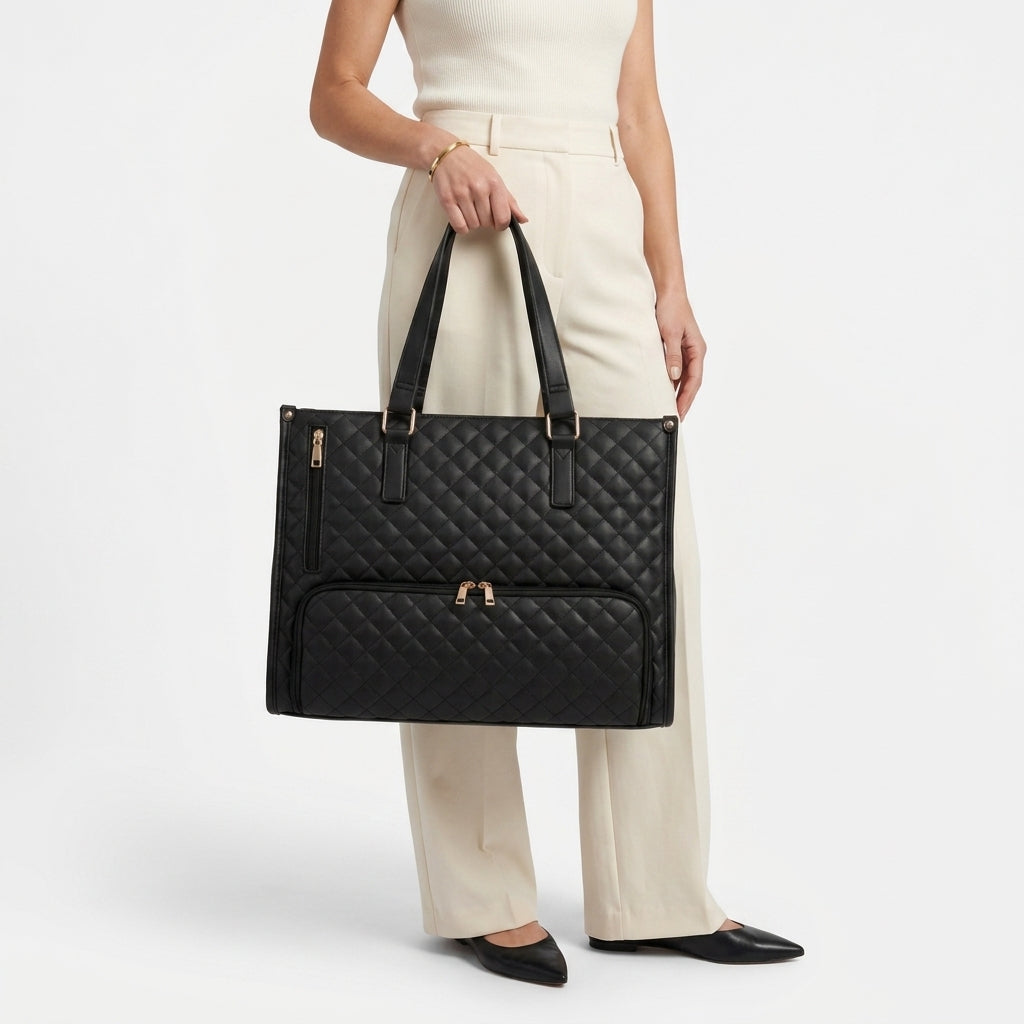
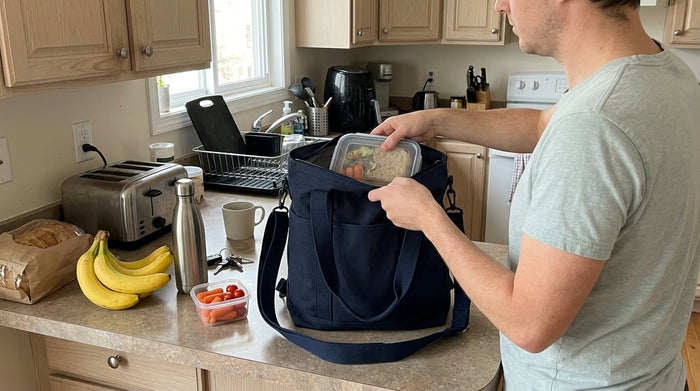
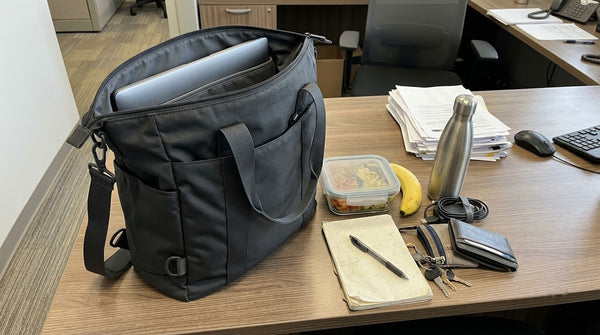
A hot food jar works best inside an insulated space, and carrying a separate lunch bag every day is one more thing to juggle. The JELRIX 3-in-1 Totebag builds that space in. It combines a work tote, an insulated lunch bag and an organizer in one bag.
- Insulated, leak-proof food compartment that keeps meals warm for up to 5 hours and cold for up to 10.
- Separate from your laptop (fits up to 17") and papers, so a hot soup never sits next to your tech.
- 7 smart compartments plus a secure zip pocket for everything else.
- Easy-to-clean lining, because spills happen.
It ships in 3 to 5 days with tracking and comes with 30-day easy returns.
Common Mistakes to Avoid
- Packing food that is only warm, not hot. Start with steaming hot food.
- Skipping the pre-heat. A cold container cools your food fast.
- Leaving a half-empty jar. Fill it up or use a smaller one.
- Packing hot and cold side by side. Keep them in separate sections.
- Eating food that has been lukewarm for hours. When in doubt, throw it out.
What the Experts Say
For more on keeping packed meals safe, the USDA has a helpful guide to using an insulated lunch bag to keep meals safe.
Keep Reading
A hot packed lunch is also a cheap one: see how to save money by packing lunch for work. Then make time to enjoy it with why you need a real lunch break, and cut packaging with our zero-waste lunch guide.
Frequently Asked Questions
How can I keep my lunch warm without a microwave?
Pre-heat a vacuum-insulated food jar with boiling water, fill it to the top with steaming hot food, close it tightly and keep it inside an insulated lunch bag until you eat. Dense, saucy foods like soup, stew, curry and pasta stay warm longest.
How long does a thermos keep food hot?
A good pre-heated vacuum food jar can keep food hot for several hours. The exact time depends on the jar, how hot the food was, how full the jar is and how cold the room is. Check the manufacturer's guidance for your jar.
Is it safe to eat lunch that has been in a thermos all morning?
It can be, if the food stayed hot. The USDA advises keeping hot foods at 140°F (60°C) or above. If the food has cooled to lukewarm, it may have spent too long in the danger zone, and it is safer not to eat it.
What is the best hot lunch to bring to work without a microwave?
Soups, stews, chili, curries, pasta in sauce, rice dishes and oatmeal all hold heat well in a pre-heated food jar. Avoid fried or crispy foods, which cool quickly and turn soggy.
Can I use an insulated lunch bag to keep food warm?
Yes. An insulated lunch bag slows heat loss, and it works best when paired with a pre-heated food jar inside it. Keep hot and cold foods in separate sections so they do not cancel each other out.
Source: USDA Food Safety and Inspection Service, "Danger Zone (40°F - 140°F)": fsis.usda.gov. This article is general information and not professional food safety advice.