Turning the pocket side of your tote toward the world makes your phone and keys easy to grab. Turning it toward your body keeps them more private and harder to reach. Neither is better for everyone, so it comes down to how you move through your day.
What facing out and facing in actually mean
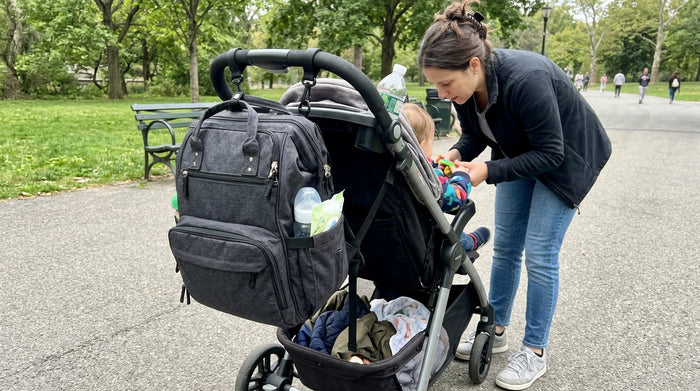
Most totes have a front panel with a pocket on it. When you carry the bag, that panel either faces away from you, toward the street, or rests against your body.
It sounds like a tiny detail. But you reach into your bag dozens of times a day, and that one choice decides which hand does the work, how far it travels, and who can see what you are doing.
This article is for anyone comparing totes before buying. We will look at how each setup feels in daily use, what to look for in a bag, and how to test it at home before you commit.
What the research can and can't tell us
Let's be upfront. The sources we checked do not prove that facing the front panel inward or outward changes people's habits. They only support practical differences in access and storage.
One of them says an exterior pocket is handy for things you take out often, because you can reach them without opening the main compartment. Another describes a convertible bag with a dedicated quick-access phone pocket, which keeps a frequently used item within reach.
None of them compares the two orientations head to head. So what follows is practical reasoning built on those access and storage facts, not a claim that science has measured it. Treat it as a guide for your own trial, not a rule.
Pocket facing out: how it tends to feel
With the pocket facing out, the things you need most are on the outside of your carry. Your phone, transit card, lip balm or keys are a quick reach away.
- Faster grabs. You can pull out a card at a gate or a phone at a crossing without opening the main bag.
- One-handed use. If you are holding a coffee or a child's hand, a pocket that faces out is easier to reach with your free hand.
- Easy to see. You can glance at the pocket and know what is in it.
The trade-off is exposure. Anything in an outward pocket is closer to other people, and it can bump against doorframes, railings and crowded seats. If you commute at busy times, you will feel that.
People who carry this way often get into a habit of keeping the pocket for quick items only. Everything else goes inside. That is a sensible habit, and it follows from how the pocket works.
Pocket facing in: how it tends to feel
With the pocket facing in, the front panel sits against your body. The pocket is still there, but it is tucked away behind the bag and harder to open while you walk.
- More privacy. Nobody sees you reach for something.
- Less snagging. The outside surface is the smooth part of the bag, so it brushes through crowds more easily.
- A slower reach. You may need to shift the bag or open the main section to get to what you want.
This setup tends to suit people who open their bag a few times a day, not dozens. If you put your things in at home and take them out at your desk, you may never miss the quick access.
One bag-design article points out that things kept in an interior pocket are less likely to fall outside the bag if they spill from that pocket. That fits the idea of keeping valuables toward the inside.
Which habits are likely to shift
Since the research doesn't prove habit changes, here are the shifts that make practical sense. Try them and see if they match what you notice.
- How often you open the main bag. With an outward pocket, you may open the main section less because small items are handy. With an inward pocket, you may open it more.
- What you put where. An outward pocket pushes you to sort by how often you need something. An inward pocket pushes you to sort by what feels safe.
- How you hold your arm. An outward pocket often means reaching with the hand on the open side. An inward pocket may mean swinging the bag around to the front.
- How much you check the bag. If the pocket faces your body, you may touch the bag more to confirm it is closed. If it faces out, you may glance at it more.
None of these is good or bad. They are just the little routines that build up around a bag. What matters is that the routine fits your day, so you don't fight your bag every time you leave the house.
A quick comparison by daily routine
- Daily commute on public transit: An outward pocket helps for your pass, but an inward setup feels calmer in a crowd. Many people mix the two, with the pass outside and the phone inside.
- Office days: You mostly set the bag down and open it. Facing in is fine, since you are not reaching on the move.
- School or campus: You are in and out of the bag constantly. An outward pocket saves time.
- Errands and shopping: Hands are often full. An outward pocket wins for keys and a phone.
- Travel days: You need documents handy but safe. An inward pocket with a zipper is often the better pick.
Security is part of the choice
If you carry valuables, the question is not only which way the pocket faces. It is also whether the pocket closes well and where the zipper sits.
A zip closure is generally harder to open by accident than an open top, which is the point of a zipper versus open-top tote comparison we looked at. The trade-off it raises is how the bag looks, and a good design can handle both.
So when you compare totes, look at the closures first, then at the orientation. A pocket that faces in with a weak closure may be less secure than one that faces out with a solid zipper.
How the 3-in-1 Totebag fits this question
If you want a bag that works well whichever way you carry it, look at the 3-IN-1 Totebag. It is listed at 69 and is made from leather described as soft and durable.
Here is why its design suits both carrying styles:
- Anti-theft zipper. The closure matters more than the facing direction when it comes to safety, and this bag has a zipper built for that.
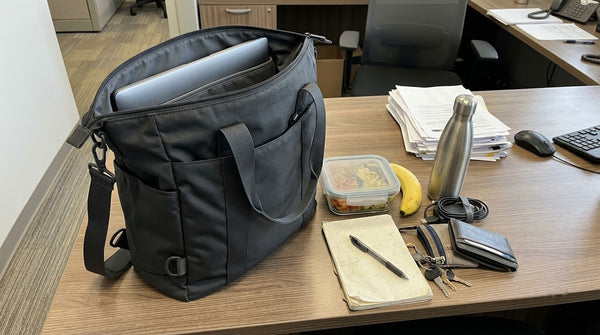
- 7 interior pockets. You can keep small items in the inside pockets, so the exterior doesn't have to do all the work. That helps if you prefer to face the front panel inward.
- Waterproof exterior. The outside can handle a wet bench or a rainy walk, whichever side faces out.
- Easy-to-clean inside lining. Handy if something spills in the main section.
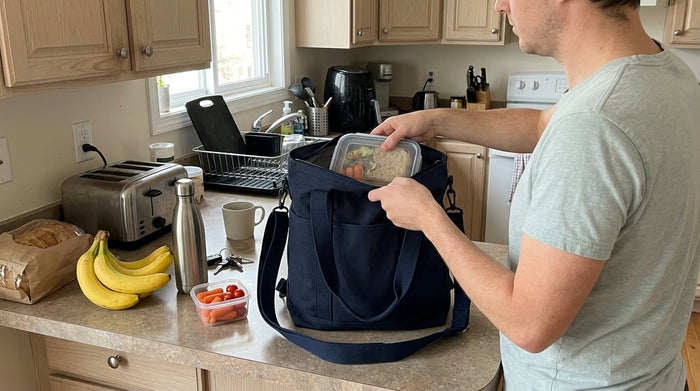
- Leak-proof food compartment. Lunch has its own space, so it stays away from your phone and papers.
The listing says it keeps meals warm for up to 5 hours and drinks cold for up to 10. It fits laptops up to 17 inches and measures 5.5 inches deep, 14.5 inches wide and 17 inches tall. It weighs 1.1 lbs, so it stays light even when it is full.
That mix suits busy professionals, moms, nurses, teachers and students, who are often the people reaching into a bag all day. The seven inside pockets let you decide for yourself how much needs to be quick to grab.
What to check before you buy any tote
Whether you choose this bag or another one, run through this list first.
- Where are the pockets? Count the outside ones and the inside ones. A bag with only one outside pocket forces you into one habit.
- How do they close? Zippers are safer than open tops. Check that the zipper runs smoothly with one hand.
- How big is the opening? If you can't see into the bag, you will open it more often.
- How heavy is it empty? A heavy bag gets heavier fast. Light leather bags are easier on your shoulder.
- Does it fit your tech? Check the laptop size against the bag's stated limit.
- Can you wipe it clean? A wipeable lining and exterior save time.
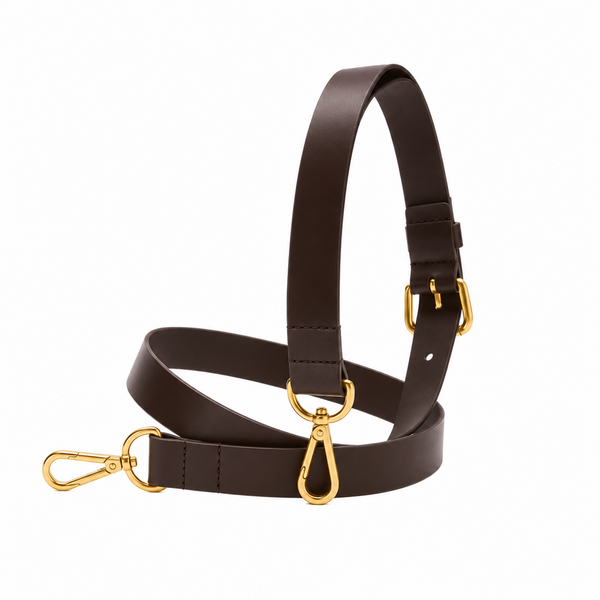
- Does it carry more than one way? One product listing we saw describes a bag that converts between backpack, crossbody and tote styles. If a bag offers that, ask how the pocket sits in each mode.
A simple home test
You don't need to guess. Before you decide, spend a week on this.
- Days one to three: Carry your bag with the pocket facing out. Notice how often you reach for it and whether you feel nervous about what is in there.
-
Days four to six: Turn the pocket in. Notice what g
Keep reading