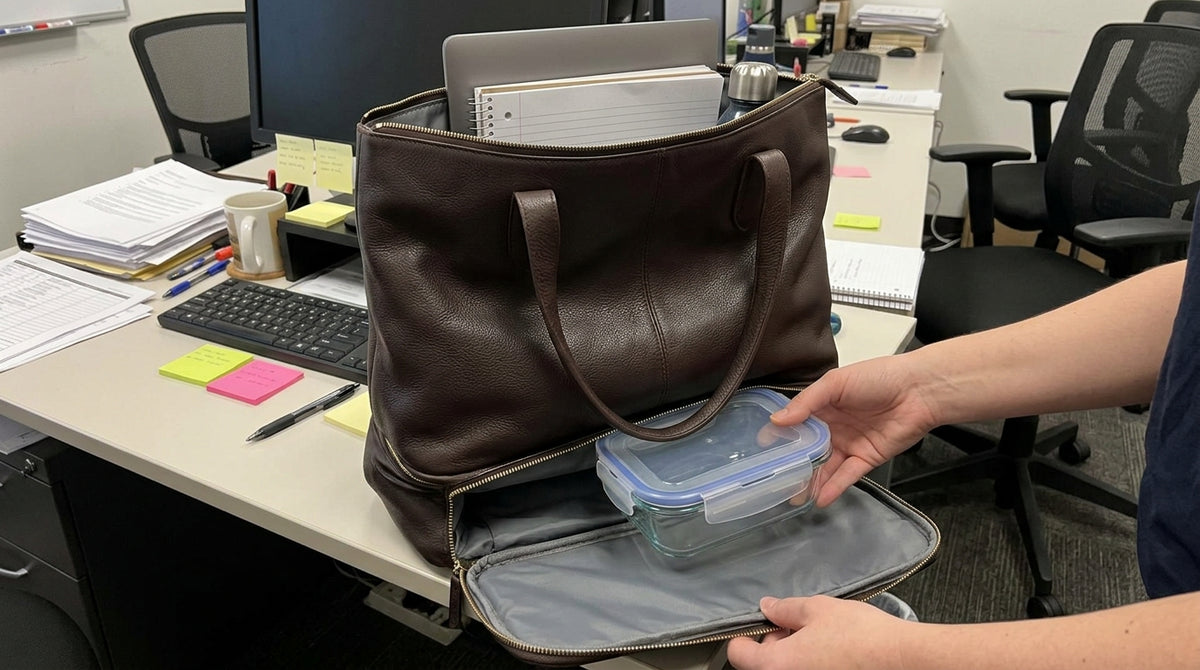
To keep lunch from making your bag smell, seal the food in a leak-proof container and keep it apart from your other things. Wipe the bag out the same day and let it dry fully. Most bag smells come from small spills and trapped damp air, so a few habits fix most of it.
Why Lunch Makes a Bag Smell in the First Place
A bag does not smell because you carried lunch. It smells because a little of that lunch got out. Maybe a drop of sauce slipped past a loose lid. Maybe steam from warm food settled on the lining. Maybe a crumb fell into a corner and sat there all day.
Fabric and lining soak up smells quickly. Warm food makes it worse, because warm air carries odors and moisture into every corner of the bag. Then you zip the bag shut, and the smell has nowhere to go.
The good news is that you can stop this at four points: how you pack, where the food sits, how you clean up, and how you let the bag dry. Fix those four and your bag can smell like your bag again, not like yesterday's curry.
Start With a Container That Really Seals
The container is your first and best defense. If nothing leaks out, nothing can soak into your bag. The USDA suggests packing food in sealed, leak-proof containers to keep spills and odors from reaching the bag.
Here is what to look for when you pick one:
- A lid with a rubber ring. A snap-on lid without a seal will drip when the bag tilts on the bus or train.
- Clamps or a firm locking lid. These hold tight even when the bag gets bumped.
- Glass or stainless steel for strong foods. Plastic can hold onto smells like garlic, fish, and curry. Glass and steel let go of them more easily.
- A size that fits the meal. A half-empty container lets food slosh around. A container that is too full can force the lid open.
Before you leave home, do a quick test. Close the lid, hold the container upside down over the sink for a few seconds, and give it a gentle shake. If a drop comes out, it will come out in your bag too.
Be Smart About Strong-Smelling Foods
Some foods are just louder than others. Fish, eggs, cabbage, onions, garlic, and spicy sauces are the usual suspects. You do not have to give them up. You just need to pack them with a little more care.
- Use your best container for them. Save the tightest lid for the smelliest meal.
- Pack sauces separately. A small sealed cup of sauce or dressing is much less messy than sauce mixed into everything.
- Keep the food cold when you can. Cold food gives off less smell than hot food, and you can reheat it at work.
- Skip loose wrapping. Foil, cling film, and paper bags let smells out. They are fine as an extra layer, but not as the only layer.
- Save the strongest dishes for days you can eat early. The longer a meal sits in your bag, the more time it has to leave its mark.
If you love leftovers like fried rice, stew, or noodle soup, a wide, sealed container with a locking lid is worth the money. Soups and saucy dishes are the most likely to leak, so treat them with extra care.
Double Up for Messy Meals
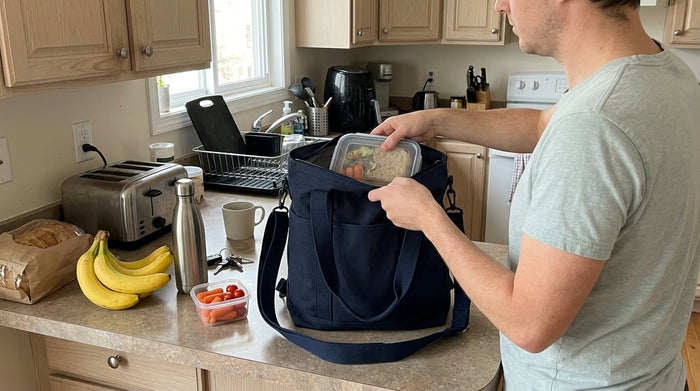
For anything runny, add a second layer. Put the sealed container inside a zip-top bag or a small silicone pouch. If the container leaks, the second layer catches it, and you throw away or wash one small item instead of cleaning your whole bag.
A folded paper towel or a small cloth at the bottom of the pouch also helps. It soaks up drips and any moisture from the outside of the container. Just remember to take it out at the end of the day.
Do not wrap a hot container in a bag and zip it closed. Steam gets trapped, turns into water, and can sit against your lining for hours. Let hot food cool a bit before you seal it, or use a container made to hold heat.
Keep Food Away From Everything Else
Even a tight container can pass its smell to the things around it. A scarf, a gym top, or a paper notebook will happily soak up the scent of last night's dinner. So give your lunch its own space.
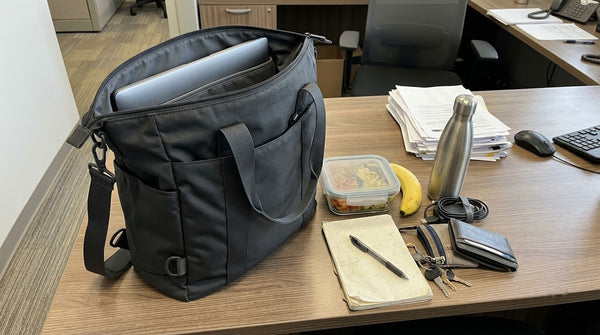
- Put lunch in its own compartment or pouch whenever you can.
- Keep soft things, like scarves, cardigans, and tissues, in a different section.
- Keep your laptop and papers on the opposite side from the food.
- Place lunch upright, not on its side, so any drip stays inside the container.
If your bag has only one big space, a small insulated pouch or lunch sack works well as a bag inside the bag. It makes a clean boundary between food and everything else you carry.
Keep It Cool, For Taste and For Safety
Cold food is better for safety, and it also smells less. For food that needs to stay chilled, the USDA recommends an insulated lunch bag with at least two cold sources, such as ice packs or frozen drinks.
Here are easy ways to do that:
- Freeze a small water bottle and use it as an ice pack. It also gives you cold water to drink later.
- Put one cold source under the food and one on top.
- Pack the lunch right before you leave, straight from the fridge.
- Put the bag in the fridge at work if you can. If not, keep it somewhere cool and out of the sun.
Cold packs can sweat, which means water drops form on the outside. Put them in a small bag or wrap them in a thin cloth so that water does not end up on your lining.
The After-Work Routine That Does Most of the Work
This is the habit that makes the biggest difference. Smells set in when food and moisture sit in a closed bag overnight. If you clear them out the same day, there is very little left to smell.
The USDA advises removing food and leftovers as soon as you get home, then wiping the inside with hot, soapy water and letting it air-dry. That is a good rule to follow every day. Here is a simple version:
- Empty the lunch section right away. Take out the container, napkins, cold packs, and any wrappers.
- Wipe the inside. Use a cloth with hot water and a little dish soap. Get into the corners and seams.
- Check the pockets. Crumbs and loose sauce packets love to hide there.
- Leave it open to dry. Do not zip it shut while it is still damp.
Cleaning spills quickly matters too. Wiping up spills before they dry can help prevent lingering stains and odors. A spill that sits overnight is much harder to remove than one you wipe up in a minute.
Let the Bag Dry All the Way
Many people clean the bag but then close it up too early. Trapped moisture is a main cause of that stale, musty smell. Leaving the lunch section open until it is completely dry helps keep that smell from building up.
To dry it faster:
- Open every zip and pocket.
- Stand the bag somewhere with fresh air, away from direct heat.
- Pat the inside with a dry cloth first to take off most of the water.
- Do not store the bag in a cupboard or closet until you are sure it is dry.
Morning is a good time to check. If the inside still feels damp, give it a few more minutes with the bag open while you get ready.
What to Do If Your Bag Already Smells
Do not panic. Most smells can be improved with patience. Start gently and work your way up.
- Wipe and air it out. Clean the inside with warm soapy water, then leave the bag open in a room with fresh air.
- Try baking soda. Sprinkle a little inside the dry