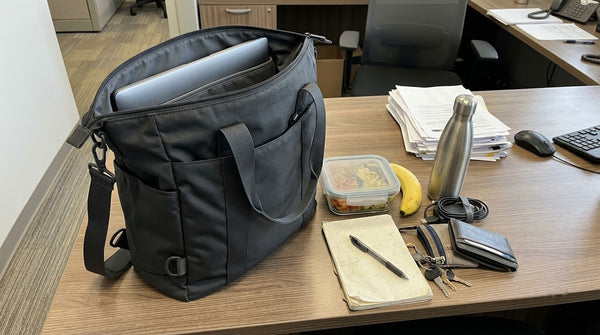
Bring your phone, wallet, keys, work ID, a charger, and a water bottle. Add a notebook and pen, plus your laptop if your job needs one. Pack the same way every day and you will rarely forget anything.
Why a work checklist helps
Most of us have had that moment. You get to the office, reach into your bag, and realize the charger is still at home. It is a small thing, but it can slow down your whole day.
A checklist fixes this. It takes the guessing out of your morning, and it frees your brain for more important things. You do not have to remember everything. You just check the list.
The best list is the one that fits your real day. A nurse, a teacher, and an office worker will not carry the same things. That is fine. Start with the basics below, then add or remove items to match your routine. Work totes commonly carry things like laptops, documents, chargers, water bottles, and personal belongings, so use that as a starting point and tailor it to yourself.
The basics you should never leave home without
These are the things you need almost every single day. If you forget one of them, you will notice quickly.
- Phone: For calls, messages, maps, and work apps.
- Wallet: Cash, a bank card, and any cards you use often.
- Keys: Home, car, office, or locker keys.
- Work ID or access card: Many buildings will not let you in without it.
- Payment card: Handy for lunch, coffee, or a surprise errand.
A good habit is to keep your wallet and keys somewhere easy to reach. It helps to use a secure compartment, as work tote guides suggest for wallets, keys, and small personal items. That way you are not digging around at the door while people wait behind you.
Tech items that keep you going
Phones and laptops are part of nearly every job now. A dead battery can stop your day, so a little planning helps a lot.
- Laptop and charger: If your job uses a laptop, bring the charger too. Having it means you can keep working when needed.
- Phone charging cable: A spare cable is cheap and very useful.
- Power bank: This is a great backup if your phone runs low on a long day or a long commute.
- Headphones: They help on the way to work, and they can help you focus when the office is noisy. A water bottle and headphones are common everyday carry items for good reason.
Tip: keep one set of cables in your bag all the time. Do not pull them out at night to charge things at home. Buy a second set for the house instead. This one small habit removes a common cause of forgotten chargers.
Notes, pens, and paper
Even in a digital workplace, a small notebook and pen are very handy. You can write down tasks, meeting notes, and ideas without opening an app. A notebook and pen are good for jotting down information you will want to remember.
- Small notebook: Pick one that fits easily in your bag.
- Two pens: One always runs out at the wrong moment.
- Folder or document sleeve: Keeps papers flat and clean.
- Sticky notes: Great for quick reminders on your desk or screen.
If you often carry printed papers, a flat folder protects them from spills and wrinkles. It also makes them easy to find in a full bag.
Food and drink for the workday
Eating well at work saves money and keeps your energy steady. It also means you do not have to rush out when you are busy.
- Water bottle: Drinking water through the day is easier when the bottle is always with you.
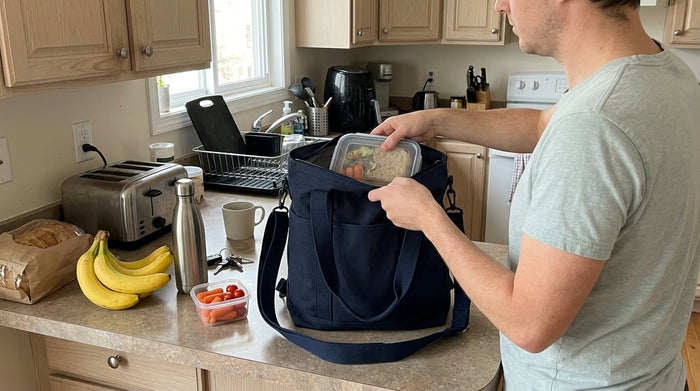
- Lunch box: Pick one that closes tight so it does not leak onto your things.
- Snack: Nuts, fruit, or a granola bar can save you from a 3 p.m. slump.
- Reusable cutlery: Useful if your office does not have any.
- Coffee or tea cup: If you like your own, bring it.
The big risk here is leaks. A sauce or soup spill inside your bag can ruin a notebook or even a laptop. Always use a sealed container, and keep food apart from your electronics when you can.
Small comfort and health items
These items are not exciting, but they are the ones you are glad to have when you need them.
- Tissues: For sneezes, spills, and anything else.
- Personal medication: A small supply of the medication you normally use and tissues can be useful for common needs during the day. Only carry what is right for you, and follow the advice of your own doctor.
- Hand sanitizer or wipes: Good before lunch or after a commute.
- Lip balm and hand cream: Offices with strong air conditioning can be dry.
- Hair tie or comb: A quick fix before a meeting.
- Small umbrella or light jacket: Weather can change fast, and office temperatures are not always comfortable.
Keep these in a small pouch. That way they stay together, and you can move the pouch from bag to bag without thinking about it.
Extras for different kinds of jobs
Your job decides what else goes in your bag. Here are a few ideas to build from.
- Office workers: A laptop, charger, notebook, headphones, and a cardigan for cold rooms.
- Teachers: Spare pens, a planner, a lunch box, a water bottle, and comfortable shoes.
- Nurses and healthcare staff: Work ID, comfortable shoes, a water bottle, snacks, and hand cream.
- Students and trainees: A laptop, notebooks, a power bank, and a filled water bottle.
- Busy parents: A small pack of tissues, wipes, a snack, and a spare phone cable.
If you are not sure what you need, track it for one week. Each time you wish you had something, write it down. At the end of the week, you will have your own personal list.
How to pack your bag the night before
The easiest way to remember everything is to pack the night before. It takes five minutes and makes your morning much calmer.
- Step 1: Put your laptop, charger, and notebook in first.
- Step 2: Add your small pouch with health items and cables.
- Step 3: Place your lunch and water bottle last, upright, so nothing tips over.
- Step 4: Set your wallet, keys, and phone by the door.
- Step 5: Check the weather and add an umbrella or jacket if needed.
Then, in the morning, you only add the last few items. Many people keep a small tray by the door for keys, ID, and wallet so they are always in the same spot.
Choose a bag that holds it all
A checklist is only helpful if everything fits well. A bag with lots of pockets keeps small things from getting lost at the bottom. A separate spot for food keeps lunch away from your tech.
The 3-IN-1 Totebag is one example of this idea. It has a leak-proof food compartment, an anti-theft zipper, and 7 interior pockets. It fits laptops up to 17 inches and weighs just 1.1 lbs, so it stays light even when it is full. The exterior is waterproof and the inside lining is easy to clean. It also keeps meals warm for up to 5 hours and drinks cold for up to 10, which is handy on long shifts.
Whatever bag you choose, look for these features: room for your laptop, a safe spot for your wallet and keys, a place for food, and straps that feel good on your shoulder.
Common mistakes to avoid
- Carrying too much
Keep reading