You can stop buying lunch every day by planning ahead and packing it the night before. Cook a bit extra at dinner, store it cold, and carry it in a bag made for the job. It takes a few minutes and keeps money in your pocket.
Why Buying Lunch Every Day Costs You
A coffee shop sandwich here and a takeaway bowl there feels harmless. But lunch happens five days a week, every week. Those small buys turn into a habit you barely notice until you check your bank app.
Buying lunch is also a decision you make when you are hungry and short on time. That is when the quick, pricey option wins. Packing lunch takes that decision away. You already know what you are eating, and you already paid for it.
Home Food Usually Costs Less
Health guidance from the NHS notes that home-cooked meals are usually cheaper than ready-made alternatives. That matches what most of us see in real life. When you buy ingredients and cook them yourself, you are not paying for someone else's rent, staff, and packaging.
You also get to choose what goes in your lunch. Want more vegetables? Less sauce? Your favorite snack on the side? It is your call, not a menu board's.
Plan Lunch Before the Week Starts
You do not need a fancy meal plan. You just need a rough idea of what lunch will be. The same NHS resource points out that planning a packed lunch ahead lets you use leftovers instead of buying food ready-made.
Try this simple routine:
- Pick two or three lunches you actually like.
- Check what is already in your fridge and cupboard.
- Write a short shopping list for what is missing.
- Shop once, not every other day.
That is the whole plan. Keep it easy, or you will give up by Wednesday.
Cook Once, Eat Twice
The easiest lunch is last night's dinner. Make a bigger pot of soup, pasta, rice, or roast vegetables, and set some aside before you sit down to eat. The NHS resource suggests making larger batches for family meals and packed lunches, and it is a smart way to save both time and effort.
Here are a few easy ideas:
- Grain bowls: rice or couscous, roasted veg, and a simple dressing.
- Wraps: leftover chicken or beans with crunchy salad.
- Soup and bread: make a big pot on Sunday and pack single portions.
- Pasta salad: cook extra pasta and toss with whatever is in the fridge.
Pack It the Night Before
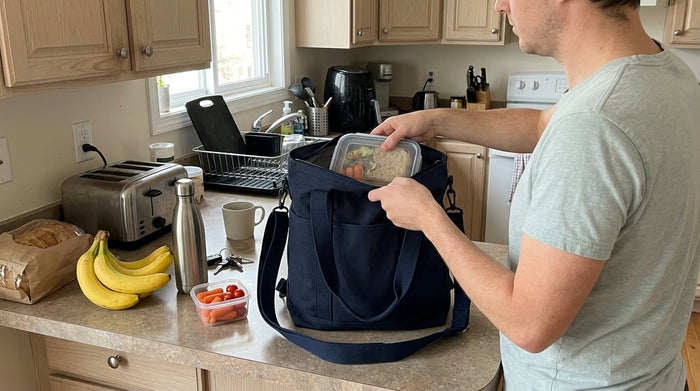
Mornings are rushed. If lunch is not ready when you wake up, you will probably buy something on the way. The NHS resource recommends you prepare lunch the night before and keep it refrigerated until you leave.
Make it part of your evening. Once dinner is cleared, spend five minutes boxing up lunch. Put it in the fridge, and grab it on your way out. You will feel organized, and you will spend nothing.
Keep Your Lunch Cold and Safe
A packed lunch that sits warm for hours is not a great lunch. The USDA says perishable foods should stay cold on the way to work and while you are there. Its guidance is to use an insulated lunch bag with at least two cold sources.
In everyday terms, that means:
- Use an insulated bag, not a thin paper bag.
- Add two cold sources, like an ice pack and a frozen water bottle.
- Keep the bag in the fridge at work if you can.
- Do not leave it in a hot car.
Carry Everything in One Bag
One reason people give up on packed lunches is that they are awkward to carry. You already have a work bag, a laptop, and maybe a handbag. Adding a separate lunch box feels like one thing too many.
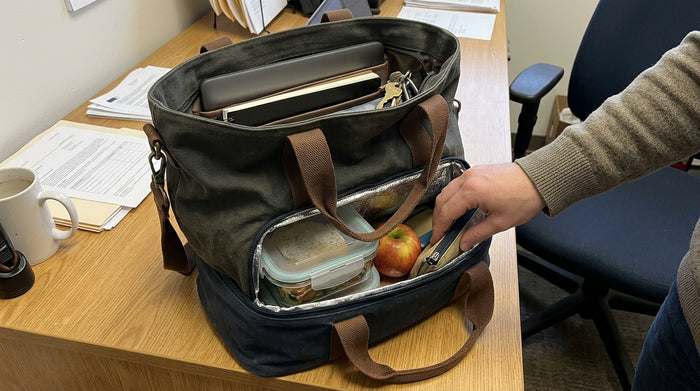
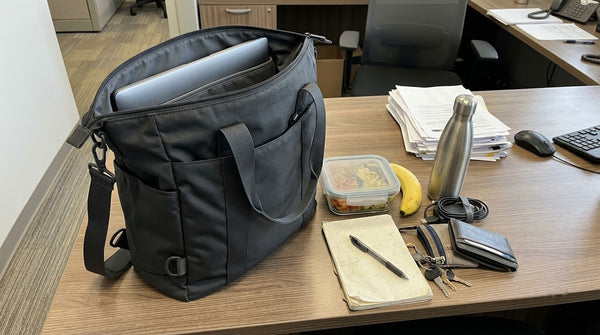
That is where the 3-IN-1 Totebag comes in. Packuum describes it as combining an insulated lunch section, a laptop compartment, and a handbag in one bag. So your lunch, your laptop, and your daily items travel together.
The maker also says the insulated section is designed to keep food warm for 5 hours and drinks cold for 10 hours. Those are the manufacturer's claims, so think of them as the design goal rather than a promise for every situation. Still, a bag with a built-in lunch section makes it easier to stick with your plan, because there is nothing extra to remember.
Make the Habit Stick
Saving money on lunch is less about willpower and more about making it easy. A few small tricks help:
- Start with three days. You do not have to pack every single day. Begin with Monday to Wednesday.
- Keep a treat day. Buy lunch on Friday if you want. It feels better when it is a choice.
- Stock easy extras. Fruit, yogurt, nuts, and crackers make a lunch feel complete.
- Keep your bag by the door. If it is packed and ready, you will take it.
After a few weeks, packing lunch feels normal. You may even start to look forward to it, because you picked the food yourself.
The Bottom Line
You do not need to give up eating well or enjoying your lunch break. You just need a plan, a bit of extra cooking, and a good way to carry your food. Pack the night before, keep it cold, and bring it with you. Do that most days, and you will stop buying lunch every day without feeling like you are missing out.
How do I stop buying lunch every day?
Plan a few lunches, cook extra at dinner, and pack it the night before. Keep it cold in an insulated bag so it is easy to take with you.
Is packing lunch really cheaper?
Usually, yes. NHS guidance says home-cooked meals are usually cheaper than ready-made ones.
How do I keep a packed lunch safe until noon?
Use an insulated bag with at least two cold sources, like an ice pack and a frozen bottle. Keep it in a fridge at work if you can.