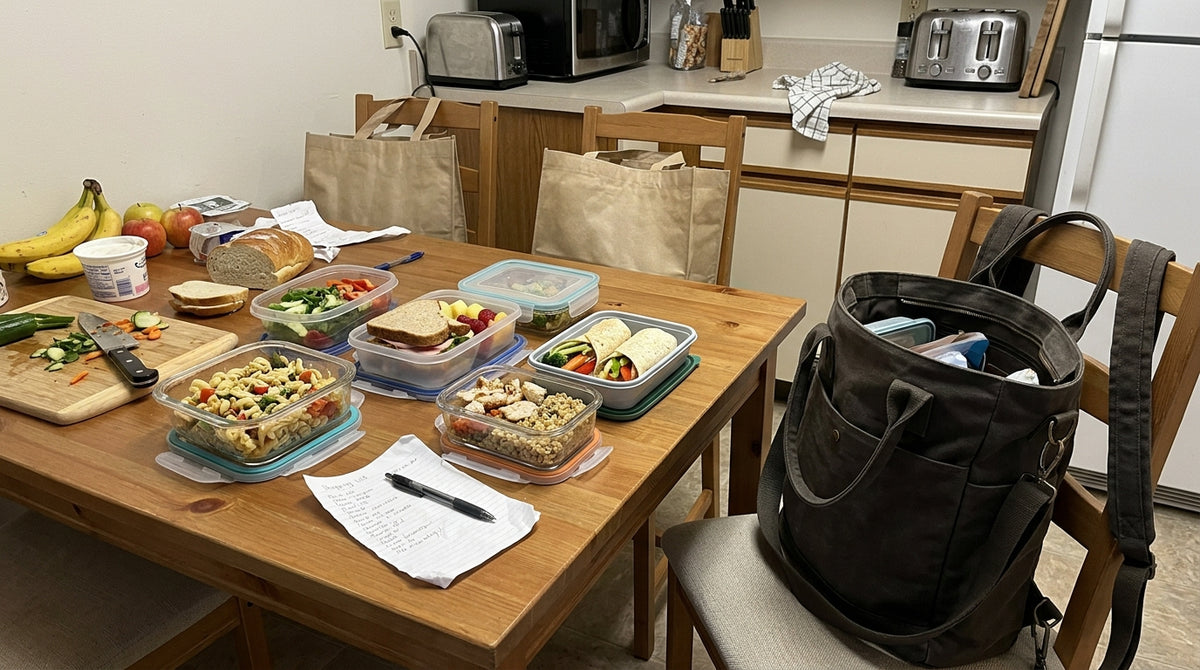
A good work lunch plan is five simple lunches, one shopping trip, and one short prep session. This guide gives you all three, so you can stop deciding what to eat every morning.
What Makes a Work Lunch Work?
The easiest lunch to pack is one you already know how to put together. A simple rule helps: build each lunch around a protein, a grain, a fruit or vegetable, and something with calcium, like yogurt or cheese. Clemson Extension suggests including foods from at least three food groups in a packed lunch.
That means you do not need fancy recipes. You need a few basics that mix and match, and a plan that reuses ingredients so nothing goes bad in the fridge.
Your Five-Day Lunch Plan
Here is a week of lunches that share a short list of ingredients. Swap anything you do not like. The pattern matters more than the exact food.
- Monday: Chicken and rice bowl. Rice, sliced chicken, steamed broccoli, and an orange on the side.
- Tuesday: Chicken wrap. Leftover chicken, spinach, and shredded cheese in a tortilla, plus an apple.
- Wednesday: Lentil soup. A frozen portion from your Sunday batch, with whole-grain bread and a yogurt.
- Thursday: Chickpea pasta salad. Pasta, chickpeas, cucumber, tomatoes, and feta, with grapes.
- Friday: Egg salad sandwich. Hard-boiled eggs, a little mayo or yogurt, carrot sticks, and a banana.
Notice the repeats. Chicken shows up twice, and the same fresh vegetables fill several lunches. Repeating ingredients keeps your list short and your food fresh.
The Shopping List
A list sorted by store section makes the trip quicker. A practical list can be grouped by produce, meat and seafood, dairy and eggs, and bakery items. Here is that idea applied to this plan.
- Produce: broccoli, spinach, cucumber, cherry tomatoes, carrots, onion, garlic, oranges, apples, grapes, bananas.
- Meat and seafood: chicken breasts or thighs, enough for two lunches and one dinner.
- Dairy and eggs: a dozen eggs, plain yogurt (or single cups), shredded cheese, feta.
- Bakery: whole-grain bread, tortillas.
- Pantry: rice, pasta, dried red lentils, canned chickpeas, a carton of broth, mayo, olive oil, salt and pepper.
Before you head out, check what you already have at home. Clemson Extension also advises buying only what you can use in a reasonable amount of time and comparing unit prices, which helps you avoid wasting food.
A Simple Sunday Prep Session
You do not need to spend your whole afternoon in the kitchen. Aim for about an hour and do these jobs in order:
- Start a big pot of lentil soup. Cook it with onion, garlic, carrots, and broth.
- Cook a pot of rice while the soup simmers.
- Bake or pan-cook all the chicken at once.
- Boil the eggs for Friday.
- Wash and chop the vegetables and fruit.
Clemson Extension suggests cooking a larger batch of soup or stew and freezing it in lunch-size portions to save time. Do exactly that. Pour the cooled soup into single containers, and move Wednesday's portion to the fridge on Tuesday night so it thaws.
Use Dinner Leftovers on Purpose
Leftovers are the easiest lunch there is. If you cook chicken for dinner on Sunday, set aside the lunch portion right away. Clemson Extension recommends using dinner leftovers for the next day's lunch and packing the lunch portion separately when you store them. It keeps the meal tidy and saves you from scooping food into a container at 7 a.m.
Keep Your Lunch Safe Until Noon
Chicken, eggs, yogurt, and cheese all need to stay cold. USDA recommends an insulated lunch bag with at least two cold sources, such as frozen gel packs, for perishable lunches.
Time matters too. USDA says perishable food should not stay at room temperature for more than two hours, or more than one hour when it is above 90°F. If your lunch sits in a warm car or on a hot desk, put it in the fridge as soon as you arrive.
Carrying It All
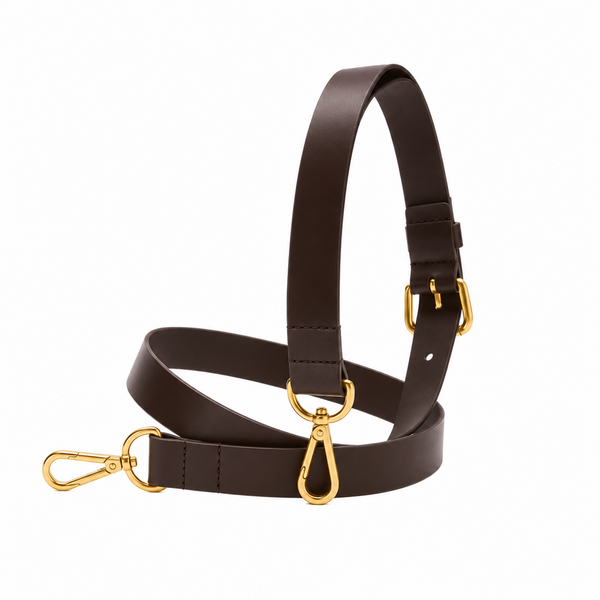
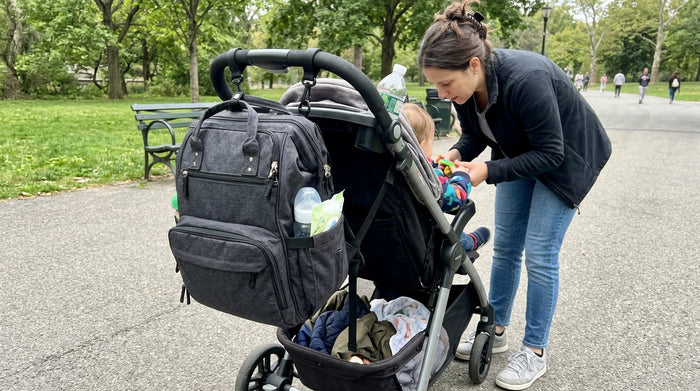
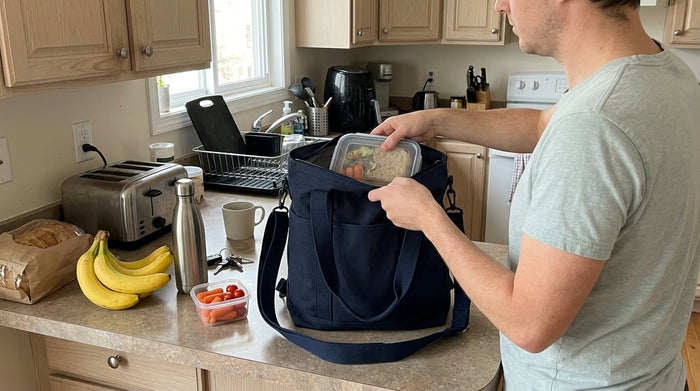
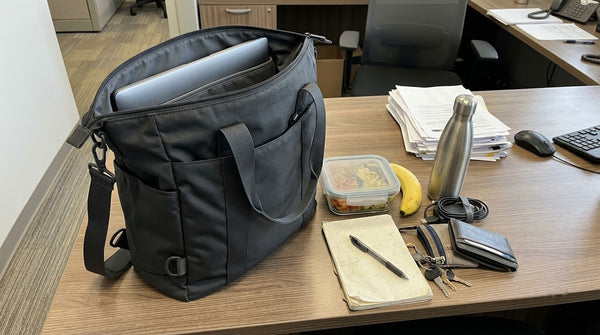
Packing a week of lunches is easier when your bag does more than one job. If you commute with a laptop, a bag that holds your lunch and your work gear saves you from carrying two things. The 3-IN-1 Totebag is one option. It is priced at $69 and is built to combine an insulated lunch compartment, a laptop compartment, and handbag storage. Whatever bag you choose, add your cold packs and keep the lunch away from the warm side of your gear.
Tips to Make the Week Easier
- Pack lunches the night before, so mornings stay calm.
- Keep dressings and sauces in small containers, so wraps and salads do not get soggy.
- Use the same containers all week, so packing becomes a habit.
- Leave one lunch flexible. If a coworker invites you out on Friday, you will have food for Monday.
Can I Make This Work Lunch Plan Ahead for Two Weeks?
Yes, if you freeze the soup, rice, and cooked chicken in lunch-size portions. Keep fresh produce and eggs for a weekly shop so they stay at their best.
How Do I Keep Lunch Cold at Work?
Use an insulated bag with at least two frozen cold packs, and keep it out of the heat. Put it in a fridge when you can, since perishable food should not sit out for more than two hours.