Packing lunch can save you hundreds of dollars a year. Two homemade lunches a week can save up to $800 a year before you count grocery costs. Here is how to make it simple.
How much can packing lunch really save?
Let's start with the math, because it is the best reason to begin. Clemson Extension says skipping two $8 lunches a week could save up to $800 a year, before you subtract the cost of the food you make at home. Louisiana State University's AgCenter gives a second example. Swapping two $10 lunches a week for homemade meals could save up to $1,000 a year, again before the cost of those meals.
Notice the words up to. Your real savings depend on what you pay for lunch now and what you spend on groceries. But the direction is clear. Bringing lunch from home is usually cheaper than eating at a restaurant or cafeteria. And those examples only count two lunches a week. Pack more days and the number can grow.
Why the savings add up so fast
A single bought lunch does not feel like a big deal. It is a sandwich, a drink, maybe a snack. The cost sneaks up because it repeats. The same small purchase, made again and again, turns into a real line in your budget.
Packing lunch cuts that repeat spending in a few ways:
- You skip the markup. Restaurants charge for the cooking, the staff, and the space. At home, you pay mostly for ingredients.
- You skip the extras. The drink, the side, and the quick snack at the register disappear.
- You stop impulse buys. When your lunch is already in your bag, you do not wander out hungry and grab whatever is closest.
- You waste less food. Leftovers get eaten instead of tossed.
None of this takes a big life change. It just takes a little planning the night before.
Start with leftovers
The easiest packed lunch is last night's dinner. Clemson Extension suggests reusing planned leftovers, such as soup, pasta, or meat from dinner. That means you cook once and eat twice.
Try making a little extra on purpose. Roast a bigger tray of chicken. Make a bigger pot of soup. Cook extra pasta. Then scoop a lunch-sized portion into a container before you sit down to eat. It takes two minutes, and tomorrow's lunch is done.
Keep a short list of go-to lunches
Most people quit packing lunch because they run out of ideas. A short list fixes that. Pick four or five lunches you actually like and rotate them.
- Leftover pasta with a side of fruit
- A sandwich or wrap with veggie sticks
- Soup in a good container with crackers
- A rice bowl with whatever protein you cooked earlier in the week
- A big salad with a protein you prepped ahead
You do not need to be creative every day. You need lunches that are easy, filling, and cheaper than the place down the street.
Make it easy to carry and keep fresh
Here is where many good plans fall apart. If your lunch is awkward to carry, or it goes warm or cold at the wrong time, you will talk yourself into buying food instead. A bag that handles the whole workday makes the habit much easier to keep.
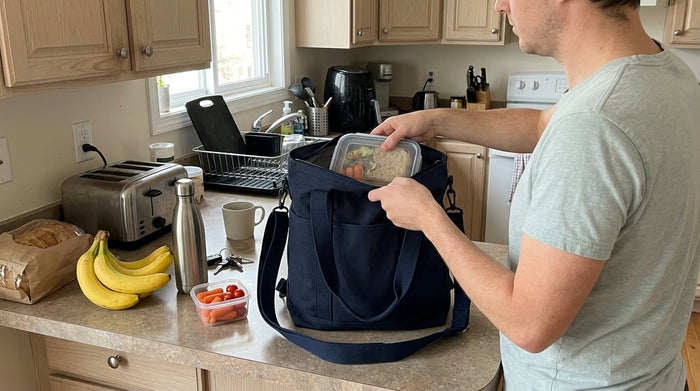
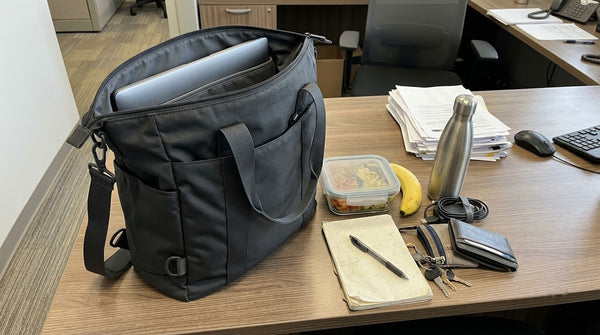
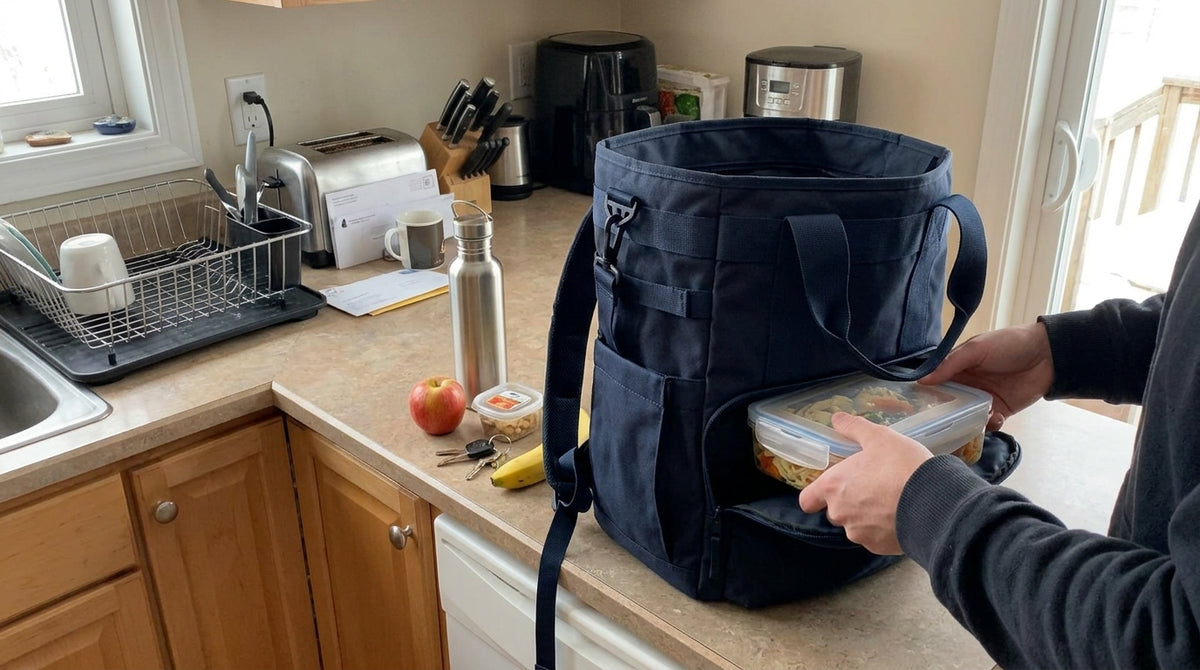
One option is the 3-IN-1 Totebag, priced at $69. According to the product page, it has a built-in insulated lunch compartment, a laptop compartment, and handbag space. That means one bag can carry your lunch, your work gear, and your everyday items, so you are not juggling a separate lunch box.
The same page says the insulation keeps food warm for up to 5 hours and drinks cold for up to 10 hours. That matters if your lunch sits in the bag through a long morning of meetings or a commute. A lunch that still tastes good at noon is a lunch you will want to bring again tomorrow.
Plan once a week, not every day
Packing lunch feels like a chore when you decide everything at the last minute. So decide once. Pick a set time each week, maybe Sunday afternoon, and spend ten minutes on it.
- Choose your lunches. Write down what you will eat on each workday.
- Check your kitchen. See what you already have so you do not buy doubles.
- Shop with a list. A list keeps you from filling the cart with things you will not use.
- Prep one or two items. Cook a grain, wash fruit, or cut vegetables.
This small routine protects your savings. It keeps your groceries focused and keeps your lunches simple.
Common mistakes that cost you money
Packing lunch only saves money if the food gets eaten. Watch out for these traps:
- Buying fancy ingredients. If your homemade lunch costs nearly as much as a restaurant meal, the savings shrink. Keep it practical.
- Packing food you do not like. You will end up buying something else, and the packed meal goes to waste.
- Going all in on day one. Start with two days a week. Add more when it feels easy.
- Skipping the right gear. If your food leaks, wilts, or gets cold, the habit will not last.
Turn it into a habit you keep
The first week is the hardest. After that, packing lunch starts to feel normal. Put your container by the door or in the bag the night before. Tie it to something you already do, like loading the dishwasher after dinner.
You can also watch the savings build. Each time you skip a bought lunch, set that money aside, even if it is just a note on your phone. Seeing the total grow is a strong reason to keep going. Two lunches a week is a fine place to begin, and it can lead to hundreds of dollars saved over the year.
How much money can I save by packing lunch?
It depends on what you pay now and what your homemade lunch costs. Clemson Extension says two $8 lunches skipped each week could save up to $800 a year before food costs.
What is the easiest way to start packing lunch?
Pack leftovers from dinner. Make a little extra and put a lunch portion in a container right away.
How do I keep my packed lunch fresh until noon?
Use an insulated bag or compartment so food stays at a good temperature. The 3-IN-1 Totebag product page says its insulation keeps food warm for up to 5 hours and drinks cold for up to 10 hours.