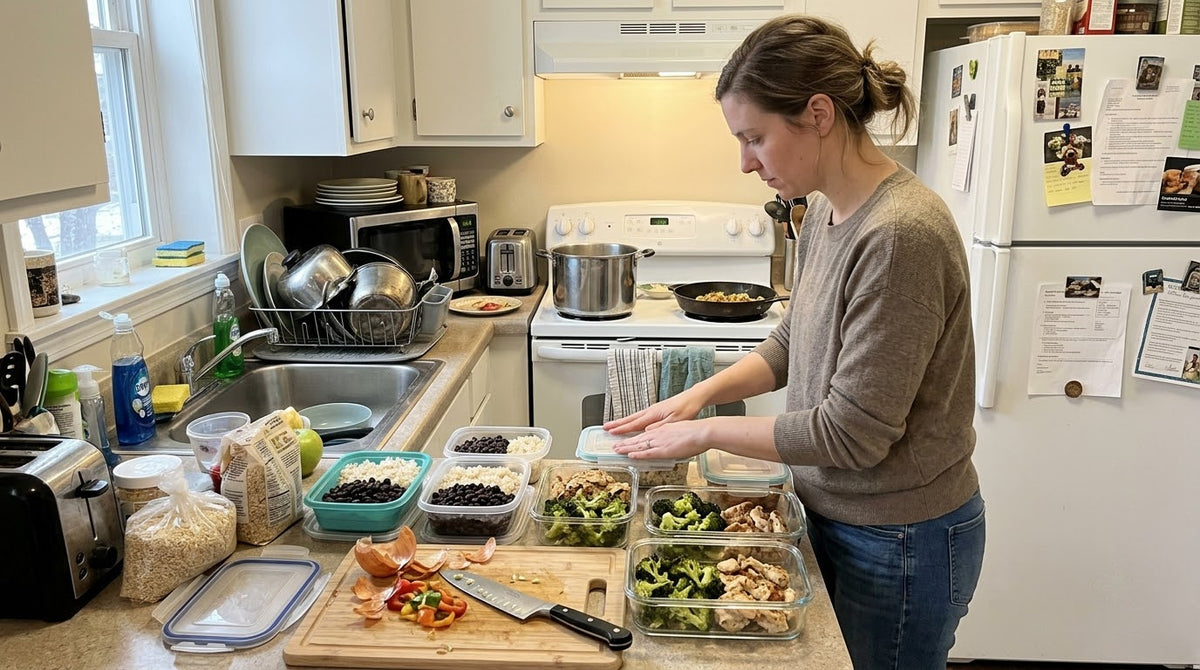
Budget meal prep means cooking a few simple meals once and eating them all week. It saves money because you buy less on impulse and waste less food. One hour on the weekend can cover most of your workday lunches.
Why Meal Prep Is Worth It When You Work Full Time
You already give your best hours to your job. By 6 p.m., the last thing you want is to decide what to make for dinner. That is when delivery apps, drive-thrus, and pricey grab-and-go lunches start to look easy.
Meal prep takes that decision away. When your meals are already cooked and waiting, you do not have to rely on willpower or spend money you did not plan to spend. You save cash, you save time, and you save mental energy for the things that matter more.
The best part is that you do not need fancy recipes or a perfect Sunday routine. You need a plan, a short list, and a few containers.
Start With a Plan, Not a Shopping Trip
Most overspending happens in the store, not in the kitchen. Going in without a plan is how a quick stop turns into a full cart of things you never use.
The USDA suggests planning a week of meals and making a grocery list before you shop, and including breakfasts, lunches, dinners, and snacks. That last part matters. Snacks and breakfasts are often what quietly drain a budget.
- Pick 2 or 3 meals you would be happy to eat more than once.
- Check your fridge and pantry first so you do not buy what you already have.
- Write a list by section (produce, protein, grains, pantry) so you move through the store fast.
- Stick to the list. If it is not on there, it waits until next week.
Shop Smart Without Spending Hours Hunting for Deals
You do not need to clip a drawer full of coupons. A couple of small habits go a long way.
Look at the shelf label for the unit price, not just the sticker price. The USDA notes that comparing unit prices and checking store sales can help you pick lower-cost options. A bigger package is not always the better deal, and the unit price tells you the truth in a few seconds.
Build your meals around ingredients that stretch. Rice, beans, oats, eggs, frozen vegetables, and whole chicken pieces are all easy to use in many ways. Buy what is on sale, then plan around it instead of the other way around.
Cook Once, Eat Several Times
This is the heart of budget meal prep. You are not cooking seven different dinners. You are cooking a few building blocks and mixing them up.
The USDA points to preparing meals ahead and freezing extra portions as budget-friendly strategies. It also notes that flexible dishes like soups, salads, stews, and stir-fries can stretch pricier ingredients into more portions. A little chicken or beef goes much further in a stir-fry or a pot of soup than on its own plate.
Here is an easy way to think about it:
- One big pot: soup, chili, or stew that makes four to six servings.
- One tray: roasted vegetables and a protein on a single sheet pan.
- One grain: a batch of rice or pasta you can change all week with different sauces.
- One grab-and-go item: hard-boiled eggs, cut fruit, or a snack mix.
With those four, you can build lunches that do not feel like the same meal on repeat.
Keep Your Food Safe While You Save
Saving money does not help if food goes bad. A few simple rules keep your prep safe.
- Chill food quickly. The USDA says perishable food should be refrigerated within 2 hours, or within 1 hour when it is above 90°F.
- Watch the days. Cooked meat and poultry keep in a fridge at 40°F or below for 3 to 4 days. Freeze portions you will eat later in the week.
- Use shallow containers. The USDA recommends shallow containers for leftovers so they cool fast before going in the fridge or freezer.
A good habit is to eat the first few days of meals fresh from the fridge and freeze the rest right away. That way, Thursday and Friday lunches are just as safe and tasty as Monday's.
A One-Hour Sunday Routine You Can Actually Keep
The best routine is one you will repeat. Keep it small at first.
- Minutes 0 to 10: Turn on the oven, start a pot of rice or grains, and wash your vegetables.
- Minutes 10 to 30: Chop, season, and put a tray of protein and vegetables in the oven. Start a pot of soup or sauce on the stove.
- Minutes 30 to 50: Boil eggs, cut fruit, and portion snacks while everything cooks.
- Minutes 50 to 60: Let food cool in shallow containers, then label and store. Freeze what you will not eat within a few days.
Put on a podcast or your favorite playlist and it stops feeling like a chore. One hour now can free up many evenings later.
Don't Forget How You Will Carry It All
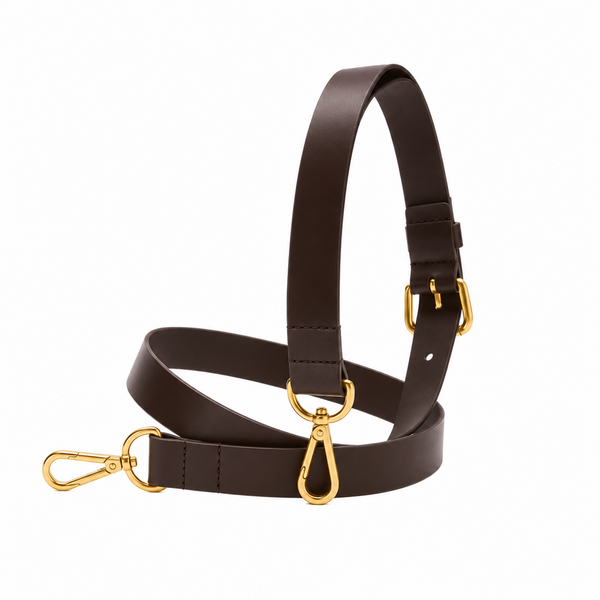
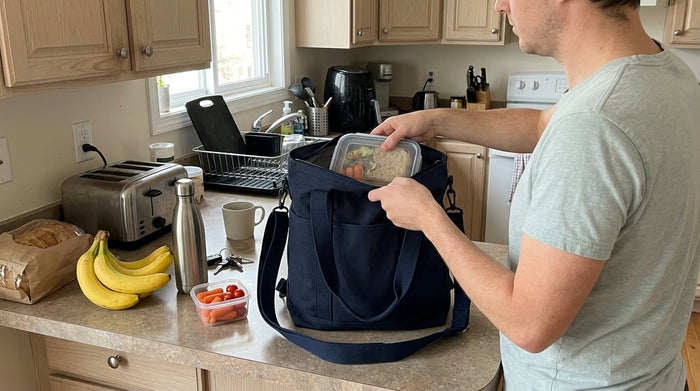
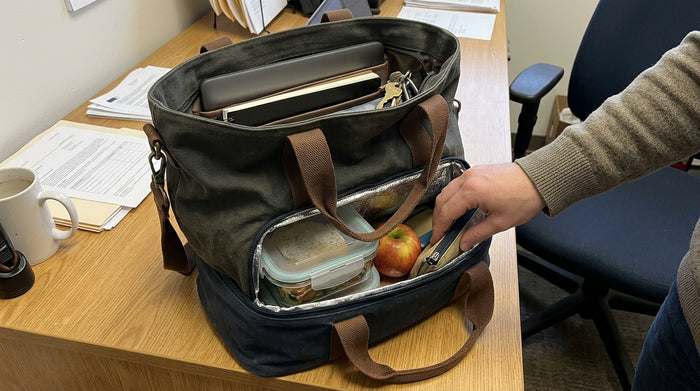
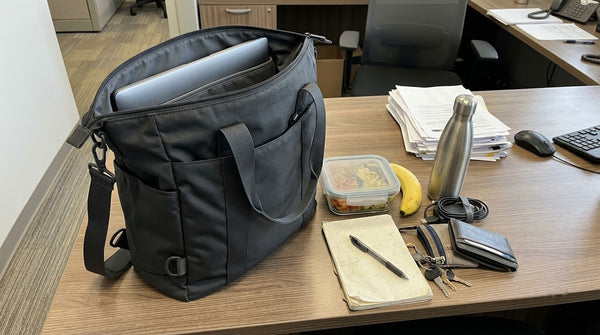
Prepped meals only save money if they actually make it to work with you. Many people skip the lunch they packed because it is awkward to carry, then buy something instead. A bag that holds your containers, your laptop, and your daily items in one trip makes the habit easier to keep.
If you want one bag for that job, the 3-IN-1 Totebag is priced at $69 and is worth a look. Think of it as part of your system: pack the night before, grab one bag, and go.
Small Habits That Keep the Budget on Track
- Repeat meals you love. A short list of reliable favorites beats a long list of recipes you never make.
- Use your freezer. It is your best tool for avoiding waste.
- Change the sauce, not the whole meal. Salsa, pesto, or a simple dressing can make the same base taste new.
- Track one number. Look at what you spend on food each week. Seeing it drop is great motivation.
How much can I save with budget meal prep?
It depends on what you spend on food now. Cutting back on takeout and wasted groceries is where most people see the biggest drop.
How long do prepped meals last in the fridge?
The USDA says cooked meat and poultry last 3 to 4 days in a fridge at 40°F or below. Freeze extra portions you will eat later.
What is the easiest way to start meal prep on a busy schedule?
Pick two simple meals, write a short grocery list, and cook for one hour on the weekend. Add more once that feels easy.